Divine Quandaries

Divinity, at least according to followers of Abrahamic religions, involves five essential attributes: eternal existence, the divinity must have always existed and will always exist; omnipresence, i.e., the divinity must be ubiquitous, concurrently everywhere; omniscience, the divinity must have permanent and eternal knowledge concerning absolutely everything not only with respect to the past and the present, but also the future; omnipotence, the divinity must necessarily be all powerful, capable of anything and everything without reservation; and, the divinity must be omnibenevolent, all good without a trace of evil or negativity.

Other religions, more ancient religions as well as contemporary religions have been more realistic.  Deities, where they existed, were just more powerful than humans albeit not omnipotent, especially when they were plural.  If not ubiquitously omnipresent, they were perhaps not bound by the rules concerning time and space that apply to us and could show up when least expected.  Omniscient?  Not at all, although perhaps they, or some of them, were more cognitively gifted, at least sometimes.  Eternal?  Nope, they somehow came into being, usually sequentially, and in most cases, eventually expired, although the expiration was sometimes temporary.  And omnibenevolent?  Hell no!  They were willful and selfish and prone to emotional outburst.  Hmmm, that all sounds a great deal like the Abrahamic YHWH.

Still, to be fair, omniscience and ubiquitous omnipresence would seem possible if one eliminates time and space, treating them as illusions.  If time did not exist, then eternity would be either irrelevant or merely a natural state.  Perhaps in that context, since nothing would really exist, omnipotence might also be possible although not all that potent. But omnibenevolence is subjective although, in the absence of time and space and anything at all (other than perhaps, a sentient singularity), it might well be either irrelevant or natural, there being no choices to make.  In the foregoing context, an idealized divinity such as that imagined in Abrahamic religions might be possible, but only until time and space arrived, only until decisions became, not only possible, but necessary, even if any such decisions were merely illusions.

So, where does that leave us? 

Perhaps pondering on the nature of quantic phenomena and how they might impact the foregoing.  As I understand it, everything and anything is possible at a quantic level, sort of like the concept of chaos where, rather than consider it a negative, chaos is merely the confluence of every possibility; however, quantic activation would require an observer which would create a sort of bootstrap cosmogony.  Kind of like the ones were it is the worshippers who create the worshipped.

Or would that involve cosmology?

_____

© Guillermo Calvo Mahé; Manizales, 2025; all rights reserved.  Please feel free to share with appropriate attribution.

Guillermo (“Bill”) Calvo Mahé (a sometime poet and aspiring empirical philosopher) is a writer, political commentator and academic currently residing in the Republic of Colombia (although he has primarily lived in the United States of America of which he is also a citizen). Until 2017 he chaired the political science, government and international relations programs at the Universidad Autónoma de Manizales. Previously, he chaired the social studies and foreign language departments at the Eastern Military Academy in Huntington, New York. He is currently the publisher of the Inannite Review available at Substack.com; an intermittent commentator on radio and television; and, an occasional contributor to diverse periodicals and publications. He has academic degrees in political science (BA, The Citadel, the Military College of South Carolina), law (JD, St. John’s University, School of Law), international legal studies (LL.M, the Graduate Division of the New York University School of Law) and translation and linguistic studies (GCTS, the University of Florida’s Center for Latin American Studies). However, he is also fascinated by mythology, religion, physics, astronomy and mathematics, especially with matters related to quanta, cosmology and cosmogony. He can be contacted at guillermo.calvo.mahe@gmail.com and much of his writing is available through his blog at https://guillermocalvo.com/.

Reflections on Poetry and on the Nature and Uses of Prayer

Sam Hamill

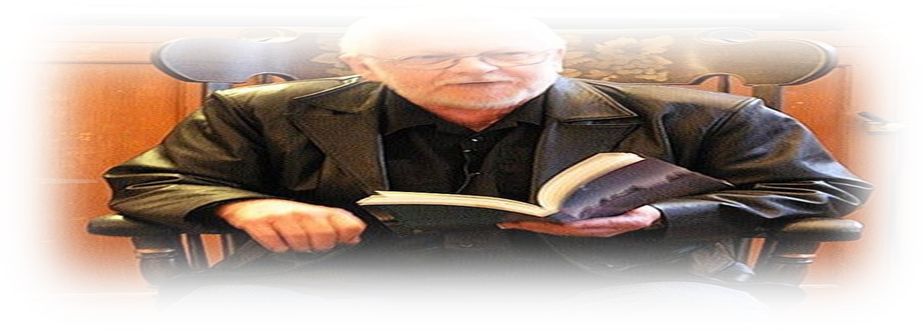
It came to me as I read indigenous reflections written in 1976, almost half a century ago, by Arthur Amiotte, then an artist and teacher who lived among the Teton Sioux in South Dakota, that I have never understood the nature or functions of prayer.  Not strange given how few if any priests or pastors or rabbis have ever grasped them.  Prayer had always seemed superficial to me, ritual repetition of sounds directed at one or more beings to whom we seemed little more than insects, inferior objects to be scorned and disdained, albeit in a strange and twisted, masochistic way, loved as well. 

An observation attributed to a gentle Nazarene whom the Hebrews and perhaps the Romans may have tortured and perhaps hung or crucified has always made a great deal of sense to me: his suggestion that direct communion with the divine, without ritual or intervention, without prayer, was really the only legitimate and effective means of touching divinity but, reviewing Arthur Amiotte’s indigenous reflections, something I’ve been doing while concurrently reading the probably fictitious writing of Carlos Castaneda (fictitious not being synonymous with useless),  another alternative occurred to me.  Ironically occurred to me who, if not an atheist am at best a panentheist.  It came to me in the form of an epiphany: Prayer may well have a positive purpose but it is unrelated to the ritual repetition of sounds the meaning of which few really consider as they utter them, and fewer still understand

In that instant of epiphany, it came to me that ritual prayer does have a role and a meaning and a use and a purpose but that it is very different from the meaningless collective rote exercise that takes place on designated days at designated hours in designated places under the leadership of designated men and sometimes, although rarely, designated women.  It is, or perhaps, better stated, it should be, an isolated, personal reflective instrument that properly tuned and used can lead to introspection, contemplation, meditation and self-examination, all in a quest for insight, perhaps totally novel insight, and through such insight, to both elucidation and pragmatic solutions. 

That makes sense, or made sense to me; finally.  Prayers, correctly used, can be catalysts for internal communication in which, perhaps, a spark of the divine (if a spark of the divine exists within each of us, as some among the Gnostics tend to believe), may, at times, be present.

Poetry” Sam Hammill (a great friend, a great poet and a great translator) once told me “is meant to be spoken and heard”.  As much as I admired him and still do (though he is long gone), I did not agree.  For me, reading poetry rather than listening to it permitted me to transcend the music of the words in order to wrestle with the layers of meaning involved, not all of them layers the author intended.  In that sense, it seems that poems are “written on mirrors”, i.e., they have different meanings for everyone who really delves into their depths based on the reader’s personal experiences, context and perceptions.  I’ve shared my observation with another poet I admire but who is as different from Sam, in many but not all ways, as two poets can be.  Sam was a big man, a former United States marine, with a booming voice, an adventurer in every sense, while the second poet, Carlos Mario Uribe Alvarez, is a fairly diminutive and soft spoken Colombian, but one who annually gathers poets from all over the world to declaim and share perspectives in the sky-high Andean city where I’ve now lived for almost two decades.  Despite their differences, as is the case with many poets, they both share a taste for variety in women, each of whom they love in their own way, and for strong intoxicants, whether drunk or inhaled. 

As it was for Sam, poetry for Carlos, at the numerous events he organizes, is an oral exercise.  I dutifully attend the readings performed by earnest and talented artists who have profound truths to share but I get little out of the readings.  Indeed, I’ve urged that each reading be preceded by contextualization and a sharing of the motives and reflections and introspection that gave birth to each poem presented.  Sam would have argued with me.  Carlos agrees, but seemingly superficially.

I now feel the same way about prayer after my epiphany.  But perhaps that’s just me.  Writing and reading call to me much more than does listening to prayers or poetic expositions.  Reading permits me to dive and delve and reflect while writing seems a means of communicating with my inner self, with the me who’s been and the me that may someday be, and perhaps, at times, with echoes and shadows of divinity that have made their way, if not to me, at least towards me.

Interesting.  But perhaps not novel except for those of us who have been long misled by Abrahamic delusions.  Perhaps my epiphany is an echo of something lost by those of us who have misplaced things that our ancestors understood well and perhaps used and perhaps some among us may still understand and practice it, albeit alone and in personal places in a manner such as that of which that gentle Nazarene once spoke.

Thoughts on a pleasant autumn day high in the central range of the Colombian Andes.
_____

© Guillermo Calvo Mahé; Manizales, 2025; all rights reserved.  Please feel free to share with appropriate attribution.

Guillermo (“Bill”) Calvo Mahé (a sometime poet and aspiring empirical philosopher) is a writer, political commentator and academic currently residing in the Republic of Colombia (although he has primarily lived in the United States of America of which he is also a citizen). Until 2017 he chaired the political science, government and international relations programs at the Universidad Autónoma de Manizales. Previously, he chaired the social studies and foreign language departments at the Eastern Military Academy in Huntington, New York. He is currently the publisher of the Inannite Review available at Substack.com; an intermittent commentator on radio and television; and, an occasional contributor to diverse periodicals and publications. He has academic degrees in political science (BA, The Citadel, the Military College of South Carolina), law (JD, St. John’s University, School of Law), international legal studies (LL.M, the Graduate Division of the New York University School of Law) and translation and linguistic studies (GCTS, the University of Florida’s Center for Latin American Studies). However, he is also fascinated by mythology, religion, physics, astronomy and mathematics, especially with matters related to quanta, cosmology and cosmogony. He can be contacted at guillermo.calvo.mahe@gmail.com and much of his writing is available through his blog at https://guillermocalvo.com/.

Of Butterflies and Bibles

I’ve frequently wondered as to what motivated the inept linguist or translator who turned the word “flutterby” into “butterfly”.  That usually brings to mind (at least to my mind) the inept Catholic “saint”, Jerome of Stridon, who made a mess of his Latin translation of the Greek version of the Hebrew Tanakh.  Poor Lucifer, demoted by the purported saint from the Roman god of truth and light into a rebellious archangel and the patron of evil (a role that belonged to a Hebrew “entity” whose name was Hel-El).

Flutterby is obviously the correct term to describe the fluttering, flying insect, often beautiful, that has nothing to do with butter but is stuck with that appellation. I don’t suppose Jerome was responsible, he knew nothing of English, but who knows.  The absence of knowledge never stopped him.

And as to the “Latin” version of the Bible on which the St. James and other mistranslations are based, what can one say other than perhaps, …

… “Oy Vei”!

_____

© Guillermo Calvo Mahé; Manizales, 2025; all rights reserved.  Please feel free to share with appropriate attribution.

Guillermo (“Bill”) Calvo Mahé (a sometime poet and aspiring empirical philosopher) is a writer, political commentator and academic currently residing in the Republic of Colombia (although he has primarily lived in the United States of America of which he is also a citizen). Until 2017 he chaired the political science, government and international relations programs at the Universidad Autónoma de Manizales. Previously, he chaired the social studies and foreign language departments at the Eastern Military Academy in Huntington, New York. He is currently the publisher of the Inannite Review available at Substack.com; an intermittent commentator on radio and television; and, an occasional contributor to diverse periodicals and publications. He has academic degrees in political science (BA, The Citadel, the Military College of South Carolina), law (JD, St. John’s University, School of Law), international legal studies (LL.M, the Graduate Division of the New York University School of Law) and translation and linguistic studies (GCTS, the University of Florida’s Center for Latin American Studies). However, he is also fascinated by mythology, religion, physics, astronomy and mathematics, especially with matters related to quanta, cosmology and cosmogony. He can be contacted at guillermo.calvo.mahe@gmail.com and much of his writing is available through his blog at https://guillermocalvo.com/.

Reflections on Evolutive Monotheism

Prior to the advent of egotistical monotheism in the Arabian peninsula, the goddesses Al-lātAl-‘Uzzá, and Manāt were believed, as once portrayed in Salman Rushdie’s infamous Satanic Verses, to have been the daughters of Allah and back then, before the rise of Islam, Allah was one among many members of the caste of the divine, as was supreme Canaanite divinity El and as was El’s errant son, YHWH, and as were YHWH’s sixty-nine brothers and their Sumerian cousins and many, many others.  And they cohabited, not quite in peace, but neither in a state of perpetual genocidal animosity, as, all too soon, came to be.  Came to be, if not the norm, at least the custom among those ghoulishly gullible Abrahamic humans who chose to follow and emulate ghastly YHWH.
_____

© Guillermo Calvo Mahé; Manizales, 2025; all rights reserved.  Please feel free to share with appropriate attribution.

Guillermo (“Bill”) Calvo Mahé (a sometime poet and aspiring empirical philosopher) is a writer, political commentator and academic currently residing in the Republic of Colombia (although he has primarily lived in the United States of America of which he is also a citizen). Until 2017 he chaired the political science, government and international relations programs at the Universidad Autónoma de Manizales. Previously, he chaired the social studies and foreign language departments at the Eastern Military Academy in Huntington, New York. He is currently the publisher of the Inannite Review available at Substack.com; an intermittent commentator on radio and television; and, an occasional contributor to diverse periodicals and publications. He has academic degrees in political science (BA, The Citadel, the Military College of South Carolina), law (JD, St. John’s University, School of Law), international legal studies (LL.M, the Graduate Division of the New York University School of Law) and translation and linguistic studies (GCTS, the University of Florida’s Center for Latin American Studies). However, he is also fascinated by mythology, religion, physics, astronomy and mathematics, especially with matters related to quanta, cosmology and cosmogony. He can be contacted at guillermo.calvo.mahe@gmail.com and much of his writing is available through his blog at https://guillermocalvo.com/.

Initial Reflections on Pope Leo XIV

Raining on parades is not something of which I’m fond, especially given how many parades I participated in during my youth while a cadet, first at the Eastern Military Academy in Huntington, New York, and then at the Citadel, the Military College of South Carolina, which is not to say that I and my fellow cadets were not, at times, very grateful for rain that resulted in cancellation of weekly parades permitting us to enjoy additional leave time.  Today, however, as I reflect on the passing of Jorge Mario Bergoglio, Pope Francis I, and of Jose Mujica several weeks later, I find myself doing just that, although perhaps it’s just tears cascading I hear.  That we were privileged to share this world with two souls as purely beneficent as theirs has been an amazing blessing.

Following Francis I will not be an easy task, it may well prove extremely challenging as there is little hope of equaling his charismatic humility and the aura of human decency he generated.  It is unlikely that Robert Francis Prevost will follow the examples of humility and personal frugality that Jorge Mario Bergoglio set, both before and after he attained the papacy.  It is interesting, in a very sad manner, to note with profound regret that we lost both Pope Francis and his political homolog, Jose Mujica, the late, former president of Uruguay, within several weeks of each other.  That is an immense degree of decency lost in a very brief period, especially when human decency and humility among those who currently lead us is in such short supply.

My first impression of the new Pope was not positive but I admit that after Francis probably no one would have seemed comparatively positive to me, at least at first blush.  However, I fear that my unfair initial reaction may unfortunately have been instinctively and cognitively perceptive, especially after rumors that pressure to select Cardinal Prevost were exerted, who knows how, by the American Israel Public Affairs Committee and by neoliberal and neoconservative elements in a number of governments, especially that of the United States.  But I guess it would be extremely naïve in a professional political analyst to believe that the election of a new pope would be free of geopolitical pressure from many sides.  Especially if one has studied papal history.

Cardinal Prevost, now Pope Leo XIV, has aspects that should appeal to me emotionally.  He is a Peruvian as well as a United States citizen, the son of Louis Marius Prevost of French and Italian descent and of Mildred Martínez of Spanish descent and it appears that his maternal grandparents, Joseph Martinez, born in Haiti, and Louise Baquié, a Creole a native of New Orleans, were partially of African descent.  Like the new Pope, I’m also a dual national, having been born a citizen of the Republic of Colombia and naturalized many decades ago as a citizen of the United States of America.  And I share at least the Pope’s Spanish and French roots.  But for some reason, the ethnicity and dual citizenship that we share did not impact me in the way that Pope Francis’ Argentinian birth did.  It should have.  Instead, the fact that he is a United States native seems a double edged sword.  He is viewed with pride by United States’ citizens as the first United States born Pope but with suspicion by many throughout the world, fearful, as noted above, that his election was impacted by United States and especially, Israeli pressure.  Something that is given at least some credence if one reads between the lines of some of his public statements involving international affairs, both before and after he became Pontiff.

Still, he is unlikely to be as Deep State oriented as were his predecessors, John Paul or Benedict XVI, but he is also unlikely to be as progressive or humble as Francis, something his decision to reside in the Papal Palace at Castle Gandolfo eschewed by Francis makes clear.  However, as in the case of Supreme Court justices in the United States, the office frequently changes the holder and perhaps, rather than a disappointment (to me) he will prove to be an inspiration.

Only time will tell. 

The only certainty is that my perceptions are emotional, intuitive and not factually based although, like billions of others, I’ve sought for whatever facts I can find but, other than glowingly positive reports concerning his priesthood in Peru, reports of the kind frequently generated by public relations specialists rather than by historians, not much that rings true to me seems available.  Perhaps as I’ve matured, I’ve become a bit too cynical.

I certainly hope so.
_____

© Guillermo Calvo Mahé; Manizales, 2025; all rights reserved.  Please feel free to share with appropriate attribution.

Guillermo (“Bill”) Calvo Mahé (a sometime poet) is a writer, political commentator and academic currently residing in the Republic of Colombia (although he has primarily lived in the United States of America of which he is also a citizen). Until 2017 he chaired the political science, government and international relations programs at the Universidad Autónoma de Manizales. Previously, he chaired the social studies and foreign language departments at the Eastern Military Academy in Huntington, New York. He is currently the publisher of the Inannite Review available at Substack.com; an intermittent commentator on radio and television; and, an occasional contributor to diverse periodicals and publications. He has academic degrees in political science (BA, The Citadel, The Military College of South Carolina), law (JD, St. John’s University, School of Law), international legal studies (LL.M, the Graduate Division of the New York University School of Law) and translation and linguistic studies (GCTS, the University of Florida’s Center for Latin American Studies). However, he is also fascinated by mythology, religion, physics, astronomy and mathematics, especially with matters related to quanta, cosmology and cosmogony. He can be contacted at guillermo.calvo.mahe@gmail.com and much of his writing is available through his blog at https://guillermocalvo.com/.

Reflections on an Easter Sunday

While I am admittedly not a believer in the divinity of any being born of a human woman, or perhaps, of any divinity at all, I am not a “non”-believer, acknowledging that anything is possible and that I have yet to discern the truth, though I have searched for it during eight decades so far.  Nonetheless, I have had a lifelong fascination with the Palestinian born in Nazareth whose personal name was probably Yešu and who would perhaps be most non-confrontationally referred to as Yešu of Nazareth, although he was purportedly born in Bethlehem, both Palestinian villages. 

I have read a great deal about him, not only through biblical sources but also the Jewish response to the Christian Gospels, a series of alternative versions collectively referred to as the Toledot Yeshu, and I have written and published a bit on the subject which draws me to it as a means of seeking to understand myself and ourselves and perhaps, even the concept of divinity. 

Today is a confluence of days holy to major branches of Christianity, the Orthodox, the Catholic, the Protestant and others, as well as part of a season sacred to Jews, a somewhat rare confluence, and it is taking place during the Zionist genocide of the Palestinians and the ethnic cleansing of Palestine thus, at least to me, it is a day not for joyous celebration of a resurrection but of sad reflection on human nature, and on how disappointed in us Yešu the Nazarene would be, as hypocrisy and murder and mayhem have become the norm, although it may well be probable that such has always been the case.
_____

© Guillermo Calvo Mahé; Manizales, 2025; all rights reserved.  Please feel free to share with appropriate attribution.

Guillermo (“Bill”) Calvo Mahé (a sometime poet) is a writer, political commentator and academic currently residing in the Republic of Colombia (although he has primarily lived in the United States of America of which he is also a citizen). Until 2017 he chaired the political science, government and international relations programs at the Universidad Autónoma de Manizales. Previously, he chaired the social studies and foreign language departments at the Eastern Military Academy in Huntington, New York. He is currently the publisher of the Inannite Review available at Substack.com; an intermittent commentator on radio and television; and, an occasional contributor to diverse periodicals and publications. He has academic degrees in political science (BA, The Citadel, The Military College of South Carolina), law (JD, St. John’s University, School of Law), international legal studies (LL.M, the Graduate Division of the New York University School of Law) and translation and linguistic studies (GCTS, the University of Florida’s Center for Latin American Studies). However, he is also fascinated by mythology, religion, physics, astronomy and mathematics, especially with matters related to quanta, cosmology and cosmogony. He can be contacted at guillermo.calvo.mahe@gmail.com and much of his writing is available through his blog at https://guillermocalvo.com/.

Reflections on Anthropomorphic Deity Based Divinity

Deity based divinity, especially the anthropomorphic variants, beg the question as to whether such divinity or divinities were the creators, or were, in fact, created by those who worship him, her, it or them.  That he, she, it or they are derivative emanations made manifest and empowered by at least some of us ourselves.

If the latter case, then it seems that they were created through the energy expended by their earliest worshipers amplified through mass rituals and, unfortunately, at least for us, because negative energies like fear and hate and fury and envy are stronger than positive energies such as love, compassion, generosity and empathy, the prevalence of furious, jealous divinities like YHWH, deities who seek to control everything and impose drastic punishments for disobedience makes sense. 

But making sense is not the same as justification.  And perhaps if they are our creations, we can also de-create them, eradicate them by refusing to acknowledge them as our masters and by refusing to obey their commandments, by replacing them with our own morals and ethics, hopefully positive ones, with or without mythic archetypes who require veneration.

Perhaps, rather than a guilt ridden refrain, that’s what occurred to Friedrich Nietzsche when, reflecting Georg Wilhelm Friedrich Hegel, Heinrich Heine, Philipp Mainländer and others he proclaimed: “God is dead. God remains dead. And we have killed him. How shall we, the murderers of all murderers, comfort ourselves?”  I wonder what Mark Twain would make of all of this.

The foregoing seems especially relevant in hypocrisy ridden times like ours when “genocide” is being considered by many as a positive, as a harbinger of the beginning of the end, as sign of an impending apocalypse for which they yearn, perhaps one in the form of a nuclear holocaust.  

Something on which to at least ponder.
_____

© Guillermo Calvo Mahé; Manizales, 2024; all rights reserved.  Please feel free to share with appropriate attribution. Guillermo (“Bill”) Calvo Mahé (a sometime poet) is a writer, political commentator and academic currently residing in the Republic of Colombia (although he has primarily lived in the United States of America of which he is also a citizen). Until 2017 he chaired the political science, government and international relations programs at the Universidad Autónoma de Manizales. Previously, he chaired the social studies and foreign language departments at the Eastern Military Academy in Huntington, New York. He is currently the publisher of the Inannite Review available at Substack.com; an intermittent commentator on radio and television; and, an occasional contributor to diverse periodicals and publications. He has academic degrees in political science (BA, The Citadel, The Military College of South Carolina), law (JD, St. John’s University, School of Law), international legal studies (LL.M, the Graduate Division of the New York University School of Law) and translation and linguistic studies (GCTS, the University of Florida’s Center for Latin American Studies). However, he is also fascinated by mythology, religion, physics, astronomy and mathematics, especially with matters related to quanta, cosmology and cosmogony. He can be contacted at guillermo.calvo.mahe@gmail.com and much of his writing is available through his blog at https://guillermocalvo.com/.

Syncretic Evolutionary Accretion in Human Spirituality

I recently commented on an academic colleague’s article contrasting Christian and Jewish perspectives concerning the disgraced apostle Judas Iscariot, perhaps unfairly criticizing her observations based on the Jewish Toledot Yeshu as shallow[1].  The article described Christian attitudes with respect to Judas as reflecting the most extreme example of evil and betrayal possible, an attitude indeed shared by many, but not one universally shared among more modern Christians, especially in light of twentieth century efforts to rehabilitate Judas and ameliorate the perception of the Jewish role in the arrest, torture and execution of Yešu[2], given the climactic horrors of antisemitism during the Second World War seeking to treat both in a more neutral manner. 

The Jewish attitude towards Judas, as reflected in the Toledot Yeshu (as well as in both the Jerusalem and Babylonian Talmud), predictably regard him as a hero, albeit as a hero without ethical boundaries, and as the savior of Judaism in the face of encroachment by Yešu-inspired heretics (not yet misnamed “Christians” by Saul of Tarsus[3]).  My point in criticizing (too strong a word really) the authors’ description of related Christian perceptions concerning Judas was that, to an increasing number of Christians, rather than an arch-villain, Judas Iscariot is a tragically complex figure who faced irresolvable conflicts of interest between his aspirations seeking a messianic Jewish liberator and the otherworldly idealism attributed to the victim of his betrayal, a conflict complicated by the reality that, at any rate, he was irrevocably bound to the fate decreed for him by the always strange Abrahamic deity which both he and Yešu believed they served. 

For some reason, the forgoing led me to reflect on the accretive nature of Abrahamic religions and then, to reflect on the reality that most if not all religions seem accretive.  A strange leap but that’s my story and I’m sticking to it!

Consider:

The roots of all Abrahamic religions lie in the city of Uruk in ancient Sumer.  They all start with a certain Sumerian, ironically given subsequent beliefs, the son of an idol maker.  That Sumerian’s original name was phonetically Abiramu but has reached us as Abraham.  Based on the foregoing it seems clear that most of the stories in the Hebrew Book of Genesis, e.g., the Garden, the Flood, etc., have Sumerian roots, but as Abiramu and his sister-wife Sarai and their descendants fled though Egypt into Canaan, and Judaism slowly evolved as a religion, cultural borrowing was heavy and included Akhenaton’s monotheism, the Midian religion wholesale, and from Canaan, its divinity, YHWH, one of the seventy sons of the chief Canaanite god, El.  Somewhere along the line however, for reasons unknown, Judaism shed its female deities, the numerous wives of YHWH including Anat-Yahu, Aholah and Aholibah , Asherah, Anatha of the Lions and Ashima of the Doves, not to mention the Shekinah, a process largely rejected for centuries by the common people until Hebrew women were reduced to objects bereft of rights and a religious, civic and social patriarchy, purportedly divinely ordained, was established, history having been reformulated and recorded, as necessary.  Of course, all of the foregoing also forms the predicate for both Christianity and Islam, although Christianity added a number of Hellenic religious and philosophical concepts via Saul of Tarsus (Islam has always been much closer to Orthodox Judaism, ironic given today’s genocidal antipathies).  Wow!!!  What a journey in every sense.

Syncretism is a term used to describe the dialectic process through which accretion leads to religious evolution and it was certainly evident among the religions of the country the ancient Hebrews referred to as “Mizraim” (which we call Egypt) where gods from diverse regions were added to a growing common pantheon where they eventually tended to meld.  The same seems true with respect to divinities and their respective cults in the Indian subcontinent and to the divinities prominent in ancient Greece and Rome.  It may well be true of religions in the Americas as well. 

As a young academic many, many decades ago, I taught a course on comparative religions which I elected to divide into three major segments, the first dealt with primitive spiritual concepts such as animism and totems, the second with mythologies which my students denominated “other peoples’ religions” and finally, to the enormous diaspora of spiritual and religious concepts that have become prevalent during the past three millennia.  Through it all I sensed a fount of religious instincts sprouting from somewhere in central Asia, perhaps somewhere in what is today modern day Mongolia, the place from which, periodically, waves upon waves of refugees turned invaders seemed to erupt, waves that included the Huns, the Mongols and those to whom we refer as Indo-European, Hindus, Achaeans, Aryans, etc.  I visualized the foregoing as a crescendo of peoples and beliefs, perhaps sharing a common origin, then diffracting and subsequently reassembling in differing configurations.  However, all too soon, as tends to occur, the young academic I once was found his academic pursuits deflected into first history, then political science, then law, and my quest for “a unified theory of socio-spiritual evolution” returned to the ether from which it had apparently once sprung, … until recently.  Until when, after semi-retiring to pursue personal interests and research, I returned to old roots exploring the “legends” of Gilgamesh and the origins of YWHW and of the myriad faces of Yešu, which, somehow or other, after reading the article by Ora Limor and Israel Jacob Yuval (“Judas Iscariot: Revealer of the Hidden Truth”), led me back to this introspective reflection concerning the diametrically opposed perspectives concerning both Judas Iscariot and Yešu that have subtlety but profoundly impacted our history during the past two millennia, and that has led me to reflect on how much our socio-religious perspectives are changing as time goes by, as our values change and as our memories evolve. And of how long-held traditional religious beliefs are being considered by some among our new generations as mere myths, a sort of inversion of how the students in my class on comparative religion once considered mythology, while others seem willing to accept and espouse new hypotheses concerning intergalactic aliens as the sources of our civilizations and even, of the possibility that our remote biological ancestors from the Mesozoic Era, the dinosaurs, in fact survived and merely went underground, literally, where they await in their own civilizations for a chance to return to the surface once, in our arrogance, we arrange for our own extinction.

Chaos to me is not a negative but rather, the primal state where once upon a time everything at all was a possibility and contradictions comfortably cohabited as compliments.  Strangely, modern theories of physics involving both minimalist quantic phenomena and omniversal string theories seem filled with echoes of that primordial chaos, the chaos that seems to have existed before the Big Bang or the divine seven days of creation, take your pick. 

Today, as I write, confusion appears to reign, happily enthroned and smiling, as we impatiently seek to untangle the confused webs we’ve woven and somewhere perhaps, echoes from Elphaba Thropp’s refrain at the conclusion of the 1930’s movie, the Wizard of Oz, as she slowly melted, laid low by water, “… what a world, what a world” happily resonate, and perhaps, somewhere outside the bounds of time and space, Yešu and Judas dispassionately debate.

_____

© Guillermo Calvo Mahé; Manizales, 2024; all rights reserved.  Please feel free to share with appropriate attribution.

Guillermo (“Bill”) Calvo Mahé (a sometime poet) is a writer, political commentator and academic currently residing in the Republic of Colombia (although he has primarily lived in the United States of America of which he is also a citizen). Until 2017 he chaired the political science, government and international relations programs at the Universidad Autónoma de Manizales. Previously, he chaired the social studies and foreign language departments at the Eastern Military Academy in Huntington, New York. He is currently the publisher of the Inannite Review available at Substack.com; an intermittent commentator on radio and television; and, an occasional contributor to diverse periodicals and publications. He has academic degrees in political science (BA, The Citadel, The Military College of South Carolina), law (JD, St. John’s University, School of Law), international legal studies (LL.M, the Graduate Division of the New York University School of Law) and translation and linguistic studies (GCTS, the University of Florida’s Center for Latin American Studies). However, he is also fascinated by mythology, religion, physics, astronomy and mathematics, especially with matters related to quanta, cosmology and cosmogony. He can be contacted at guillermo.calvo.mahe@gmail.com and much of his writing is available through his blog at https://guillermocalvo.com/.


[1] Limor, Ora and Israel Jacob Yuval (2011): “Judas Iscariot: Revealer of the Hidden Truth” in Peter Schäfer, Michael Meerson, and Yaacov Deutsch, eds., Toledot Yeshu (The Life Story of Jesus) Revisited: A Princeton Conference; pp. 197-220; Mohr Siebeck, Tübingen available at https://www.academia.edu/43624042/Ora_Limor_and_Israel_Jacob_Yuval_Judas_Iscariot_Revealer_of_the_Hidden_Truth_in_Peter_Sch%C3%A4fer_Michael_Meerson_and_Yaacov_Deutsch_eds_Toledot_Yeshu_The_Life_Story_of_Jesus_Revisited_A_Princeton_Conference_T%C3%BCbingen_Mohr_Siebeck_2011_197_220.

[2] “Yešu” is the correct Aramaic phonetic pronunciation of the Hellenized name of the principle protagonist of the diverse Christian faiths usually referred to as “Jesus”.

[3] According to some versions of the Toledot Yeshu, Saul of Tarsus whose Roman name was Paulus and who is referred to by Christians as St. Paul, was really a Jewish infiltrator into the evolving Yešu heresy whose role it was to sunder the movement from Judaism in order to decelerate and minimize conversion.