
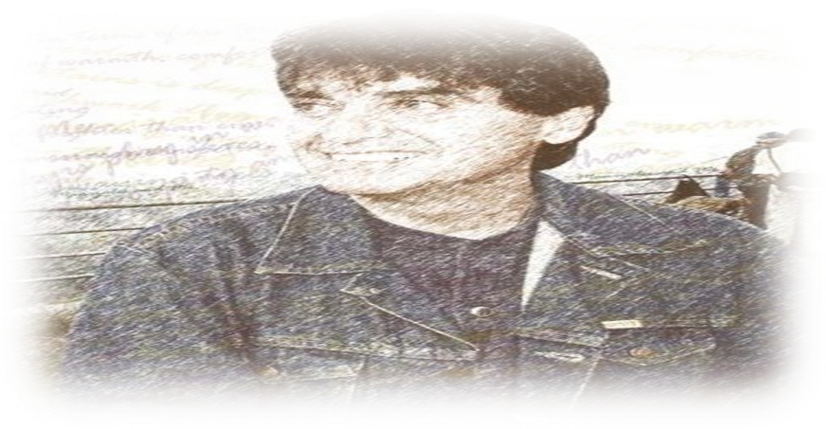
I started my eighth decade recently and, on reflection, I’m sometimes a bit surprised that I’ve somehow survived. Like many others, perhaps most, as I mature (I like that term better than age) I engage in quite a bit of reflection and introspection, sifting through a past that has always been too transient, seeking for nuggets somehow worth salvaging, if only in memory. The streams of time are unforgiving.
Last night I had a strange sort of dream but one not uncommon for me. I have an active and very strange dream life. In the dream it was the penultimate day of classes for me in a boarding school somewhere, but not one I ever really attended although I did attend boarding academic institutions through most of high school and during my college undergraduate years (but in military institutions, the Eastern Military Academy in Huntington, New York and the Citadel in Charleston South Carolina). In this dream it was a civilian facility and coeducational. It was not a very fancy place, indeed, it seemed drab, old and somewhat run down; really sort of dank and dark and dreary. Not at all like Eastern (a palace, literally, now called OHEKA Castle) or the Citadel (magnificently beautiful).
In the dream, my roommate and I had not yet packed our things which were carelessly strewn about and I needed to contact my mother to verify how I was to get home. She’d called and left a message asking what I wanted to eat and I had responded to the message somehow, asking for something too expensive for our budget, not realizing that it was a tangible question about the meal she wanted to prepare for me when I got home. Instead, I’d assumed that is was a sort of generic question into what I liked most, regardless of how unlikely it was that I’d get it. It was a dream thus normal logic was not involved. In the dream, the girl who’d conveyed our messages had not asked my mother for a phone number to which I could respond. Well, that was logical, it was my mother after all. The girl had no reason to know how frequently my family moved and in doing so, changed everything, telephone numbers included. And I had no way of knowing how I was going to get home. The latter was frequently true and frequently, it was not home I’d be heading to but a friend’s house. Luckily for me, there were always friends with decent houses around, houses nicer than my family’s, and I gravitated to them. It was a sort of desertion I now realize. I was abandoning my family for some reason. In reality. Not in the dream. That’s something I’ve long regretted.
In my boarding school career there were seven end-of-the-academic-year departures and seven more Christmas vacation departures and for many of them, perhaps most, home was not my destination. An unfortunate consequence was that my younger siblings, a sister and a half-brother, did not get any benefit from guidance I might have shared with them, or protection I might have given them, or love we might have shared. My family lived in New York during that period, in numerous different places, but all in Queens. First, in Ozone Park, then in Hollis, then in Queens Village and finally, in several different places in Flushing. We’d moved to New York from Miami Beach when I was twelve, with detours, first for about eighteen months in Charlotte, and then for about six months at my grandmother’s home in South America, in the Republic of Colombia; in the City of Manizales, an oasis of stability we would visit for short periods from time to time.
In Colombia we were seemingly well off; well, my grandmother was well off, relatively. She owned a hotel, several taverns, a flower shop and a beautiful country home high on a hill surrounded by hundreds of thousands of carnations and roses, and fruit trees, with a pool by the side of a gazeebo and an artificial cement lake with swans and ducks, and a flowing stream at the foot of the property. In the United States we seemed to get by but faced continuous financial problems I knew nothing about; problems from which my mother sheltered me completely, … somehow. I had a stepfather, my father having vanished from our lives when I was three or four, although, according to him (many decades later, when we briefly reunited), it was we who had vanished, had been taken and hidden from him by my grandmother. My mother had immigrated to the United States when my father vanished as so many Latin Americans did then and do now, but it was easier back then, back then as the 1940s turned into the 1950s and she remarried when I was six.
My stepfather was a complex person whose complexities were not perceived by me until much later. He was very loving but sometimes violent with me. Back then corporal punishment was the norm. The major problem with my stepfather though was that he was a compulsive gambler, cards I think, in Greek clubs, he was of Greek descent, a first generation “American” (United States citizen). The consequences of his gambling “problems” were something my mother lived through for about nine years after which they separated, something I criticized at the time, at least to myself. I’d been kept ignorant of the problems he caused her and us. She had never spoken ill of my birth father nor did she with respect to my stepfather which made them seem heroes, when the real hero, well heroine, had been her. During our time with my stepfather we had to move almost every year and unknown to me, creditors hounded my mother and stepfather, and not the commercial kind. Still, while he was with us, I loved him very much and perceived of him as a protector rather than as a problem.
Anyway, while I was boarding at Eastern, weekends home were a possibility but one of which I rarely took advantage. I generally stayed at the school, which was largely vacated on weekends, in part because I always had a problem with foreign languages (first Latin and then French) and didn’t meet the academic requirements for weekend passes which required an 80% average in every subject, cumulative average not being enough. Ironic because I scored in the top three percentile in foreign languages on my college boards and I earned a graduate certificate in translation studies and linguistics relatively late in life; after I’d earned degrees in political science from the Citadel, and in law and then in international legal studies from universities in New York City.
When I did get to leave the school for weekends or on vacations, I would frequently stay with a friend’s family either in Huntington, on Caledonia Road, the Chamberlins, or the Rothchilds in Little Neck. Both families were very kind to me. I should have been with my own family although, by then, we had joined the ranks of the dysfunctional, at least more obviously so. When I was close to turning sixteen, my mother and stepfather separated and my siblings were also sent to boarding schools for which my mother miraculously managed to pay. She’d studied cosmetology during the latter part of her marriage to my stepfather, apparently aware that she would soon need to be financially independent. But I was the only one of my siblings who stuck it out and graduated. Perhaps that was more because that’s all my mother could afford than because of any failings on the parts of my siblings. I never knew which but strongly suspect the former.
At the Citadel, things were not that much different. Of the three summers between its four year academic program, I spent two away, the first, attending summer classes but also vacation time with Rob Shelnutt and his wonderful family in Tarpon Springs. Rob was to become my future Citadel roommate for several years. Then, the final summer, I again spent attending summer classes at the Citadel while living with three of my classmates in an apartment we rented collectively in Charleston. I did spend the intervening summer close to home but mainly living with my young aunt Carola. I had a summer job with A.G. Becker & Sons on Wall Street helping to support my family because my mother had to have gall bladder surgery. For once, I got to be productive and responsible and spend some time with my siblings. Oddly, I can’t remember what they were doing at the time, my sister was not going to school but my younger brother should have been in high school. Strange that I can’t remember anything to do with them that summer.
Actually, for some reason, there are way too many things about my immediate family that I never knew and rather than clarify things, my siblings confused them, sharing almost totally different versions of important events to which I was not privy. It seems that my mother was determined to protect me from anything that might derail my path towards a better future, something she accomplished, but only for me. My siblings were left behind in a sense. Something which, as I came to realize it, generated strong feelings of guilt, feelings accentuated by the last words I recall my stepfather saying to me shortly before he passed away from his third heart attack. That was at a time when he’d briefly reconciled with my mother and I had become a faculty member at Eastern (to which, like a homing pigeon, I’d returned after graduating from the Citadel). I’d just started or been accepted to law school and he was very proud of me and told me that he “believed in me more than he believed in God”. And he’d asked me to always look out for my sister and brother. The former rather than the latter was a heavy burden, especially when my stepfather died shortly thereafter. The latter was a duty I tried to meet but usually not all that successfully. Much later I served as by brother’s legal guardian for a while and I think I helped him overcome serious issues, but my sister has always been extremely independent and distant and has always rejected any efforts on my part to help her. We talk on the phone several times a year, on holidays and on her birthday, or if there is a local climactic disaster, and we care for each other a great deal, but that’s it. And my brother? He passed away last September but he sometimes seems to visit me in my dreams, seemingly now a link to my mother who passed away in early June of 1990.
On two occasions when I was returning home from the Citadel I hitchhiked, my two great hitchhiking adventures, both positive. Once was with my roommate at the time, Jeff Ronald, who was driving to his home in Springfield Massachusetts and dropped me off, … somewhere, from which I somehow got to New York City, but the second time was more memorable. It was right after graduation and I was set to go home with Jeff again but at the last minute I decided to go as far as Maryland with my friend Toby Griffen, a somewhat proudly eccentric intellectual who I intuited I’d rarely see again. That was a long hitchhike in several stages. Apparently offended however, Jeff kept a number of my things which he’d promised to take back for me, a typewriter and portable radio and probably some clothes. I don’t recall how, but I made it back to New York, to Flushing where my mother, sister and brother were living at the time in a somewhat run down rented house, one in which I’d never stayed. There are quite a few gaps in my memory of instances like that. Looking back on that “trip” I’m amazed that I had the reckless courage to undertake it and the surety (a double entendre of sorts) that it would turn out all right, but those were different times and people were seemingly different then. And it did turn out all right, except for my “misplaced” belongings.
When I delve into my past, which I frequently do, I tend to focus on things I would change and in fact, I would seemingly change many things. I would have loved people who slipped by and let slip by some of those with whom I had failed relationships (more for their sake than for mine), and I’d have studied mathematics and physics rather than political science and history. But then, I’d probably not have had my three sons, now 40, 38 and about to turn 36. I’d change most of the important decisions in my life but, then again, reflecting on how that new life would probably have turned out, I might well be wishing I could change that one as well. Seemingly, as the saying goes: “the more things change, the more they stay the same”. Of course, the ultimate related daydream involves returning to a very young version of myself having retained knowledge of the future and having become a zillionaire philanthropist and peace activist. I’m pretty sure I’d stick with that.
In a related sense, I’ve actually had to start my life over again, and too frequently it seems. From scratch. But, of course, without any prescience. Still, I’ve survived and at times thrived. I guess it’s a good thing that I was blissfully unaware when they occurred of many of the serious issues and deficiencies in my life, things that I’ve discovered in my reflections and introspection, things which consequently did not impact me as negatively as they might have had I focused on them at the time they occurred instead of from the relative safety of the future (when they’ve already been somewhat successfully resolved). I’ve been at least as fortunate as I’ve been unlucky and, as in the case of my hero, the Chilean Nobel laureate, communist civic activist and Latin American nationalist, Pablo Neruda, my biography might be titled, “I Can Confess that I’ve Lived”.
I’ve lived quite a bit, seemingly a dozen lifetimes in one. I’ve helped some people a lot, mainly my students, and hurt others much more than they deserved, mainly my relationships with women, and I’ve been seriously betrayed on several occasions while I think that I’ve not betrayed others, other than in some cases romantically. But during the past several decades, after I returned to where I started, back in Manizales, I’ve seemingly found a semblance of stability and the time to remember. And, as I’m doing now, to record and share my memories.
Dreams tend to fade quickly, perhaps leaving behind traces that are sometimes reassembled later but others can be fascinating catalysts, as the one last night has been, triggering a flood of memories, reflections, introspections and speculation. Last night’s dream is unlikely to fade at all.
Now, as to the future?
Perhaps my adventures, or misadventures, are just beginning.
_____
© Guillermo Calvo Mahé; Manizales, 2026; all rights reserved. Please feel free to share with appropriate attribution.
Guillermo (“Bill”) Calvo Mahé (a sometime poet and aspiring empirical philosopher) is a writer, political commentator and academic currently residing in the Republic of Colombia (although he has primarily lived in the United States of America of which he is also a citizen). Until 2017 he chaired the political science, government and international relations programs at the Universidad Autónoma de Manizales. Previously, he chaired the social studies and foreign language departments at the Eastern Military Academy in Huntington, New York. He is currently the publisher of the Inannite Review available at Substack.com; an intermittent commentator on radio and television; and, an occasional contributor to diverse periodicals and publications. He has academic degrees in political science (BA, The Citadel, the Military College of South Carolina), law (JD, St. John’s University, School of Law), international legal studies (LL.M, the Graduate Division of the New York University School of Law) and translation and linguistic studies (GCTS, the University of Florida’s Center for Latin American Studies). However, he is also fascinated by mythology, religion, physics, astronomy and mathematics, especially with matters related to quanta, cosmology and cosmogony. He can be contacted at guillermo.calvo.mahe@gmail.com and much of his writing is available through his blog at https://guillermocalvo.com/.
 Guillermo Calvo Mahé