Este comentario, que trata con la precandidatura de la senadora y anterior alcaldesa de Bogotá, Clara Eugenia López Obregón, refleja mi opinión positiva sobre ella, posición que he tenido desde ya muchos años. La verdad, posición que asumí desde que volví a Colombia en el 2007 después de una vida en los EE.UU. Desde su participación en los debates presidenciales de 2014 he creído que ella era la mejor opción presidencial para Colombia y por muchas razones, aunque admiro mucho al presidente Petro y también a dos de los otros actuales precandidatos presidenciales del Pacto Histórico, Iván Cepeda y Carolina Corcho.
Clara parece especial por razones complicadas, incluso quizás incoherentes en ciertos aspectos. De lo que entiendo, de joven, durante los años 70, fue amiga y quizás novia de Álvaro Uribe Vélez, era durante el tiempo cuando él entonces señor Uribe supuestamente era liberal. El mismo Álvaro Uribe Vélez quien hoy en día es el mayor oponente de lo que ella ahora apoya, pero yo aspiro que, basado en ese pasado, las relaciones de ella con la derecha colombiana (odio las frases ultraderecha y ultra izquierda que solo son peyorativas) podrían ser positivas o por lo menos cordiales, aun habiendo sido ella por ya muchos años definitivamente de izquierda. Creo que por su experiencia y forma de ser podría lograr una relación política cordial con quienes piensan diferente sin ser media tibia como el señor Fajardo o amarga como el senador Robledo y eso mucho necesitamos en Colombia para minimizar la polarización política, cívica y cultural en la cual nos encontramos. Ademas, por su extensa trayectoria política, creo que tiene relaciones, si no siempre excelentes, por lo menos adecuadas, con muchos políticos tradicionales que sin denegar su asociación con brechas morales y éticas con respecto al abuso del poder para su propio beneficio, siguen esenciales para lograr reformas importantes, como lastimosamente ha descubierto (o debe haber descubierto) el Presidente Petro. Lo anterior, en mi opinión, la hace la mejor candidata para lograr el éxito no solo en las próximas elecciones, ampliando en forma importante el anticipado “Frente Amplio”, pero en la gobernanza esencial que necesitaría lograr si su campaña fuera exitosa. Pero, ademas de esos temas pragmáticos, creo que es la persona más preparada que tenemos en Colombia para enfrentar y resolver en forma positiva los numerosos retos que nos enfrentan. A diferencia con otros precandidatos nobles y sinceros, Clara es multidimensional en su experiencia, conocimiento y enfoque.
Biografía
Entonces, echémosle una mirada, aunque superficial, a su trayectoria cívica y política. Datos extensos y específicos al respecto no serán difíciles encontrar. De acuerdo a Wikipedia, una fuente de poca confianza con respecto a muchas cosas pero, en este caso, pareciéndose neutral, ella quedó huérfana muy joven pero fue “adoptada política y familiarmente” por el líder político liberal Alfonso López Michelsen, presidente de Colombia entre 1974 y 1978 y el primo de su padre. Ella estudió economía en la Universidad de Harvard y, posteriormente, se licenció en derecho en la Universidad de los Andes. En la actualidad, es candidata a doctorado en derecho tributario y financiero en la Universidad de Salamanca.
Durante su estadía en Harvard, se involucró activamente en protestas en contra de la incursión de los Estados Unidos en Vietnam e inicio un cambio filosófico desde sus raíces en el progresismo liberal hacia la izquierda, llegando a entender realidades sobre esa potencia del norte que por tanto tiempo nos ha dominado con desprecio, y que tanto daño nos ha hecho, algo que en los últimos días el señor Trump ha hecho más claro que nunca. Por eso, a diferencia de mucha de la clase política en la cual nació, ella no ha vendido sus valores y su persona por los beneficios económicos personales con los cuales la oligarquía estadounidense compra la lealtad de tantos líderes en nuestro continente.
Regresó a Colombia en 1974 aceptando un cargo en la Secretaría Económica de la presidencia de Colombia, presidencia ocupada en ese tiempo por su mentor, el liberal Alfonso López Michelsen, movimiento en el cual inicialmente milito pero que abandonó en forma permanente en 1979, al parecer, reaccionando en forma muy inesperada con respecto a una disputa entre los expresidentes López Michelsen y Carlos Lleras Restrepo, irónicamente tomando el lado ideológico a favor de Lleras Restrepo y su pupilo Luis Carlos Galán Sarmiento. Por lo tanto, se inscribió en el Nuevo Liberalismo, movimiento fundado por Galán y el exalcalde de Neiva, Rodrigo Lara Bonilla.
Como militante en el Nuevo Liberalismo fue elegida concejal y eventualmente presidenta del concejo distrital en Bogotá, eso durante los años 80 y, posteriormente, fue elegida contralora distrital de Bogotá. En el Nuevo Liberalismo apoyó la candidatura presidencial de Carlos Galán en 1982 (no obstante la posición contraria de su anterior benefactor y mentor Alfonso López) pero en 1986 cambio su perspectiva y afiliación política, moviéndose más hacia la izquierda política y salió del Nuevo Liberalismo para afiliarse con la Unión Patriótica desde la cual, en oposición a la candidatura presidencial de Galán en 1986, apoyó a Jaime Pardo Leal quien quedó en tercer lugar en esa contienda antes de ser asesinado en 1987. En 1988, por primero vez, se lanzó como candidata a la alcaldía de Bogotá bajo la bandera de la Unión Patriótica, elección que fue impactada en forma irónica por el secuestro del candidato que resultó exitoso, quizás por haber sido secuestrado y liberado, el candidato conservador y conocido periodista, Andrés Pastrana Arango, apoyado por su padre, el expresidente Misael Pastrana.
1990 fue un año desastroso para la izquierda colombiana y, en realidad, para toda Colombia. Bernardo Jaramillo Ossa, el candidato de la Unión Patriótica apoyado por Clara para la presidencia fue asesinado en abril de 1990, después del asesinato de Luis Carlos Galán en agosto de 1989 y antes del asesinato de Carlos Pizarro, también en abril de 1990. Traumatizada políticamente, como se encontraba gran parte del país, Clara se alejó de la política por casi una década, dedicándose a la academia y respaldando a las ambiciones políticas de su esposo, Carlos Romero, como concejal. En 2002 volvió a involucrarse en temas de gobernanza cuando fue nombrada Auditora General de Colombia por el entonces presidente, su viejo pretendiente, Álvaro Uribe Vélez, función que ejerció por tres años hasta que se vio obligada a denunciar ante la Corte Suprema de Justicia de Colombia la posible infiltración de organizaciones armadas ilegales de extrema derecha en el Estado Colombiano, eso después de que Salvatore Mancuso, el exjefe máximo de la Autodefensas Unidas de Colombia, dio a conocer que al menos el 35% de los miembros del actual Congreso de la Republica eran aliados suyos. Esa denuncia de Clara dio inicio al proceso investigativo que adelantaría el supremo tribunal, y que derivaría en un proceso judicial que desató un escándalo político en Colombia conocido como la Parapolítica.
Encontrándose ya estigmatizada por el “uribismo” decidió volver a involucrarse en la contienda electoral apoyando la nueva conglomeración política de izquierda, el Polo Democrático Alternativo, partido por el cual aspiró a la Cámara de Representantes en 2006, perdiendo curul por poco más de cien votos. Por un tiempo después de esa campaña considero una nueva campaña para la alcaldía de Bogotá pero decidió apoyar la candidatura de Samuel Moreno Rojas quien, como a tantos otros, la engaño por un tiempo con respecto a su falta de ética, algo demostrada por su rol en el denominado Carrusel de la contratación y que resulto en su destitución como alcalde. Para Clara eso fue una gran decepción pero, a la vez, una gran oportunidad de aprendizaje.
Como importante asesora en la campaña de Samuel Moreno Rojas Clara fue designada como Secretaria de Gobierno en la nueva administración municipal bogotana lo cual requirió que su esposo, Carlos Romero, renunciara a su escaño en el Concejo de Bogotá. Como Secretaria de Gobierno, llego a denunciar el caso de “falsos positivos” en la supuesta guerra uribista en contra de las Fuerzas Armadas Revolucionarias de Colombia (las FARC) y otros movimientos insurgentes, caso en el cual, para recibir “comisiones” por cada insurgente “eliminado”, táctica sugerida por los gobiernos de George W. Bush y Barak Obama en los EE.UU., miembros de las fuerzas públicas colombianas capturaban a jóvenes inocentes, disfrazándolos de insurgentes para entregar sus cadáveres en cambio recompensas. En específico, la investigación en la cual participo Clara trató con 19 jóvenes que figuraban desaparecidos y que fueron ingresados por el ejército a medicina legal en la ciudad de Ocaña, Norte de Santander, como muertos en combate. El resultante escandalo a nivel nacional e internacional culminó con la destitución de 27 oficiales del ejército por su involucramiento en el asesinato de más de tres mil jóvenes inocentes en diversas regiones de Colombia.
Clara ocupó la Secretaría Distrital de Gobierno hasta el 10 de marzo de 2010, fecha en la que fue escogida como fórmula vicepresidencial de Gustavo Petro para las elecciones presidenciales de 2010 en las que alcanzaron más de un millón trescientos mil votos, pero no resultaron elegidos. Tras la renuncia de Jaime Dussán Calderón a la presidencia del Polo Democrático, el Comité Ejecutivo del partido la proclamó unánimemente como nueva presidenta de esa colectividad, cargo que asumió en abril de 2010. Renuncio a ese cargo temporalmente en junio de 2011 porque, habiendo brotado el escándalo de la corrupción de la administración municipal y la resultante destitución de Samuel Moreno Rojas como alcalde, ella fue escogida el 8 de junio de 2011 por el entonces presidente de la Republica, Manuel Santos, para remplazar a Moreno como alcaldesa encargada, un reto que parecía desagradable e imposible y con desastrosas implicaciones para un futuro político. Bogotá se encontraba política y económicamente ahogada, después de tres años, solo el 15% del presupuesto se había ejecutado y la confianza de los bogotanos en su gobierno era solo del 7%. Pero Clara y su equipo lograron milagros. Aunque solo se esperaba que mantuviera el cargo por solo tres meses, se amplió su periodo hasta el primero de enero de 2012 y su rendimiento fue inesperadamente excelente, tan productivo como el de Moreno había sido desastroso. En su discurso de posesión prometió que defendería el patrimonio de los ciudadanos rechazando la privatización de la Empresa de Telecomunicaciones de Bogotá ETB, pero también preservando para los ciudadanos en su conjunto los otros bienes distritales. Dirigiéndose al escándalo del denominado carrusel de contratación municipal, prometió transparencia en la firma de contratos y licitaciones. De acuerdo a la encuesta Gallup, entro a su cargo en un ambiente de desconfianza total con una aprobación minúscula para salió de su cargo apoyada por el 76% de los ciudadanos, la más amplia aprobación registrada hasta entonces para la alcaldía de Bogotá. Entre sus numerosos logros se destacaron el plan decenal de agua que por primera vez otorgó de manera gratuita el mínimo vital a las familias más pobres de la capital, el subsidio al transporte público para las personas con discapacidad y sus cuidadores y la expedición de decreto de participación incidente de los ciudadanos en la confección de los planes y programas del gobierno de la ciudad. Cuando entro a su cargo, después de tres años solo se había ejecutado el 15% del presupuesto municipal autorizado, cuando lo entrego, se había ejecutado, en solo ocho meses, el 95%.[1]
Luego de su rol como salvadora de Bogotá, Clara volvió a las contiendas electorales primero, como la candidata del Polo Democrático para la presidencia de Colombia en las elecciones del 2014 donde obtuvo casi dos millones de votos y ocupó la cuarta posición, y luego, como candidata a la Alcaldía de Bogotá en representación del Polo Democrático, la Unión Patriótica y el Movimiento Alternativo Indígena y Social (MAIS).
No fue exitosa en esa elección pero el 25 de abril de 2016, Clara fue designada por el presidente Juan Manuel Santos, a quien había apoyado en segunda, como Ministra de Trabajo, cargo que ocupó hasta el 5 de mayo de 2017 cuando renuncio para participar en las elecciones presidenciales de 2018. Desde el 20 de julio de 2022 ha sido senadora de la Republica. Además de lo anterior, ha sido profesora de la Universidad del Rosario y Universidad de los Andes.
De nuevo, precandidata a la presidencia
En 2025, Clara confirmó su precandidatura presidencial para las elecciones de 2026 postulándose a través de la coalición política “Unitarios” conformado por cerca de 15 partidos que se presenta como un complemento fraterno al Pacto Histórico. La meta de su campaña es participar en la consulta del “Frente Amplio” en marzo de 2026. En esa consulta se enfrentarían precandidatos como Roy Barreras, Camilo Romero y la figura que finalmente designe el Pacto Histórico (probablemente o Carolina Corcho o Iván Cepeda), su objetivo siendo la continuación de la transformación iniciada por Gustavo Petro.
En lo personal, no soy miembro del partido político Colombia Humana o del nuevo partido unificado, el Pacto Histórico, aunque a ambos los he asesorado y creo en sus ideales. No soy “petrista” aunque conozco y apoyo a Gustavo Petro porque esa frase huele demasiadamente al caudillismo en el cual ni él ni yo creemos. Para mí, como analista político, me es importante ser independiente de organizaciones políticas donde la ética insiste que cada miembro debe acatar a las decisiones colectivas. Estoy muy de acuerdo con las políticas que la administración actual ha propuesto y por las cuales ha luchado, aunque sin el éxito que merecen, pero me ha preocupado la falta de dirección política personal por parte del presidente, algo que me parece esencial en negociaciones directas con la oposición y hasta con aliados, roles que han asumido diversas personas en formas algo incoherentes. No obstante esa observación, entiendo que dada la histórica corrupción de nuestros líderes políticos, burócratas, empresarios y medios de comunicación, lograr los cambios transcendentales requeridos para crear la sociedad justa, eficiente e igualitaria que merecemos los colombianos es un tema muy complicado y, en última instancia, parece requerir intervención ciudadana por medio de una nueva constituyente, algo con el cual el presidente Petro y Clara están de acuerdo. Mi perspectiva con respecto a la constitución colombiana es mucho más drástica que la de ellos, algo sobre cual circulé hace un tiempo un artículo “Porque Colombia ha requerido un nuevo Constituyente desde el 1991”. Yo creo que los defectos constitucionales son tan profundos que requieren una revisión total de la Constitución de 1991, una constitución larguísima, llena de promesas incumplibles e instituciones incoherentes y en la cual, en importantes partes, los sujetos no son los ciudadanos sino los partidos políticos. Como ejemplo de lo último solo hay que entender que la prohibición a lo doble militancia les prohíbe a los supuestos representantes del Pueblo votar su conciencia, en vez, siendo legalmente forzados a votar como deciden sus partidos. En base de lo último, las reformas esenciales propuestas por el actual gobierno para eliminar corrupción y lograr sistemas de salud, pensión, medicina, trabajo, tributo, etc., justos y eficientes han sido derrotadas.
No obstante esa perspectiva compartida sobre la necesidad de una reforma constitucional, no estoy de acuerdo con la manera en la cual Clara cree que se debe implementar una constituyente, eso siendo por medio de democracia directa utilizando tecnologías novedosas para coordinar los esfuerzos. Pero eso es lo único con lo cual no estoy de acuerdo en las propuestas de Clara. Me encantaria si fuera posible pero coordinar treinta millones de participantes me parece una tarea imposible, en especial cunado trata con temas tan complicados que requieren conocimiento supremamente complejo sobre derecho, teorías constitucionales, economía, política comparada e historia.
Entonces, ¿por qué no los otros dos precandidatos que también mucho admiro?
Carolina Corcho es una brillante y ética persona con experiencia en temas cívicos y profundo conocimiento sobre el disfuncional sistema de salud colombiana pero carece de experiencia electoral y ejecutiva y todavía es algo unidimensional en su experticia. Ademas, creo que para ella sería difícil interactuar en forma eficiente con fuerzas políticas y económicas opositoras a las reformas en las cuales ella, como Clara, como Iván Cepeda y como el presidente Petro creen. Iván Cepeda ha sido entre los mejores legisladores de nuestro país con impecable trayectoria en la lucha contra la corrupción y por la paz, lo admiro enormemente y lo quiero. Pero carece de experiencia administrativa y ejecutiva y el uribismo y sus aliados son sus enemigos mortales, lo odian aún más que odian al presidente Petro, entonces gobernar en forma exitosa sería difícil, quizás imposible.
Eso deja a Clara que lo tiene todo, la experiencia tanto electoral como administrativa habiendo sido ministra, alcaldesa y senadora, ella tiene los ideales que admiro, los cuales comparte con Carolina e Iván y con el presidente y, tiene la posibilidad de interactuar en forma positiva con diversas corrientes políticas para crear una coalición amplia capaz de implementar importantes reformas. Como Carolina e Iván, es brillante y ética y progresista, pero con mayor capacidad de unirnos y de minimizar la polarización que tan horriblemente nos infecta.
[1] Por la necesidad de circular esta reflexión en forma expedita, no se ha logrado revisarla en temas de estilo, etc., por lo cual se solicita disculpas.
Guillermo Calvo Mahé es escritor, comentarista, analista político y académico residente en la República de Colombia. Aspira ser poeta y filósofo empírico y a veces se lo cree. Hasta el 2017 coordinaba los programas de Ciencia Política, Gobierno y Relaciones Internacionales de la Universidad Autónoma de Manizales. En la actualidad, participa en entrevistas radiales y televisadas, foros, seminarios y congresos cívicos y edita y publica la revista virtual, The Inannite Review disponible en Substack.com/. Tiene títulos académicos en ciencias políticas (del Citadel, la universidad militar de la Carolina del Sur), derecho (de la St. John’s University en la ciudad de Nueva York), estudios jurídicos internacionales (de la facultad posgrado de derecho de la New York University) y estudios posgrado de lingüística y traducción (del Centro de Estudios Latinoamericanos de la Universidad de la Florida). Sin embargo, también es fascinado por la mitología, la religión, la física, la astronomía y las matemáticas, especialmente en lo relacionado con lo cuántico y la cosmogonía. Puede ser contactado en guillermo.calvo.mahe@gmail.com y gran parte de su escritura está disponible a través de su blog en https://guillermocalvo.com/.
La justicia colombiana ha encontrado culpable de delitos penales a quien ha sido el hombre más poderoso del país, el ex presidente Álvaro Uribe Vélez. La decisión me sorprendió porque la justicia en Colombia tradicionalmente ha ignorado abusos del poder por parte de su clase dirigente pero, a la vez, la decisión duele porque, por correcta que sea, muy probable es que nos dividirá aún más como pueblo.
Un víctima de la injusticia tan común en Colombia, mi amigo Luis Fernando Rosas Londoño, un hombre talentoso, inteligente y honrado quien fue injustamente privado de sus derechos políticos y de su libertad, lleva tiempo rogándoles a los dirigentes políticos de nuestros partidos que para sanarnos como pueblo, para realmente lograr la paz, necesitamos una amnistía general, algo que, irónicamente, entiendo fue rechazado por el ex presidente Uribe. Luis Fernando no lo propone por su propio beneficio. Lo hace teniendo en cuenta las personas inocentes que han sido castigados en procesos jurídicos injustos y, a la vez, entendiendo que con tantos pecados por todos lados de nuestra política, se necesita “reformatear nuestro disco duro” e iniciar de nuevo.
No obstante lo anterior, reconozco que aunque el concepto de un perdon general es importante para re-direccionarnos hacia un futuro más civil y más decente, la corrupción, sea política, económica, académica o militar, etcétera, la corrupción que infecta a nuestra sociedad en forma tan profunda se tiene que minimizar, entendiéndose que acabar con ella es improbable, si no imposible; entendiendo que en un sistema político funcional, la violación de responsabilidades públicas tiene que ser el mayor delito con los castigos más serios.
Entonces, en este instante, nos encontramos en una situación, a la vez tan positiva como amarga. Una situación probablemente sin solución. No estoy feliz que el expresidente Uribe se haya encontrado culpable de violar leyes esenciales para el funcionamiento de nuestro sistema legal, pero estoy aún más triste que él nos ha puesto en la situación en la cual nos encontramos, que él ha violado sus más sagrados juramentos. Y me entristece profundamente que, en toda probabilidad, el expresidente Uribe insistirá, o en forma directa o indirecta, que sus seguidores rechacen la decisión en su contra no obstante el impacto que tenga esa reacción con respecto al bienestar popular. Espero que, en forma directa o indirecta, el expresidente Uribe insistirá en que sus seguidores organicen protestas y manifestaciones masivas en las cuales la violencia será probable.
Claro que es posible que si el expresidente es tan noble como creen sus seguidores, pondrá el bienestar de nuestro pueblo por encima de sus intereses personales. Él podría, sin admitir o negar las acusaciones en su contra (que ahora son sentencia), aceptarlas y pedirles a sus seguidores que también acepten la decisión jurídica existente. Y quizás, para minimizar la polarización, si el presidente Gustavo Petro también es tan noble como creen sus seguidores, él podría otorgarle al ex presidente Uribe clemencia en forma de un perdon ejecutivo, no en forma de algún tipo de negocio extrajudicial, pero como una ofrenda de paz para todos los colombianos en la cual, las horribles brechas entre nosotros se puedan realmente empezar a sanar y la desconfianza que nos ha dividido por tanto tiempo impidiendo las reformas esenciales en nuestras políticas públicas que urgentemente necesitamos, se pueda remplazar con un espíritu de colaboración.
No veo lo último probable pero hoy, por medio de nuestras reacciones con respecto a este juicio, se podría crear una oportunidad casi única para reconocer que los colombianos todos somos hermanos, no obstante nuestras diferencias de opinión, y que ya es tiempo que rechacemos el ejemplo mítico de Caín y Abel en favor del ejemplo de ese antiguo nazareno que tantos colombianos supuestamente aman.
Ya pronto veremos que va a ocurrir.
Temo que será lo peor pero, a la vez, aspiro que en eso yo esté equivocado. Yo salí de Colombia, como tantos otros, a los seis años, salí no en forma voluntaria pero por una decisión de mis padres basada en la violencia en la cual se encontraba nuestro país. Pero nunca olvidé que yo era y siempre seré colombiano, y que desde ese país hacia el norte que tanto daño nos ha hecho, me era muy difícil entender cómo, en un pueblo como el nuestro, un pueblo lleno de lo mejor que puede brindar la naturaleza, nos encontrábamos tan infelices el uno contra el otro. Y que muchos de los mejores ciudadanos nuestros, los más educados y los más nobles, huían en un flujo permanente hacia el norte donde eran despreciados e insultados, doctores trabajando como meseros.
Desde lejos era fácil percibir que unidos, aunque con diferencias en temas de creencias y opiniones, seriamos entre los pueblos más exitosos del mundo. En parte, para ayudar a lograr eso, fue que siempre quise volver a mi patria, algo que logré en el 2007, ese año tan especial en el cual nuestro pueblo, en masivas manifestaciones, demostró que estaba harto con nuestros eternos conflictos internos. Al volver, tuve el privilegio de trabajar por una década en la Universidad Autónoma de Manizales con estudiantes de diversas perspectivas políticas, pero unidos en el respeto por sus diferencias mientras dedicados a superarlas para lograr el bienestar común, estudiantes enamorados con su pueblo, estudiantes que ya están ascendiendo las laderas de las responsabilidades políticas y en la gran mayoría de los casos, haciéndolo en forma ética y eficiente. Esos ex estudiantes míos y otros jóvenes que he conocido me hacen pensar que la Colombia que merecemos no solo es posible sino probable, probable si evitamos seguir enmarañados en las mallas del pasado.
Hoy, haremos importantes decisiones, quizás existenciales, como individuos pero también como pueblo. El desastre del juicio en el cual se encuentra el expresidente Uribe no es ocasión para sentirnos o vencedores o vencidos, no es ocasión para ser felices o sentirnos heridos. Es una ocasión excepcional para reflexionar y mirar hacia el futuro, recordando la regla de oro: tratando a los demás como quisiéramos que otros nos trataran. Entonces, como tantas veces decimos en ocasiones más positivas, “que viva Colombia” y “que vivan los colombianos”, … todos.
Guillermo Calvo Mahé es escritor, comentarista, analista político y académico residente en la República de Colombia. Aspira ser poeta y a veces se lo cree. Hasta el 2017 coordinaba los programas de Ciencia Política, Gobierno y Relaciones Internacionales de la Universidad Autónoma de Manizales. En la actualidad, participa en entrevistas radiales y televisadas, foros, seminarios y congresos cívicos y edita y publica la revista virtual, The Inannite Review disponible en Substack.com/. Tiene títulos académicos en ciencias políticas (del Citadel, la universidad militar de la Carolina del Sur), derecho (de la St. John’s University en la ciudad de Nueva York), estudios jurídicos internacionales (de la facultad posgrado de derecho de la New York University) y estudios posgrado de lingüística y traducción (del Centro de Estudios Latinoamericanos de la Universidad de la Florida). Sin embargo, también es fascinado por la mitología, la religión, la física, la astronomía y las matemáticas, especialmente en lo relacionado con lo cuántico y la cosmogonía. Puede ser contactado en guillermo.calvo.mahe@gmail.com y gran parte de su escritura está disponible a través de su blog en https://guillermocalvo.com/.
On July 21, 2005, Patrick Lawrence wrote a commentary concerning Gaza, income inequality, Israel and politics entitled “Sun Valley vs. Queensbridge”. It was published in Consortium News, one of the very few still reliable independent sources of information (Volume 30, Number 202 —Tuesday, July 22, 2025). To a great extent the article dealt with the cataclysmic victory of Zohran Mamdani in the recent New York City Democratic Party mayoral primary, apparently as unexpected as the purported victory of the mythic David over the equally mythic Goliath over three millennia ago. The article brought to mind, at least for me, how deluded, confused and manipulated most of the United States’ electorate has always been and the panic which the awakening of even a portion of that electorate is generating among the corrupt elite who has maintained us politically and economically enslaved since the dawn of the Industrial Revolution. A sign I for one view as positive.
To many of my friends, especially among well-educated and intelligent fundamentalist Christians (as well as to many among some of my Jewish friends), Mr. Mamdani poses an existential threat because he is a vocal critic of the abuses of what passes for capitalism (but is in reality kleptocracy) as well as because he vocally opposes the ongoing genocide of the Palestinian people orchestrated by American and Israeli Zionists. He is thus, in their perception, a “communist” anti-Semite. Those “buzz” terms are essential in order to deflect from factual analysis of his beliefs, beliefs which coincide with the premises underlying the economic and civic philosophy of the “messiah” who my Christian friends claim to worship and adore. Ironic, but that pavlovian reaction had been carefully crafted using behaviorist psychology long before B.F. Skinner invented that art form. It is essential in order to secure the counterintuitive support of decent people for indecent realities and for policies that are clearly against their own interests, policies such as universal healthcare and universal education at all levels and a real social safety net, something artfully crafted by the kleptocrats who rule us.
The foregoing has led me to reflect on the strange distortion of terminology that the kleptocratic corporate media has imposed on us. For example: “antisemitism” now means opposition to mass murder, torture, rape as a political tool, ethnic cleansing, organized mass theft and genocide. And “communism”? Well, that now apparently means daring to support mercy, equity, meritocracy, economic justice and the golden rule, but especially, the economic doctrines espoused by that certain Palestinian who, two millennia ago, taught that hoarded wealth was the surest route to perdition. You may well have heard some of the sayings attributed to him in the Christian gospels, “that it is easier for a camel to pass through the eye of a needle than for a hoarder of wealth to enter into the kingdom of heaven” and promising that “the meek shall inherit the earth”. Evidently horrible ideas.
Mr. Lawrence´s article, for some reason, also made me reflect on another hysterical current campaign, one again attributable to the kleptocratic elites who control us, in this case, through their so called Democratic Party (the kleptocracy of course controls both the Democratic and Republican parties). In this ancillary campaign, massively hypocritical outrage is being expressed at the association of Jeffrey Epstein which took place prior to 2003[1] with Donald Trump, ignoring Mr. Epstein’s similar association with myriads of Democratic Party heroes. It seems designed specifically to distract from the real scandal associated with the late Mr. Epstein, that being his role as an agent of the Israeli Mossad in which he used and abused under age men and women to obtain compromising material on leaders in politics, industry, commerce, etc., all apparently in order to blackmail them into supporting Israeli goals, a role which led to the deaths of thousands of Americans and millions of innocent people in the Middle East and elsewhere through perpetual wars whose primary goal has been the implementation of the Zionist final solution to the Palestinian problem and the creation of the “Greater Israel” to which Zionists aspire. Indeed, the Democratic Party’s orchestrated outrage seems designed to deflect consideration of related, recently declassified information concerning probable Mossad involvement in the assassination of United States President John Fitzgerald Kennedy (ironically a Democratic Party hero) as well as concerning likely Mossad involvement with the destruction of New York’s World Trade Center on September 11, 2001. That same campaign, of course, also deflects attention from the genocide that has been perpetrated on the Palestinian people by Israel during the past seventy-five years, genocide affected with the full cooperation of the United States, the United Kingdom, France and Germany as well as with the tacit assistance of the Middle East dictatorships such countries established and maintained following the Second World War. You know, the war purportedly fought to eliminate the threats to human rights posed by the Nazis and their allies.
Not that Mr. Trump does not deserve serious criticism but, that the foregoing criticism is directed at his amorous misadventures during the past century rather than his current support for Zionist genocide or his increasingly incoherent international economic policies or the betrayal of his promises not to perpetuate the cycle of endless wars and foreign military interventions in which the United States has been engaged during the past century, is not only ludicrous, but is blatantly malevolent. Then again, the Democratic Party is at least as guilty as Mr. Trump with respect to much of the foregoing so, … birds of a feather, … in every respect.
Caveat:
I am not a fan of Mr. Trump, who, for personal reasons, I dislike.
I am not a believer in any organized religion and find the Abrahamic religions especially disturbing and, inter se, incoherent. Especially given that of the three Abrahamic branches, Islam is the most reviled while being the closest to both of the others. Indeed, it is the bridge between them.
I am bitterly opposed to most political parties, both in the United States and abroad, finding that they are the embodiment of the “factionalism” rather than statesmanship that, in the Federalist Papers, James Madison promised would not occur.
As a historian, I am not a respecter of the collection of fallacies peddled to all of us as history but designed, not to elucidate, but to keep us deluded.
As I write this I am completing my seventy-ninth year on our planet, most of them depressed by how consistently we devolve into the people we would least like to see staring back at us from our mirrors. Nonetheless, it seems that hope is not yet altogether extinguished, especially when people like Mr. Mamdani continue to appear from time to time, although admittedly, usually only briefly and all too often all to quickly converted into that against which they once railed.
But, back to Mr. Mamdani who has become the focus of hate, fear and despair from followers of Mr. Trump and especially from traditionalists in the Democratic Party. He is, at least for now, perhaps a sign that, paraphrasing the articulate albeit hypocritical Abraham Lincoln:
“Perhaps the kleptocracy cannot fool all of us all of the time.”
Fortunately for the kleptocracy, because he is a naturalized rather than native born United States citizen, Mr. Mamdani can never become president. But, then again, perhaps sometime soon, someone who shares his values will appear on the national stage and, unlike Mr. Trump, will not so quickly betray the principles he promised to sustain. _____
Guillermo (“Bill”) Calvo Mahé (a sometime poet) is a writer, political commentator and academic currently residing in the Republic of Colombia (although he has primarily lived in the United States of America of which he is also a citizen). Until 2017 he chaired the political science, government and international relations programs at the Universidad Autónoma de Manizales. Previously, he chaired the social studies and foreign language departments at the Eastern Military Academy in Huntington, New York. He is currently the publisher of the Inannite Review available at Substack.com; an intermittent commentator on radio and television; and, an occasional contributor to diverse periodicals and publications. He has academic degrees in political science (BA, The Citadel, The Military College of South Carolina), law (JD, St. John’s University, School of Law), international legal studies (LL.M, the Graduate Division of the New York University School of Law) and translation and linguistic studies (GCTS, the University of Florida’s Center for Latin American Studies). However, he is also fascinated by mythology, religion, physics, astronomy and mathematics, especially with matters related to quanta, cosmology and cosmogony. He can be contacted at guillermo.calvo.mahe@gmail.com and much of his writing is available through his blog at https://guillermocalvo.com/.
[1] Mr. Trump purportedly ended his fifteen-year friendship with Mr. Epstein that year, barring him from Mar o Lago because of an incident involving unwanted advances towards the fourteen-year-old daughter of another of Mr. Trump’s acquaintances.
In terms of political organizations, the concepts of “conservative”, “liberal”, “progressive”, “left”, right” and “center” no longer have any real meaning. Their meaning and context have been vacuumed, distorted and destroyed by those in charge of perpetrating and perpetuating lies and disinformation, the corporate media, faux historians, controlled academia and those who control the Internet (including both social media and search engines where algorithms rule). Such terms are now merely tools to polarize us, to divide us and to make us easier to control.
Two relevant opposing concepts do however exist: state-ism and populism.
Statists include an ironic amalgam of those who honestly believe that current governments are beneficent and the answer to all our social, economic and political problems with cynical deep state operatives who see the state as the ideal tool to control us and through such control, to extract ever increasing profits for the billionaire class. The latter is comprised of moles buried throughout the bureaucracy, the judiciary and the media who assure that government works to perpetuate the worst among us in power while keeping the bulk of us safely divided.
Populists are an amalgam from diverse, frequently opposing sociopolitical perspectives who share a belief that the institutions of government have been perverted and thus oppose them. In general, they share beliefs in real democracy and real liberty but acknowledge that such concepts do not currently exist. Populists comprise the vast majority but have permitted statist to maintain them divided into opposing camps based on the fake labels listed above, i.e.: “conservative”, “liberal”, “progressive”, “left”, right” and “center”, which populists take seriously. The labels are institutionally fake but contextually relevant. The differences exist for populists but the reality is that far more unites each sector of the populist political spectrum than that which divides them. Something that statists seek to obfuscate at all costs because, should populists attain their common interests and often complimentary goals, the statist empire could be destroyed and the dreams of equity, relative equality, justice and peaceful coexistence might become realities.
Statists use divisive emotions to maintain dictatorial control: what were once known as “wedge issues” which keep populists at each others’ throats. Issues like abortion and gun control and immigration, and they distort sociocultural divisions like gender, sexual orientation, race, nationality and religion keeping real problems festering because as long as they remain unresolved, populists can be kept from uniting. And, of course, the most cynical and thus most effective statists in the United States are today found in the Democratic Party and among the traditionalist wing of the Republican Party, and in the United Kingdom, in the once populist Labour Party and in the Conservative Party, in each case, merely virtually identical two-headed-Hydrae.
In the meantime, Hillary Clinton and her groupies try to re-seize control of the Democratic Party from a dazed and confused Joe Biden so that she can have one more chance to be the first female president while the Obama camp keeps pulling tangled strings behind the scenes to deflect her aspirations but is itself confused as to whether Michele or “AG” (his real name is Eric but he can’t let us forget he was once the Attorney General) Holder should replace their inept current figurehead, and Donald Trump keeps smirking and holding massive rallies while we ignore that three decent people are seeking to lead us out of the Deep State wilderness: Robert F. Kennedy, Jr., Jill Stein and Cornell West, PhD.
And the rich keep getting richer, the poor, poorer, the economic center keeps shrinking and people keep dying massively in elective and genocidal wars while defense industry dividends soar and the corporate media shouts:
“Nothing here to see! Move along!!! Turn the page!!! Or else!!!”
Guillermo (“Bill”) Calvo Mahé (a sometime poet) is a writer, political commentator and academic currently residing in the Republic of Colombia (although he has primarily lived in the United States of America of which he is also a citizen). Until 2017 he chaired the political science, government and international relations programs at the Universidad Autónoma de Manizales. Previously, he chaired the social studies and foreign language departments at the Eastern Military Academy in Huntington, New York. He is currently the publisher of the Inannite Review available at Substack.com; an intermittent commentator on radio and television; and, an occasional contributor to diverse periodicals and publications. He has academic degrees in political science (BA, the Citadel, the Military College of South Carolina), law (JD, St. John’s University, School of Law), international legal studies (LL.M, the Graduate Division of the New York University School of Law) and translation and linguistic studies (GCTS, the University of Florida’s Center for Latin American Studies). However, he is also fascinated by mythology, religion, physics, astronomy and mathematics, especially with matters related to quanta, cosmology and cosmogony. He can be contacted at guillermo.calvo.mahe@gmail.com and much of his writing is available through his blog at https://guillermocalvo.com/.
Como ocurre en muchos otros países, en Colombia, al parecer, adoramos a nuestra Constitución. “Adoramos” es la palabra perfecta por que la tratamos como si fuera una reliquia sagrada no obstante que en casi todas sus metas, posiblemente en todas, ha sido un fracaso. La “adoramos” pero en poco la respetamos y en menos la cumplimos. Eso se ha notado en diversas ocasiones por la derecha política y también por la izquierda. Pero el rechazo a su modificación, una modificación seria, ha sido inmenso. ¿Y, por qué?
Pues en parte, la realidad es que una reforma eficiente de nuestra Constitución actual tendría que ser tan extensa que resultaría en su remplazo. Nuestra Constitución está llena de palabras lindas y conceptos hermosos, tantos que es la segunda más larga del mundo. Pero entre las lindas palabras y los hermosos conceptos están las cláusulas que permiten evadir todas sus promesas. Un laberinto de requisitos técnicos incumplibles. Sus promesas han sido ignoradas porque su implementación requiere colaboración política en el Congreso y requiere un Ministerio Publico honesto y eficiente, algo que, por la manera en el cual sus miembros son escogidos, ha resultado imposible.
Para evaluar una constitución, cualquiera constitución, se tiene que medir que tanto se ha logrado cumplir con sus metas. Hagamos el ejercicio: ¿Se estableció la paz? ¿Se eliminó la corrupción? ¿Se logró la equidad? ¿Se logró la igualdad? ¿Se logró la justicia? ¿Se ha eliminó la impunidad? ¿Se ha disminuido la polarización? ¿Se ha cumplido con los derechos prometidos? ¿Se ha logrado la democracia?
Si somos honestos y objetivos, creo que en ninguno de estos casos fundamentales la respuesta sea sí. Entonces, ¿para qué sirve esta Constitución? Bonita si es. Pero es disfuncional. ¿Y, por qué?
Pues, en gran parte no es justo decir que no sirve. Si les sirve a algunos. A los corruptos, a los ladrones. A los que tienen el dinero para evadir la justicia. Pero más que todo, les sirve a los partidos políticos. Los reales sujetos de la Constitución colombiana del 1991 no son los ciudadanos, ellos son meros objetos. Los sujetos son los partidos políticos y por ende, los que se benefician de la Constitución son los que controlan a esos partidos.
Para entender lo anterior se requiere entender la diferencia entre un sujeto y un objeto. Un objeto es una persona jurídica o natural o institucional sobre cual el poder del estado es ejercido. Eso incluyo humanos, animales y hasta objetos inanimados, como carros, mesas, comida, etc. Un sujeto es un objeto que tiene derechos de manejo sobre el poder político que lo impacta, pero derecho y poder real, no meras ilusiones.
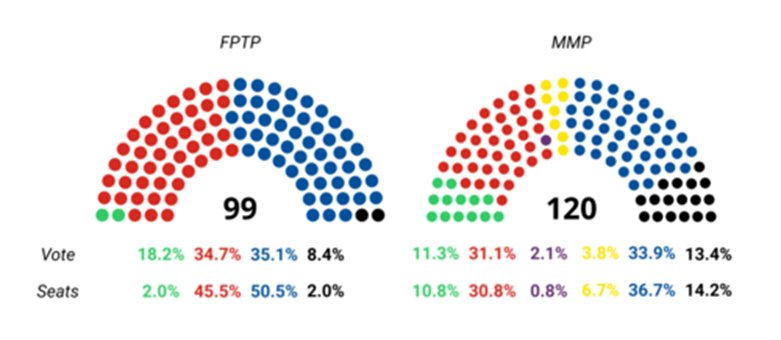
En Colombia, los legisladores en el Congreso tienen que hacer lo que dice su partido o pierden sus curules. No elegimos individuos al Congreso sino partidos. Lo único que podemos hacer, si las listas electorales son abiertas, es cambiar el orden en el cual los candidatos podrían recibir sus curules. Nada más. Por lo tanto, no podemos elegir a quienes nos parecen los mejores y los más honestos líderes políticos para nuestro congreso, o para nuestras asambleas departamentales, o para nuestros concejos municipales. Eso no es democracia.
En Colombia, planes estratégicos parecen imposibles lograr porque un plan estratégico requiere más de un periodo electoral para completarse, sea de derecha o de izquierda. Tenemos la absurda noción de, no solo prohibir la reelección, sino también prohibir que una persona que ha ocupado un cargo político ejecutivo, o tiene familiares que han ejercido una función ejecutiva, tenga que esperar un año para superar esas limitaciones que actualmente son inhabilitantes. Por lo tanto, lo normal es que ningún líder político que busca ascender en sus cargos pueda cumplir el periodo total para el cual fue escogido. O renuncia un año antes del fin de su periodo legal, o, adiós a una nueva elección. ¡Qué estupidez! Esas limitaciones no existen en ningún país exitoso del mundo.
Lo que Colombia requiere, lo que cualquier país requiere, es una constitución decente y eficiente sin promesas incumplibles. Una constitución escrita en manera comprensible por la ciudadanía. Y, una sin aspectos plenamente legislativos que no tienen por qué estar incluidos en una obra tan permanente como debe ser constitución. Una constitución real es algo extraordinario que solo debe tener cuatro funciones:
Primero, crear y delimitar las instituciones estatales. Es decir, las unidades geográficas y las instituciones gubernamentales como son la legislatura, el ejecutivo, la rama judicial, los procesos electorales, y los medios de control político, y, ademas, las instituciones responsables por la estricta interpretación constitucional y por resolver conflictos entre las diversas ramas del estado.
Segundo, toda constitución es inherentemente antidemocrática buscando impedir no solo el poder de la mayoría sino el poder de futuras generaciones. Todo supuesto derecho fundamental o humano es antidemocrático en ese aspecto. Pero antidemocrático no implica algo negativo o abusivo, ese aspecto es esencial para proteger la libertad, la autonomía personal y al bienestar y a la independencia de las minorías.
El tercer aspecto plenamente constitucional es el de establecer prioridades con respecto al ejercicio del poder, más que todo en temas presupuestales. La realidad de mucho de lo que se define como “derechos fundamentales o humanos” nada tiene que ver con el concepto de un “derecho”. Un derecho es inherente, nadie lo da, es eterno, no se puede condicionar. Entonces, por supuesto, hoy en día, ningún derecho existe ya que ninguno cumple con esos requisitos pero si existen o pueden existir prioridades. No podemos garantizar la paz, como promete nuestra Constitución, ni un medio ambiente sano, ni la educación, ni la salud, ni viviendas dignas, etc., pero una constitución si podría exigir que los primeros gastos estatales trataran con una función específica, luego, si hay suficiente dinero restante, con otra, y lo mismo hasta que se agota el dinero. Entonces, en vez de derechos incumplidos, tendríamos prioridades incondicionales delimitadas constitucionalmente.
El cuarto y último aspecto trata con su permanencia. Enmendarla debe ser, no solo difícil, sino que debe requerir de la misma formalidad con la cual se adoptó, y en ambos casos, eso debe, al final, incluir la aprobación directa del primer constituyente, del pueblo, o por plebiscito o por referendo (dependiendo en si hay más que una opción presentada). Y debe haber proceso dentro de la misma constitución no solo para su enmienda, sino para su remplazo total y eso, por medios no solamente convocados por el gobierno, o por una rama del gobierno, sino por iniciativa popular suficientemente amplia par no resultar en propuestas poco serias o poco apoyadas por el pueblo.
Esos cuatro aspectos y ningunos más tratan con temas que se deben incluir en nuestra carta magna, en nuestra carta política, en nuestra constitución. Lo que se incluye en una constitución se tiene que cumplir. Si no se cumple, entonces ahí no debía estar y si esta, se debe de eliminar.
Entonces, si vamos a superar todos los problemas antes mencionados: ¿que debe abordar una constitución decente y eficiente para Colombia? Pues hay modelos que debíamos investigar, pero no copiar. Lo que funciona en otras partes no necesariamente funcionaria aquí. Llegamos a donde estamos copiando conceptos constitucionales desde esa potencia del norte que tanto daño nos ha hecho, y copiados en forma incoherentemente descontextualizada ya que Colombia no es una federación y no aspira a ser un imperio.
Una república que si me parece que tiene un modelo admirable que nos podría, en parte, funcionar, es la de la República Irlandés. Ellos gozan de un modelo parlamentario pero no idéntico al inglés. El modelo de gobierno parlamentario es mucho más democrático que el presidencial y mucho más eficiente. Eso porque tanto la cámara baja del parlamento, la más importante aunque es denominada los comunes, y el ejecutivo son internamente ligados y cuando no están de acuerdo, en vez de congelarse la gobernación, hay nuevas elecciones para la cámara baja (y, por ende, el ejecutivo) y es el pueblo el que resuelve la crisis. El parlamento escoge el primer ministro, quien es el jefe de gobierno pero no el jefe de estado, y el parlamento y el primer ministro, conjuntamente, escogen los jefes de los diversos ministerios. La cámara alta, el senado, es muy innovadora ya que no es democrática, como es la cámara de los comunes, sino pluralista. Sus miembros no son elegidos popularmente sino por diferentes segmentos de la sociedad. Algunos son nombrados por el presidente (el jefe de estado, diferente siempre que el primer ministro), otros son elegidos por los sindicatos, otros por las universidades, otros por las cámaras de comercio, etc. Y el presidente es elegido popularmente siendo la única persona elegida a nivel nacional. El presidente es encargado más que todo con control político, con las fuerzas armadas y con temas diplomáticos. Eso permite gobernanza por un tiempo indeterminado, un tiempo que podría ser o muy largo o muy corto, dependiendo en la voluntad popular. El periodo electoral constitucional es de cinco años, pero no hay límites sobre re-elección. Al mismo tiempo, podría ser más corto si el primer ministro pierde la confianza del parlamento o si el primer ministro, queriendo aumentar su respaldo en el parlamento, disuelve al parlamento y convoca elecciones tempranas.
Quizás el aspecto que más admiro del sistema estatal de la Republica Irlandesa es el electoral. Como en Colombia, las elecciones a los comunes se basan en listas, pero las listas no se conforman por los partidos sino por los electores en forma individual. Por ejemplo, en el sistema colombiano actual, el Departamento de Caldas es representado en la Cámara de Representantes por cinco personas. Pero los electores solo pueden votar por una y, al votar por esa, su partido y todos sus otros candidatos reciben el apoyo. En la Republica Irlandesa, cada ciudadano tendría cinco votos, y los colocaría en orden de prioridad sin consideración de diferencias partidistas, creando así su propia lista. Así se mantiene el concepto de proporcionalidad entre los diversos grupos de candidatos, sean por partido o independientes, pero no se obliga a que el voto sea limitado a un partido. Ademas, una vez elegidos, los parlamentarios votan su conciencia y no pueden ser destituidos por diferencias entre ellos y sus partidos.
Entonces, tanto la derecha representada por los seguidores del expresidente Álvaro Uribe Vélez y la izquierda representada por el actual presidente de Colombia, Gustavo Francisco Petro Urrego, en parte, tenían la razon cuando decían que Colombia necesitaba un nuevo constituyente constitucional, pero ambos estaban equivocados cuando deseaban limitar los temas constitucionales a los cuales se limitaría esa convocatoria. Necesitamos iniciar de nuevo porque los cambios esenciales para lograr un país democrático, libertario, equitativo, justo y libre de corrupción e impunidad necesitan un sistema muy diferente al que tenemos y al que siempre hemos tenido. Un sistema en el cual son los individuos y no los partidos que gobiernan. Pero por esa razon, los que ahora dominan el poder, tanto los de derecha como los de centro, izquierda y los meramente pragmáticos están totalmente en desacuerdo con un nuevo constituyente ilimitado. Para ellos, su peor pesadilla es la devolución del poder al pueblo, en especial, si no logran dominar sus decisiones electorales por medio del temor, por medio de las mentiras, por medio de la manipulación o por medio de la corrupción.
Nuestra Constitución actual no es más que un rompecabezas conformado de montones de acuerdos políticos entre personas que buscaron beneficiarse personalmente y beneficiar a sus diversas agrupaciones politicoeconómicas y sociales. Un rompecabezas incoherente, uno lleno de contradicciones irresolubles. Por eso ha resultado imposible cumplir con sus numerosas hermosas promesas. Un cambio de vestido o un poquito de maquillaje no serán adecuados para reformarla.
Una Colombia ideal, una Colombia utópica en temas de su gobernanza es posible, una Colombia mucho más eficiente y realmente honesta. Una Colombia mucho más equitativa y justa. Y eso es, no solo posible, sino probable. Pero necesitamos desamarrarnos de los enlaces maquiavélicos con los cuales nuestros representantes nos enlazaron en 1991.
Guillermo Calvo Mahé es escritor, comentarista, analista político y académico residente en la República de Colombia. Aspira ser poeta y a veces se lo cree. Hasta el 2017 coordinaba los programas de Ciencia Política, Gobierno y Relaciones Internacionales de la Universidad Autónoma de Manizales y, entre las asignaturas que dictaba con relevancia a este artículo estaban Teoría Constitucional, Gobierno y sistemas políticos comparados, y, Derechos Humanos. En la actualidad, participa en entrevistas radiales y televisadas, foros, seminarios y congresos cívicos y edita y publica la revista virtual The Inannite Review disponible en Substack.com/. Tiene títulos académicos en ciencias políticas (del Citadel, la universidad militar de la Carolina del Sur), derecho (de la St. John’s University en la ciudad de Nueva York), estudios jurídicos internacionales (de la facultad posgrado de derecho de la New York University) y estudios posgrado de lingüística y traducción (del Centro de Estudios Latinoamericanos de la Universidad de la Florida). Sin embargo, también es fascinado por la mitología, la religión, la física, la astronomía y las matemáticas, especialmente en lo relacionado con lo cuántico y la cosmogonía. Puede ser contactado en guillermo.calvo.mahe@gmail.com y gran parte de su escritura está disponible a través de su blog en https://guillermocalvo.com/.
Zionists and the Holocaust, The One with a Capital H as Well as the One Taking Place Today
A disturbing reflection by Guillermo Calvo Mahé, April 30, 2024
This reflection is long overdue and deals with facts that have been in plain sight for a very long time but which have been obfuscated, distorting the terrible reality in which we find ourselves and thus, making real solutions to the problems we face unattainable. However, the horrible deliberate slaughter we are experiencing in the Middle East, specifically in Palestine (Hedges, 2024, Al Jazeera, 2017), has brought the issue treated in this reflection to the forefront and, if the phrase “never again” is ever to attain the meaning ascribed to it (primarily as a slogan) following the Holocaust, it is essential that the concepts involved be fully and accurately examined. The topic dealt with in this reflection deals with the sociopolitical phenomenon known as Zionism, a widely used term usually devoid of context which, to an extent, this reflection seeks to provide. Not as a mere academic exercise but as a wakeup call and an existential warning, especially to the Jewish community which has been and continues to be used and abused by Zionists for their own nefarious purposes.
Zionism was originally a positive and important defensive reaction to European antisemitism seeking to encourage persecuted Jews worldwide to unite to aggressively defend their rights to equality and eventually, to establish a special refuge under Jewish control (Eichler, 2013). Many places were considered, including Argentina, Brazil and Uganda but eventually, the Palestinian portion of the Ottoman Empire came to be especially coveted, although it had been inhabited for millennia by, among others, the descendants of Jews who had refused to leave Palestine despite Roman persecution, most of whom had first been forcibly converted to Christianity and then to Islam. Those descendants of the original Hebrew population form the core of today’s Palestinians, albeit intermixed with other nationalities and cultures including Arab migrants.
In its quest to wrest Palestine from its inhabitants (Al Jazeera, 2017), Zionism unfortunately morphed into a rabid subgroup within Judaism but which also included Christian fundamentalist. The latter, although inherently anti-Semitic, see the establishment of a dominant Jewish state in Palestine as a prerequisite for Armageddon and then, the second coming of their messiah (Lewis, 2021) whom they refer to as Jesus the Christ, appellations which that individual never used, his name probably having been Yeshua ben Yosef. Problematically, Zionists attempt to speak for all Jews despite being rejected and considered anathema by many (Glass, 1975) and, instead of reducing antisemitism, have increased it, in many cases actively promoting it in an effort to force recalcitrant Jews to come under their umbrella, especially with respect to securing a Jewish majority in Palestine (Dowty, 2008; Nicosia, 2008; Reinharz, 1985). Indeed, Zionist tactics and strategies have come to mimic those of the German Nazis during the second war to end all wars, an irony of epic proportions. In light of the foregoing, it is essential to understand that Zionism and Judaism are extremely far from synonymous.
Unintended consequences are not always bad things; sometimes they make us reexamine past assumptions and beliefs. That is certainly the case with respect to the current genocide perpetrated by Israeli Zionists against Palestinians in the quest for ethnic cleansing (Hedges, 2024; Borrows-Freedman, 2024) and the support of such atrocities by all the major participants in the second war to end all wars, both Allies and Axis powers. Atrocities involving Israeli genocide and ethnic cleansing ongoing for over three quarters of a century (Al Jazeera (2017), in fact, since the end of the second war to end all wars, a war purportedly fought to eliminate state sponsored crimes of lesse humanidad, although, as in the case of most wars, the purported purpose was far from accurate.[1] In light of that reality, it is past time to conduct an objective review of just what happened during the build up to the second war to end all wars, what really happened during that war and what happened immediately following the war, in order to determine why it occurred, who was to blame and just how widespread the evil was. One question that has been asked but never answered with respect to that war’s immediate aftermath is why the atomic bombing of Japan was not considered genocide or the internment of Japanese Americans in concentration camps not considered a crime of lesse humanidad, such as the crimes with which leaders of the countries that lost that war were charged.[2]
The reality is that history has demonstrated that the Nuremburg trials and their Tokyo counterparts (Sellers, 2010; Buruma, 2023) were fraudulent travesties in large part orchestrated to divert attention from massively horrible war crimes committed by the victors, not just violations of human rights during the war but during the preceding centuries. It is therefore no surprise that their high sounding promotion and promises of a better, more just world have proven profoundly empty and that tens of millions died in vain, among them, twenty-seven million Russians, as well as the victims of the Holocaust. We celebrate the victims of that Holocaust, the one with the capital H, but dare not look into why it occurred or the role of Zionism in promoting it and turning Germany from a bastion of opportunity for Jews (Reinharz, 1985, chapters 3 and 4)[3], into their assassin, a question much more than just relevant in analyzing the nature of Zionism and its goals in light of the murderous nature of Zionism today (Rossinow, 2018), always noting that Zionism and Judaism are very far from synonymous. Indeed, during the first half of the twentieth century as it is today, Zionism is the prime promoter of antisemitism.
Very few people realize that during the first war to end all wars, the vast majority of Jews everywhere in the world were pro-German, including those in Germany, Russia and the United States, and that Zionists, betraying the majority of Jews everywhere, were tasked by the British with orchestrating the defeat of the Central Powers (Germany, Austria Hungary and Turkey) by goading the United States into entering the war on behalf of the Triple Entente (the United Kingdom, France and for a time Russia) in exchange for the land occupied for millennia by Palestinians (Cornelius, 2005; Stein, 1961). That was done and was the main reason that Germany, devastated in the post war “peace”, turned on its patriotic Jews, i.e., because Zionists claimed to have acted on behalf of Jews worldwide, without, of course, having the right to make that claim.
That such Zionists actions would lead to a massive increase in antisemitism was not only understood by Zionist leaders but was an important goal as they hoped that the extremely talented and productive Jewish community in Germany would be forced to immigrate to Palestine. That the costs of that massive and vituperous increase in antisemitism would be horrendous was irrelevant as, is the case of today’s genocide in Palestine, the ends, any ends at all, justified the means. However, German Jews were not as easy to manipulate as Zionists hoped so in 1933, well before the Holocaust, the one with the capital H, the World Zionist Organization, again acting in the name of all Jews, formally declared war on Germany, economic war to be sure, and organized a worldwide embargo on trade with Germany much as the United States has done this millennium with numerous countries, including Cuba, Venezuela, Iran and North Korea, and increasingly with Russia and China. The Zionist hope was that Germany would overreact and thus, that its Jewish population would either emigrate to Palestine voluntarily or be expelled. Zionists actually facilitated such emigration in collaboration with Adolf Hitler, on amicable terms, by negotiating what became known as the Transfer Agreement. All of the foregoing is clearly documented for anyone interested in the truth. See for example, “The Transfer Agreement and the Boycott Fever, 1933” (Walensky, 1987), a study published by someone with profound antizionist sentiments, to be sure, and thus attacked as unreliable, although, while its opinions and conclusions may be unsettling, even troubling to many, the facts are impeccable and are also documented by Jewish sources well-disposed towards Zionism (see Weiss, 1998).
The foregoing information is shared, not to justify the Holocaust, or to deny it, but to illustrate the nature of Zionism, an abomination to true Judaism, one willing to sacrifice anyone and anything in order to attain its delusional dreams of power and dominion. Domination not only over all Palestinians (or at least any that survived) but also of all Arabs and all Muslims, all in a sick parody of the Nazis final solution to the Jewish problem, the latter, a solution in large part crafted with the help of hypocritical Zionists themselves. Given that Zionists were willing to risk the death of six million Jews in order to appropriate the Palestinian homeland, their actions today putting the world at risk of nuclear holocaust ought not to shock or surprise us.
Most Zionists have always believed that genocide is an acceptable tool, taking the cue from the numerous instances in Hebrew history where it was used against their opponents, purportedly under divine command (Lemos, 2023). The examples are legion (most contained in the Torah) starting with the exodus from Egypt, the annihilation of Jericho, etc. Many have been cited by current Israeli leaders, including Israel’s prime minister, foreign minister and minister of defense as examples to follow with reference to the Palestinian people, more than 24,000 of whom, as of the date of this reflection (April 30, 2024), have been massacred by the Israeli Defense Forces, the vast majority of them defenseless women and children, many in obvious cold blood with the location of mass graves now a normal occurrence. Events celebrated in festive dancing and songs not only by Israeli soldiers, but more disturbingly, by Israeli children.
The so-called law of unintended consequences all too frequently results in terrible disasters and one might take the position that the horrible experiences involving antisemitism during the last century involved that phenomenon, but that would be a mistake. The consequences of Zionism were foreseen, intentional and lasting, impacting millions of people every day. The crux of this reflection is that today’s Zionist conduct, to the detriment of Jewish interests as well as to that of Zionism’s opponents, is not new. And perhaps, as an aside, to note how ironic it is that the three branches of the Abrahamic religion, Judaism, Christianity and Islam seem to have adopted the fratricide of Abel by Cain as their guiding principle.
A reading of the sources and suggested readings below makes the foregoing absolutely clear and it is the author’s hope that readers, disturbed by what is alleged in this reflection, will read, digest and analyze them. Many are available on line. The author has reached the conclusion that with the help of Zionists leaders, millions of Jews were the victims of genocide during the first half of the twentieth century. Readers may reach other conclusions. Nonetheless, it seems ironically clear that Zionism, which was a reaction to the crimes against many hundreds of thousands, if not millions, of Jews, the victims of antisemitism throughout Europe during the past two millennia, have used the promotion of antisemitism as the most successful tool in their arsenal. An arsenal not really meant to protect the Jewish people but to consolidate power among a select group within Judaism, to steal their neighbor’s land, and to murder millions directly and indirectly through manipulation of Zionist allies in the United States and ironically, in Europe. Europe, where antisemitism was prevalent for millennia while the Islamic world, including Palestine, was the only place where Jews, as people of the book, were provided refuge and a modicum of opportunity.
Lemos, T.M. (2023): “Chapter 6, Genocide in Ancient Israelite and Early Jewish Sources”, pp. 185 – 208, The Cambridge World History of Genocide, Part II – The Ancient World; Cambridge University Press, Cambridge.
[1] The American Civil War is an obvious example. The claim that it was fought to eliminate the scourge of African slavery is obviously untrue, witness President Abraham Lincoln’s first inaugural address and the fact that slavery continued in numerous Union states throughout that war, but continues to be taught and stressed as a fact. In truth, Abraham Lincoln was a rabid racist who felt Africans were inferior, should never attain political rights in the United States and indeed, should all be shipped out of its jurisdiction, preferably to Liberia or Panama, as he felt that Africans and whites could never, and should never, live together. See, e.g., Adams, 2000.
[2] Those objectives are critical but beyond the scope of this reflection and indeed, as it has been for over three quarters of a century, much of the required research seems impossible given existing legal prohibitions on research and expression, and the relentless classification of essential information as top secret. One wonders why? But even if the information were readily available, the required report would be beyond the scope of even detailed treatise, requiring the free exchange of diverse opinions to untangle the incredible web deliberately woven to obfuscate the truth we need to know. Thus, of course, the scope of this brief reflection is much more limited, but perhaps, nonetheless essential.
[3] Most Russian and German Jews supported the Germans, as did much of the largely anti-British Irish. Indeed, the other principle Central Power, the Ottoman Empire was also supported by most of the Jews and indeed, both David Ben-Gurion and Yitzhak Ben-Tzvi volunteered for the Turkish Army and, when they were rejected, moved to the US and tried to recruit Jews to set up a Jewish unit in the Turkish army, see Teveth, 1985, pp. 25, 26.
Guillermo (“Bill”) Calvo Mahé (a sometime poet) is a writer, political commentator and academic currently residing in the Republic of Colombia (although he has primarily lived in the United States of America of which he is also a citizen). Until 2017 he chaired the political science, government and international relations programs at the Universidad Autónoma de Manizales. He is currently the publisher of the Inannite Review, available at Substack.com, an intermittent commentator on radio and television, and, an occasional contributor to diverse periodicals and publications. He has academic degrees in political science (the Citadel), law (St. John’s University), international legal studies (New York University) and translation and linguistic studies (the University of Florida’s Center for Latin American Studies). However, he is also fascinated by mythology, religion, physics, astronomy and mathematics, especially with matters related to quanta and cosmogony. He can be contacted at guillermo.calvo.mahe@gmail.com and much of his writing is available through his blog at https://guillermocalvo.com/.
To an objective political observer, admittedly an endangered species as, among other things, he or she would need to have been either politically neutral or supportive of political movements with no chance of attaining or sharing in political power, January 6, 2021 was a reaction against a series of real insurrections that began more than four years earlier, insurrections which began during early November of 2016 when the leadership of the Democratic Party orchestrated a slow motion coup. A coup orchestrated in conjunction with most of the corporate media, the outgoing Obama administration, a large portion of the federal bureaucracy (especially the intelligence agencies and the Department of Justice), a significant portion of the judiciary at both state and federal levels and traditionalist members of the Republican Party (who vehemently opposed their party’s candidate). The insurrection, in large part involved a quest for autocratic power by political professionals tied to the military-industrial-intelligence complex but included many decent citizens who were terrified of the president-elect, both because of the successful media campaign against him as well as because of his “shoot-himself-in-the foot pomposity, belligerence and immaturity.
The insurrection was clear and obvious on January 20, 2017, inauguration day, when massive demonstrations against the new president were held in diverse parts of the country but especially in the capital, Washington, D.C., seeking to disorder the inauguration where the “protestors” swore to do everything in their power to disrupt the new administration, asserting that the new president was not their president. Unlike the events of January 6, 2021, those efforts were carefully coordinated, orchestrated, funded and organized with former attorney general Eric Holder as the point person. Mr. Holder had been charged by the outgoing president, Barak Obama, to lead a “civic” organization purportedly engaged in coordinating large scale, full time activities to “promote democracy”. As important as the Holder led organization was the attack on the new president launched by the Democratic Party in Congress and through the bureaucracy alleging that Hillary Clinton’s defeat in the 2016 presidential election had been due to illegal foreign interference by the Russian Federation. In the federal bureaucracy, the insurrection was stimulated through a series of continuing leaks of both classified information and rumors, most of which lacked serious merit. Finally, concurrently with the foregoing, an ongoing series of nationwide violent disturbances, including takeovers of government property were coordinated with the assistance of local elected officials, purportedly in protest of police abuse of power resulting in the deaths of a number of people who were apparently, but not always, involved in illegal activities.
Supporters of the newly elected president watched all of the foregoing in dismay, protesting the lack of related enforcement of applicable laws and, concurrently, the whole country was put through the spectacle in Congress and in the Justice Department referred to as Russiagate. The new president was accused of violations of the emoluments clause of the Constitution because his long established businesses continued to operate and a number of his supporters were promptly indicted by a hostile Department of Justice as unregistered foreign agents under rules that apparently did not apply to his political opponents. They still don’t. Nor, apparently, does the emoluments clause.
During the 2020 electoral cycle, as evidenced in information that became public when Elon Musk acquired Twitter, all the major social media platforms, major portions of the federal bureaucracy (especially the intelligence agencies and Department of Justice), all conspired to obfuscate evidence unfavorable to the incumbent’s opponent in the presidential election and to promote disinformation unfavorable to the incumbent, as well as to deprive the incumbent of access to most major media, social as well as corporate. In addition, purportedly based on measures required to avoid the consequences of the Covid 19 pandemic, most states controlled by Democratic Party affiliated governors relaxed restrictions designed to avoid electoral fraud by expanding access to both receipt and return of electoral ballots through mass mailing without required voter requests, and enabling their return, not by voters but by third parties, something anathema worldwide in states that seek to promote electoral integrity and avoid a market in votes.
The result of the foregoing was that an important plurality of the electorate lost confidence in the electoral results, especially when a barrage of mail-in ballots, many harvested by third parties and subject to discrepancies involving dates and signature verification, arrived at the last instant changing the anticipated electoral results. The foregoing seemed especially egregious in elections in the State of Georgia were many residents of foreign states were encouraged to move their voting domicile to Georgia in order to permit them to vote there. While problematic the issue became acute when a runoff was required in elections to the Senate and it was suspected that voters who had already cast ballots in other states, moved their voting domicile and were allegedly permitted to vote in the second round of the elections, although they’d not been registered in the first round. Numerous complaints of voting irregularities and improprieties were lodged all over the country but, in stark contrast to the allegations of Russian interference in the 2016 elections, the vast majority of such complaints were dismissed on procedural grounds and few were in fact investigated, exacerbating the suspicion that the election had been “rigged”.
On January 6, 2021, Donald Trump was still president of the United States and called for massive but peaceful protests, much the way the Democratic Party did in 2017, but also, to assure that protests did not get out of line, he urged that federal troops be deployed to protect the Capitol, an offer rejected by the Democratic Party leaders who controlled both the House of Representatives and the Senate. In the United States infiltration of political and civic movements by local, state and federal agents has become normal and the groups that organized the proposed protests for January 6 were thoroughly infiltrated, apparently not only by agents charged with gathering intelligence, but by agents provocateur who apparently participated in encouraging some of the protesters to invade the Capitol grounds in order to delay certification of the results of the 2020 presidential election by the Democratic Party controlled Senate while a member of the Republican Party still served as that bodies presiding officer. Apparently, some hoped that the vice president would order an investigation of the claims of electoral fraud and delay the certification but in that, they were very mistaken. A small group broke off from the massive protests and apparently, in many cases with the assistance of Capitol police, invaded the Capitol seeking to occupy it. Something not common but not unheard of either in other protests during the past century. To many of them, the Capitol represented the most appropriate site to engage in political protest, but some of them crossed the line and engaged in ludicrous activities as though they were souvenir shopping or engaging in photo sessions. There was some violence but the only serious violence was that taken by federal agents and police against the trespassers, in one case, involving what appeared to be the type of abusive taking of life which had led to the prior year’s Black Lives Matter protests. It is interesting to reflect on the purported terror the trespassers caused among the members of Congress present, members from both parties, members despised by most of the electorate with an approval rating at the time of only 20%. That approval rating is now even lower. Perhaps they have good cause to fear the electorate which, however, while disapproving heartily of Congress as a whole, keeps reelecting the same people in their own districts.
The consequences of the protests and trespass on January 6, 2021 were completely different than the reactions to myriad protests during the prior four years, many of which involved violence and takeover of government property on a long term basis, but few if any charges or prosecutions. Instead of investigating the allegations of electoral irregularities which led to the protests concerning the results of the 2020 elections, many of the protestors as well as the trespassers were charged with serious crimes, with many prosecuted, found guilty and, if they dared to fight the charges, sentenced to lengthy periods of incarceration. The fact that they honestly believed they were performing their duty to protect the Constitution was, despite constitutional guarantees and especially the provisions of the Declaration of Independence, deemed irrelevant. As was the comparison with the activities of the four prior years.
The last three years have done nothing to diminish the absence of faith in the legitimacy of the electoral system. Indeed, flagrant attempts to defeat democratic (small “d”) support for the ex-president have increased, with the full weight of the judicial system at both the state and federal level, both the penal and civil systems, weaponized to prevent the former president, who leads all the presidential polls, from returning to power; to prevent him from even appearing on presidential ballots. That, of course, reinforces rather than diminishes the certainty among those who believe that the 2020 presidential election was “stolen”, that they were right, and that those involved in the disturbances at the Capitol three years ago were brave patriots fighting to preserve, rather than to overthrow democracy.
Many believe (with cause) that the electoral systems in purported democracies all over the world are unreliable, and that includes many in the United States. They may well be right. They are probably right. Even if votes are actually counted accurately, as to which there is now serious doubt, manipulation by the corporate media, social media, the bureaucracy and the judicial system has become fairly obvious. That is a systemic problem in a system where selection of members of the judiciary is a thoroughly politicized process and where self-serving billionaires not only control all media, but own it, and have the technological tools to completely manipulate it.
The issue of a downward spiral involving geese and ganders is now very concerning. If Mr. Trump regains power, what happens next? The bureaucracy is so thoroughly entrenched, as is the judiciary, that attempts to reform them would require massive dismissals, something that the courts could easily obstruct for at least four years. Calling for a new constitutional convention may be an answer, but the specter of declaration of a state of insurrection, martial law and the emergence of a permanent, formal dictatorship seems all too likely. The former may be the case regardless of who wins given that another election deemed stolen may well lead to a real insurrection, and as Abraham Lincoln taught us, the only way to deal with real insurrections is through an autocratic dictatorship. Not that we’re all that far from such a situation now.
Donald Trump is not the cause of the foregoing problems, although he may well be a catalyst. It is hard to understand, given his personality and mannerisms, how so many voters support him, but they do. And, as in the case of so many who vote for Democratic Party candidates although they loath them and their policies, many Trump supporters support him, I strongly suspect, because they loath the party of perpetual war, ever increasing defense and intelligence budgets, foreign intervention and polarizing woke policies, the Democratic Party. And because in both cases, although other options exist (in this electoral cycle, Robert F. Kennedy, Jr., Jill Stein and Cornel West come to mind), they are frozen out of the quest for power by the corporate media and the duopolous dictatorship under which we’ve lived all of our lives.
As an aside, one wonders how those who celebrate the 4th of July can feel so opposed to political insurrections by citizens who honestly believe in the principles enunciated in the Declaration of Independence celebrated on such date. Thomas Jefferson, the author of the Declaration of Independence, believed that such reactions were healthy and ought to take place at least every twenty years. While to me that seems extreme, given our current polarization and the extent to which our civil and political liberties are being curtailed, I acknowledge that populist reactions from both the left and right wings of the political spectrum appear to have reached a boiling point. Given this sad state of affairs, one obvious to those of us who live abroad but apparently invisible to too many of those who live in the United States, the future certainly bodes ill for the United States, but as far as most of the world is concerned, that may not be a bad thing.
Things on which to reflect, seven plus years after the start of the successful Democratic Party insurrection of 2017. _______
Guillermo (“Bill”) Calvo Mahé (a sometime poet) is a writer, political commentator and academic currently residing in the Republic of Colombia (although he has primarily lived in the United States of America of which he is also a citizen). Until 2017 he chaired the political science, government and international relations programs at the Universidad Autónoma de Manizales. He is currently the publisher of the Inannite Review, available at Substack.com, a commentator on Radio Guasca FM, and an occasional contributor to the regional magazine, el Observador. He has academic degrees in political science (the Citadel), law (St. John’s University), international legal studies (New York University) and translation and linguistic studies (the University of Florida’s Center for Latin American Studies). However, he is also fascinated by mythology, religion, physics, astronomy and mathematics, especially with matters related to quanta and cosmogony. He can be contacted at guillermo.calvo.mahe@gmail.com and much of his writing is available through his blog at https://guillermocalvo.com/.
Armed Palestinian resisters to Israeli occupation and imprisonment without trial of thousands and thousands of their brethren have shocked the “Western” world by breaking out of the Gaza Ghetto and daring to attack Israel, sort of like armed Jewish resisters once attacked Nazis in the Warsaw “ghetto”. They dared to take prisoners to exchange for the thousands of Palestinians held without trial by the Israeli occupiers, the former but not the latter considered anathema. After all, only Israelis have prisoners, those captured by Hamas are hostages. As in the first war to end all wars, “Western” media has quickly demonized those it disdains, claiming, without evidence, all sorts of atrocities and brutalities involving women and infants. Then, it was the “Huns” dining on babies; now it is Hamas purportedly raping women and beheading infants. While atrocities are probable (the thirst for revenge tends to lead to inhumane reactions), these particular reports, like those from the first war to end all wars, are highly improbable or at least, extremely exaggerated. On the other hand, the murder of tens of thousands of Palestinian women and children by the Israelis are well documented and credible. But “that” was collateral damage so it doesn’t count. And after all, the roughly forty to one ratio of Israeli to Palestinian casualties must be maintained, the score is important in this particular game.
The consequences of the Hamas led breakout were predictable, as predictable as reprisals by the Nazis during the second war to end all wars. Collective punishment of innocent Palestinians, regardless of what “International law” prohibits or what the Nuremberg tribunals decided, is “necessary”. And anyway, that’s not too much different than what has been happening every day, even before Hamas unexpectedly acted. Hunting Palestinians has become similar to the extermination of the Buffalo by “sportsmen” in the United States during the nineteenth century. Or to extermination of vermin whenever we fumigate for pests who have “invaded” our homes. After all, as a prominent Israeli leader recently exclaimed, “Palestinians are subhuman animals”.
For three quarters of a century, European invaders have subjected the Palestinian people to the most brutal form of colonialist exploitation imaginable. Exploitation coupled with a campaign of gradual genocide and constant pillaging and plundering. It was necessary. Unfortunately. Zionists wanted the homes Palestinians had lived in for millennia, and modern Israel is beautiful and needs “lebensraum”. And six million Jews were killed by the Nazis, which somehow justifies the annihilation of Palestinians.
The ex post facto rules applied to the losers in the second war to end all wars purportedly established an international legal structure that forbade the foregoing. Instead, it continues unabated with the victims labeled “terrorists” and the victimizers treated as victims by a jaded and dishonest “press”. In France and Germany, indicia of support for Palestinian rights is now officially illegal; elsewhere in the so called West, it is “unofficially” censored, the probable fate of this article.
Hypocrisy and deception “uber alles” are prevalent in everything, but especially in intercultural relations, both domestic and international. Perhaps though, that’s not a modern phenomenon. As I delve more and more deeply into history, it seems mined with little more than lies, obvious and verifiable falsehoods which make those aspects of history we’re forbidden from studying, like the causes and consequences of the second war to end all wars, very, very suspect. Just how different were the Nazis (and perhaps the “allies” as well) from today’s Zionists in Palestine or the United States almost everywhere. The perception from the Global South with reference to the foregoing seems very different from that among the populace in the United States, Canada, the United Kingdom and the European Union. But then, there is seemingly a disconnect between the populations of the latter and their governments, with those purportedly “democratic” governments disdainful of the will and opinions of those they rule. As Abraham Lincoln, that consummate politician reputedly once said, “you can’t fool all of the people all of the time”. Left unsaid, perhaps, was the corollary: “But you can at least try.”
I and those of my generation in the United States were once taught that restraints on liberty, restrains on the right to opine and to deliberate, where characteristics of totalitarian states, especially states such as Nazi Germany, the Soviet Union and Soviet allies, and that the second war to end all wars was fought to preserve our rights and freedoms, but today, the reverse seems true. Perhaps it always has been. The normative environment concerning opinions involving the current situation in the Middle East in the conflict between Israel and the Palestinians it enslaves is illustrative, as is the situation with the conflict between the Ukraine and the Russian Federation. In each case, “Western” populations are exposed consistently to a barrage of verifiably false information, but pointing out its fallacies is, “verboten”, verboten not only socially but legally. And protests, the fundamental right of citizens in a free society, are also now “out of bounds”.
It is ironic that many Palestinians are descendants of Jews who refused to participate in the diaspora following the Jewish revolt against Imperial Rome, instead converting over the centuries to Christianity and Islam in order to remain in their homeland, while most of the Zionists who have stolen that homeland are descendants of converts to Judaism over the centuries who intermarried with the Jews who left. It is also ironic that, but for the tolerance of Islam for Judaism during the millennium following Islam’s founding, there might well be no Jews at all today. But those inconvenient truths are papered over. Papered over with silence at best and outright deception at worst. The past is irrelevant to Zionists and their apologist unless it’s convenient, like remembrance of Nazi atrocities. The Nazis, of course, where not Muslims, but that makes no difference. Their atrocities are now used to justify the similar atrocities of Israeli Zionists against the Palestinian people. As in the Holocaust, the murder of women, children, the aged and infirm are necessary in order to implement a final solution to an inconvenient problem, and as in the former case, the “Western” world stands by with eyes tightly shut, not only rationalizing its inaction, but this time, making genocide viable (albeit better hidden behind a curtain of better managed public relations).
It is to the credit of the best ethical and moral standards of Judaism that many Jews stand among the most vocal critics of the foregoing while fundamentalist Christians in large numbers have decided that acceleration of “the end times” and the return of Yeshua the Nazarene to lead them to paradise justifies all such atrocities. Incoherence rules, as it seemingly always has. And what passes for history will likely clean the mess up, will package it in tidy narratives full of quotes and citations to what passes for journalism.
“Never again” is an empty slogan and the rulings of the Nuremberg tribunals following the second war to end all wars are hollow. Genocide is, in fact, celebrated annually during Chanukah (the exterminations of the Canaanite residents of Jericho) and Passover (the massacre of the first born of Egypt). Of course, genocide and ethnic cleansing are not an exclusively Israeli phenomenon. They are the hallmark of European colonialism, perpetuated against indigenous populations in the Americas, Africa, the Far East, Oceania and elsewhere.
Still, one wonders how the current Israeli genocide and ethnic cleansing will be celebrated in the future, … and by whom. _______
Guillermo (“Bill”) Calvo Mahé (a sometime poet) is a writer, political commentator and academic currently residing in the Republic of Colombia (although he has primarily lived in the United States of America of which he is also a citizen). Until 2017 he chaired the political science, government and international relations programs at the Universidad Autónoma de Manizales. He is currently the publisher of the Inannite Review, available at Substack.com, a commentator on Radio Guasca FM, and an occasional contributor to the regional magazine, el Observador. He has academic degrees in political science (the Citadel), law (St. John’s University), international legal studies (New York University) and translation and linguistic studies (the University of Florida’s Center for Latin American Studies). However, he is also fascinated by mythology, religion, physics, astronomy and mathematics, especially with matters related to quanta and cosmogony. He can be contacted at guillermo.calvo.mahe@gmail.com and much of his writing is available through his blog at https://guillermocalvo.com/.
On Sunday October 1, 2013, yesterday as I write this, Patrick Lawrence published an article in Consortium news entitled “IMPEACHMENT: ‘Cognitive Warfare’ on Capitol Hill” (Volume 28, Number 269 — Monday, October 2, 2023). It’s an important article reflecting truths obvious to any objective, cognitively competent person. At least one would think so, but Patrick sort of makes the point that such might not be the case, and explains some of the reasons why.
I do have one issue with Patrick, his use of the phrase “liberal authoritarian ideology” with respect to this otherwise praiseworthy article. “Liberal authoritarianism” is an oxymoronic phrase unfortunately used more and more by decent and intelligent people. The same is true of terms like “progressive” and “leftist” when coupled with the concepts of authoritarianism, totalitarianism and censorship. The Democratic Party is not liberal, progressive or leftist, and it is to that political party that Patrick’s observations are (or should be) directed. Unfortunately, language has become so utterly manipulated that its capacity to serve as an efficient communicative tool is now trivialized.
It is worth noting that the term “democracy” too has been perverted. Now, as used by the corporate media, the term demands facilitation of electoral fraud through relaxation of identity verification and use of unsecured ballots. It is no wonder, at least to me, that opponents of such measures suspect that they’re meant to be used to improperly impact elections. In the Republic of Colombia, for example, where I now live, where for almost a decade I chaired a university political science program, and thus, with which I’m familiar, the concept of voting without identity verification through picture ID supplemented by signature verification and ballot access available only at polling stations during actual voting would be considered anathema. The same is true almost everywhere else in the world. But not in many states in the United States of America, purportedly the “land of the free and the home of the brave” (at least according to slavery advocate Francis Scott Key).
There is a sort of new term that has become essential in order to understand what is happening socially, politically and economically in the United States, and to understand the gist of Patrick’s article, and that term is “Deep State”. The Deep State is an unfortunate reality, albeit not as an organized entity but rather, as a loose confederation of like-minded villains who now control the corporate media, most of the federal bureaucracy (especially the Department of Justice, all of the intelligence agencies and the federal judiciary), with analogs at the state, county and municipal levels in a number of jurisdictions. The two major political parties were long controlled by the Deep State, although a successful rebellion by the so called “Tea Party” has made the GOP unpredictable and thus, well, unreliable. Because of such lack of reliability as far as the Deep State is concerned, a dictatorship (in the non-pejorative sense of consolidation of legislative, executive and judicial power) by the so called “Democratic” Party has been become essential, with all theoretical “checks and balances” disabled, which brings me to the subject matter of Patrick’s well thought out article, i.e., “cognitive warfare”, both domestically and abroad, something Cassandrically prescient dystopian authors have been warning us about for at least a century, most notably Eric Arthur Blair writing as George Orwell, in his novels, Animal Farm and 1984, but also, ironically, President Dwight David Eisenhower in his farewell address.
Patrick’s article deals with the possible impeachment of current president Joseph Robinette Biden for numerous felonies and is set in the context of the cognitive warfare with which it is being opposed. Impeachment was once something drastic, but not so since the Clinton presidency, a presidency that accomplished so much long term institutional malevolence, from moving the Democratic Party away from its liberal roots to creating a mockery of verity, crystalized in Bill Clinton’s quote “it depends on what the meaning of ‘is’ is.” The two impeachments of then president Trump turned the concept into a partisan political stunt, as a consequence of which, all future impeachment proceedings become suspect, even one where the evidence is likely to be as obvious as it is in the case discussed in the article (remember when the emoluments clause of the Constitution was a big deal?).
We are, of course, as Patrick implies, in the post truth era, a predictable successor to the era when the concept of verity was stripped of meaning through the hypothesis that verity was non-existent, all meaning being relative based on the perceptor’s cognitive functions. The article is well worth reading, even if, as the Trojan prophetess Cassandra might have keened, were she among us: “things are not likely to improve so we’d best start to appreciate the benefits, if any, of authoritarian chaos, perpetual war and civil strife”: in essence, an updated version of Hobbes’ state of nature. _______
Guillermo (“Bill”) Calvo Mahé (a sometime poet) is a writer, political commentator and academic currently residing in the Republic of Colombia (although he has primarily lived in the United States of America of which he is also a citizen). Until 2017 he chaired the political science, government and international relations programs at the Universidad Autónoma de Manizales. He is currently the publisher of the Inannite Review, available at Substack.com, a commentator on Radio Guasca FM, and an occasional contributor to the regional magazine, el Observador. He has academic degrees in political science (the Citadel), law (St. John’s University), international legal studies (New York University) and translation and linguistic studies (the University of Florida’s Center for Latin American Studies). However, he is also fascinated by mythology, religion, physics, astronomy and mathematics, especially with matters related to quanta and cosmogony. He can be contacted at guillermo.calvo.mahe@gmail.com and much of his writing is available through his blog at https://guillermocalvo.com/.
Constitutions and their interpretation and enforcement are critical sociocivic and economic tools, but the concepts involved are virtually misunderstood and ignored and thus fail to attain their objectives. In part, that is a consequence of the manner in which constitutional law is practiced and adjudicated, an extremely subjective process where it ought to involve and objectively scientific methodology. In one sense, constitutions are the political framework in which juridical processes are supposed to be carried out, thus, constitutionalism is of a higher order than a mere legal system; however, that requires a broad and specialized understanding of the complex of concepts involved and that is sadly lacking, not only among judges, lawyers, political leaders and the citizenry, but among those charged with participating in the process through which constitutions are created, amended and replaced. This reflection seeks to address such deficiency, albeit in a summary fashion, more of a survey than a treatise, but in the hope that it will lead to discussion, criticism, research and more profound related studies.
Key Words
Constitution, democracy, liberty, pluralism, federalism, “separation of powers”, “constitutional review”.
Introduction
Constitutions should be essential instruments in conjunction with collective governance but they are little understood, either with respect to their creation and modification or their implementation and enforcement, and tend to be used more for political sloganeering and polarization than for anything else. Especially among the jurists and legal professionals charged with their enforcement. And that seems to be the case everywhere.
In the United States, the Constitution of 1787-89 et. seq. is revered in the manner that Abrahamic “sacred” texts (Jewish, Christian and Muslim) are revered (Bellah, 1967) and with good reason. All are hodgepodge motleys so often patched as to have utterly distorted whatever original meaning they had[1]. None are functional thus, while they’re all honored, none is really adhered to. Criticizing them, however, is anathema, thus, repairing them is virtually impossible. Still, as an adjective, “virtually” leaves a sort of loophole.
As I was taught and then as I taught United States constitutional law I eventually realized that I was merely dealing with a summary and analysis of often incoherent and disorganized decisions by jurists that dealt with “constitutionalism” as a synonym for the Roman concepts of stare decisis and res judicata, without any framework in the study of theories concerning the nature of legal concepts, and specifically, the nature of constitutions. I was fortunate, however, that several events in my life[2] led me to seriously question constitutional premises, hypotheses and theories, and that, in turn, led to a series of epiphanies I share here.
This “personal reflection” [3] analyzes relevant historical, theoretical and practical concepts involved (or which should be involved) in constitutional studies and arrives at some personal observations, conclusions and suggestions perhaps useful to students, constitutional lawyers, politicians and voters. It’s a bit long so it’s not really fit for casual reading unless one finds the topic fascinating, or perhaps, if one seeks a cure for insomnia. It’s a sort of constitutional study for dummies but perhaps, with a bit of luck, it may useful as a reflection that will pique the curiosity of others much younger and better positioned to delve into these topics in a more detailed and more academic manner than am I.
Theoretical underpinnings concerning constitutions in general
Generally, purportedly “liberal” constitutions primarily seek to reconcile contradictory tendencies, dressing them up in noble sounding platitudes but are, by their nature, antidemocratic, at least in a democratic context. That seems oxymoronic and, well, it is. But it’s also accurate, as oxymorons tend to be. Constitutions are fundamental charters meant to be frameworks for governance, establishing parameters and institutions necessary to limit the chaos inherent in mob rule through the imposition of order, but also, seeking to bind future generations to past ideals, not trusting those in charge of future “presents” to make wise decisions. They are shackles imposed on future leaders by elites who lack faith in their progeny and in majorities which, left unbounded, too often act based on ill thought out temporary expediencies.
The three most important albeit antagonistic premises involved in constitutional theory are democracy, liberty and pluralism, each opposed to the other two but all deemed essential and, the first step in making them functional, or at least, less dysfunctional, is understanding what they really involve in a functionally accurate manner rather than in the politicized form of propaganda through which accuracy and thus, functionality has been destroyed:[5]
Democracy is majoritarian rule, pure and simple, one more than half of the whole, without any of the unrelated contradictory positive platitudes[6] with which it is always presented and thus vastly different than rule by a plurality, which is rule by the largest block, although less than a majority. Majoritarian rule requires massive participation as any non-participation must be counted as a vote against. Hence, for example, in a democratic system comprised of a thousand members, action can only be taken if 5001 members are in accord. If only 600 participate, 400 are in accord and 200 against, that is not a democratic majority, rather, it is a participatory majority. Similarly, if everyone participates but there are more than two options, and the vote is 490 in favor of option (a) 300 in favor of option (b) and 210 in favor of option (c) that is not a democratic majority but rather, a pragmatic pluralistic “decision”. Of course, attaining a democratic majority, even a massive super democratic majority, e.g., a vote of 999 versus 1 does not mean that the decision is morally, ethically or even pragmatically correct.
Liberty is pretty much the opposite of democracy. It is based on the primacy of inherent individual autonomy as the source of sovereignty and thus, of decision making. It is not granted and thus may not be conditioned, even if conditions are not only reasonable but essential. It is, in a sense, the triumph of chaos over order, and is a fundamental component of the concept of rights, “rights being the quantifiable and qualifiable tangible expressions of liberty, e.g., the purported rights to life, free expression, etc. Since all purported rights are in fact subject to conditions, the concept is not only dysfunctional and incoherent but inexistent. What we refer to as rights are aspirational priorities on the use of government power and resources, assuming qualifying conditions are met, priorities rarely consistently honored, priorities coupled with undertakings by governments to either honor them or to provide a measure of relief for their violation. Thus what pass for rights are granted by superior authorities (e.g., the state) rather than inherent and neither unconditional nor eternal.
Pluralism is based on the antidemocratic and antilibertarian concept of collective minority “rights”, subject to all the qualifications mentioned above concerning rights.
Constitutions are essential to reconcile the foregoing antagonistic principles by prioritizing and conditioning them through use of a purported monopoly on the use of force. Constitutions thus have three fundamental functions: (1) reconciliation of democracy, liberty and pluralism through undemocratic restrictions; (2) creating, defining and providing for the implementation of institutional organs through which a collective is to be governed by application of the monopoly on the use of force; and (3), by providing specified forms of prioritized “constitutional legislation” not subject to modification through the ordinary mechanisms established for promulgation of more transitory legislation. Constitutional concepts do not operate in a self-created vacuum, but rather, answer (or should answer) to universal, supraconstitutional principles based on, … take your pick: divine law, natural law, ius cogens, etc., all relatively futile given the absence of legislative institutions to identify and define them, executive powers to enforce them or real judicial power to reconcile them.
There is an interesting argument to be made that constitutions should be written and self-contained, and that certainly makes them more manageable, but, for example, neither the United Kingdom, Israel nor New Zealand have traditional written self-contained constitutions[7]. Rather, they have organic statutory laws and “traditions” that simulate constitutional functions, the foregoing based on the premise that past generations lack the right to bind present or future generations, especially with respect to the concept of parliamentary sovereignty. Interestingly, it may be that in those three cases, the de facto constitutions are more closely adhered to than de jure constitutions elsewhere.
The source recognized for constitutional authority[9] in any given case has (or more accurately, should have) a huge impact on the operation of the constitution promulgated and on its subsequent modifications or even replacements. Recognized potential sources, from autocratic lo less autocratic basically follow the following sequence: divine, autocratic, state, national, popular and individual[10] but, in essence all are either imposed by an elite of some sort, or represent the crystallization of normative mores that percolate over time from popular practices. An interesting observation concerning the theory that the state is the source of constitutional authority, the platonic version, is that it is the foundational premise for fascism and other authoritarian and totalitarian systems, i.e., the belief that what is good for the state is ultimately good for the majority of its citizens. In a non-pejorative sense, state-source-based-constitutionalism sees the state as using its monopoly on the use of force to actively coordinate all societal institutions in order to attain maximum efficiency, exalting neither liberty, democracy nor pluralism, only efficiency and meritocracy.
Elitism is involved in the theories based on promulgation through divine intervention, monarchic auto-limitation and through the state as a quasi-living entity. Percolation from below is involved when the purported source of constitutional authority is derived from the nation as a whole (each member being the owner of an undivided interest in the whole), from the People (a majoritarian concept were each person has an individual percentage ownership of the whole) or from the individual (an anarchic concept). However, notwithstanding theoretical underpinnings, constitutions tend to devolve into autonomous, self-perpetuating memeplexes controlled by activist elites who do everything possible to consolidate and maintain political power for their own welfare, with real modification or replacement available only through populist revolutionary action in the form historically defined as tyrannical.
Rigidity versus flexibility
Constitutions are also classified on the basis of their relative rigidity versus flexibility. However, only the rigid variant actually qualifies as a constitution, although being rigid does not equate to permanent, merely that constitutional amendment requires a process equivalent to the original constitutional adoption. Flexible constitutions, in essence, involve the illusion of “organic interpretation”, i.e., the theory that a constitution has no independent meaning and must be interpreted in the context of changes in societal values, hence, formal amendment is not necessary. That is the crux in the constitutional confrontation in the United States between strict-construction-originalists and advocates of creative organic constitutionalism. As is the case above with respect to “democracy”, neither hypotheses (really a range of different hypotheses) determines whether or not a constitution adequately serves to assure equity, justice, governmental efficiency, meritocracy or to attain its principal objective, the common welfare.
On the nature of confederalism, federalism and unitarism[11]
Understanding confederalism, federalism and unitarism is essential to understanding the United States and other confederal or federal constitutions[12] and the political systems they seek to impose. The three related concepts, are, of course, important with respect to governance in any country and also, with respect to evolving international organizations endowed with supranational personality.
Confederalism and federalism are fundamentally based on the concept that the subjects of the composite entity involved are its component states. Both subjects and objects are impacted by law, but only subjects have the capacity to act within the associated legal and judicial frameworks on their own behalf. Thus, for example, an automobile, a slave, and in less enlightened times, a woman, were objects of laws, that is, impacted by them, but they lacked standing to force enforcements of laws that benefitted them, although they could be protected if their case was taken up by a subject, e.g., the owner of the car or slave, or the father, husband, brother or son of the woman.
Both confederalism and federalism are conceptually related to a similar theory of international law[13], one now not as respected as it once was, to the effect that status as subjects of international law was limited to states (countries), a status later somewhat expanded in a hybrid fashion to include international organizations endowed with supranational aspects, but excluding individuals who, while objects of international law, were the concern of states where they might be objects or subjects depending on the nature of the state (e.g., whether the state was confederate, federal or unitary[14]).[15]
The difference between a confederation and a federation lies in the balance of power between the central government and its component states, with component states being more powerful in a confederation and less so in a federation. Thus, under the Articles of Confederation and Perpetual Union, all principal central decisions required consensus among all the members, i.e., unanimity, and the central government had no autonomy to act on its own. In a federation, the central government is at least as powerful as its components and has autonomous capabilities. Confederalism and federalism are thus governmental mechanisms designed to fracture sovereignty along geographical and thematic lines, but sovereignty, even fractured, is a permanence-based concept. In confederate and federal contexts, the states are the only subjects of the confederation or federation, while individuals are the subjects of unitary systems. The United States of America purports to be a federation comprised of unitary states, thus individuals should only be subjects with respect to the states, although objects of both. That, of course, as discussed in detail below, is no longer the case.
A unitary system, as in the case of most governments, has no fragmentation of sovereignty although it may have division of functions between a central government and regional and local governments. Because fragmentation of sovereignty is not involved, the allocations of functions and related authority can be unilaterally modified by the central government, an essential aspect of the unitary structure. There are gradients of unitary governmental structures based on the allocation of administrative responsibilities among a central government and its administrative subdivisions so that a unitary government sometimes smells as though it were federal, but the absence of fragmented sovereignty is a critical difference.
Separation of powers versus separation of functions
Separation of powers involves a concept made popular by Charles Louis de Secondat, Baron de La Brède et de Montesquieu (“Montesquieu”)[16] in his seminal treatise, The Spirit of the Laws, pursuant to which the abuse of power facilitated by its autocratic and dictatorial concentration was ameliorated through its fragmentation into coequal but separate components (usually referred to as “branches”), each with separate, independent albeit complementary powers and responsibilities, so that the powers of one branch are not in conflict with those of the other branches. Inherent in the concept is the requirement that no individual have authority in more than one such branch, which differentiates it from Westminster (parliamentary) systems where there is a fusion of legislative and executive functions in the figure of the chief executive (usually a prime minister, premiere or, in certain monarchies, a president) and a cabinet comprised of members of parliament, and possibly a fusion of legislative and judicial functions as well, for example, in the judiciary committee of the United Kingdom’s House of Lords. The latter should be referred to as “separation of functions” but is unfortunately, frequently conflated in diverse constitutions with “separation of powers. The original division was into three segments, the legislative, executive, and judiciary, but in modern times, especially in Latin American, additional branches have been added, including branches that control the electoral system and that monitor and discipline corruption in the other branches.
In my analysis of related systems, I have come to conclude that the doctrine of separation of powers leads to political deadlock and inefficiency but generally fails in its mission to curb authoritarian governance. Instead, it seems to lead to continual intragovernmental conflict and usurpation of power, especially by the “executive branch”, something less common but not absent in parliamentary systems. The defect is not theoretical but rather practical, based on the nature of political power and the inherent participatory deficiencies among the electorate in systems that purport to be “democratic”.
Background to constitutional governance in the United States of America
The Declaration of Independence signed by representatives of thirteen of the British Monarch’s North American Colonies on July 2, 1776 but promulgated on July 4, 1776, together with the subsequent Articles of Confederation and Perpetual Union adopted by the resulting thirteen sovereign North American states through their Continental Congress on November 15, 1777 and ratified by the thirteen sovereign states effective as of March 1, 1781, were the founding documents for the United States of America, originally known as the “Perpetual Union”; not the subsequently adopted constitution of 1789. The latter constitution was adopted by an unconstitutional constitutional convention that assumed power in defiance of the requirements of the Articles of Confederation and Perpetual Union[17] and presented the final draft of a new constitution on September 17, 1787, having exceeded the authority granted by the thirteen sovereign states to the constitutional convention. In contravention of the unanimity requirements of the Articles of Confederation and Perpetual Union, the new constitution was adopted upon ratification by nine of the thirteen sovereign states on June 21, 1788, and adopted as “the law of the land” by the Congress of the Perpetual Union on September 17, 1788. That body then passed resolutions setting dates for choosing the first senators and representatives to the new Congress, the first Wednesday of January (January 7, 1789); electing the first president, the first Wednesday of February (February 4); and officially starting the new government, the first Wednesday of March (March 4), when the first Congress would convene. In essence, the Congress of the Perpetual Union committed suicide and took the Perpetual Union with it.
The Counterrevolutionary Constitution of 1787-89
The Declaration of Independence and the Articles of Confederation and Perpetual Union were revolutionary documents while the constitution that went into effect on March 4, 1789 was a counterrevolutionary instrument revoking most of the principles on which the Declaration of Independence had been premised. It had nothing to do with democracy as none of the institutional organs it created, the Senate, the House of Representatives, the Supreme Court, the Electoral College or the Presidency were based on the one person, one vote majoritarian concept underlying the institution known as “democracy”, hence, the frequent albeit incoherent refrain, neither accurate nor wholly inaccurate, that the United States is a “republic” and not a democracy. The new constitution made a mockery of the Declaration of Independence’s claim that all men were created equal by not only guaranteeing the continuation of slavery but also of the slave trade for a minimum period. It granted the right to vote only to the formerly sovereign states which could then delegate it to such individuals as they saw fit, primarily white male landowners.
No provision was made in the Constitution for resolution of conflicts between the different branches, other than with respect to the presidential veto and provisions for its override, nor, for responsibility for constitutional interpretation or review. However, that is not entirely accurate. Plans for constitutional review were considered and rejected at the constitutional convention, which instead opted for the presidential veto to deal with such issue. In the common law, that was a responsibility ascribed to the legislature (parliament). In the United States however, that was a power usurped by the Supreme Court, a usurpation only finally resolved through the Civil War of 1861-65. Alternative theories until that time insisted that each state, as a contracting party, had the right of Constitutional review (the theory of nullification) or that every federal official who took an oath to uphold and defend the Constitution had a right and duty to interpret it when doing so (a view espoused by President Andrew Jackson and others). Consequently today, the branch of the Federal government that the members of the constitutional convention deemed the weakest, and thus the branch most in need of protection through isolation from political considerations through appointment rather than democratic election and through life tenure, has instead proved the strongest, evolving into a non-democratic politburo and super legislature, and that in turn has turned selection of the president, into a contest over who will appoint the federal judiciary and resulting in politicized justices and judges who make their most important decisions passed on political considerations, thoroughly corrupting both institutions.
Ratification of the Constitution was hard fought with truth an irrelevancy, much the way politics functions today. The biggest concerns with the proposed constitution involved how it would impact two essential principles: the equality and rights of the sovereign states and the liberty of the citizenry. Those who supported ratification of the Constitution, the “Federalists”, guaranteed it would never function the way it does today, the way those who opposed the Constitution, the Antifederalists feared it would; i.e., the Antifederalist feared that the federalist form of government being proposed, a compromise between the loose form of confederate government that existed under the Articles of Confederation and Perpetual Union and the centralized form of unitary government that existed in the United Kingdom, would all too soon become unitary, with state rights minimized and autocracy replacing liberty. The Federalists promised to immediately add a bill of rights to assure that would not occur but, notwithstanding such adoption, the anti-Federalist fears became our reality.
Governance under the Constitution of 1787-89
The new form of government devised under the Constitution of 1787-89 sought to create a synthesis between the confederalism of the prior constitution and the unitary form of government used in the United Kingdom, linguistically problematic when it was explained in the so called Federalist Papers by Messrs. James Madison, Alexander Hamilton and John Jay (se discussion of confederalism, federalism and unitary forms of constitutions above) as the terms confederation and federation were frequently used as synonyms. The novel hybrid, “federalism”, was deemed to involve a great experiment as each state could experiment with different modalities of governance, as long as they were republican (non-monarchic) in nature, it being anticipated that the most successful innovations would be replicated in the other states.
In addition, in order to minimize the abuse of power (erroneously referred to as “tyranny”[18]), Montesquieu’s concept of decentralization of power into three separate but purportedly equal branches, legislative, executive and judicial (Montesquieu, 1748, Chapter 6 of Book XI), was adopted, a transition from the Westminster concept of legislative supremacy. The three branches were designed as follows:
The Congress, like the parliament of the United Kingdom, was bicameral and based on single member constituencies designed to promote a two party system, but with distinct differences. First and foremost, the Westminster system’s combination of legislative and executive functions and provisions for dissolution (either by royal prerogative or in the event of deadlock) with new elections accelerated, was abandoned, as was the concept of parliamentary sovereignty, wherein parliament was supreme over other branches of government. Terms were to be fixed and sovereignty was to reside in the amorphous concept of “the People”.
The upper house (the Senate) would not be representative of the aristocracy but rather, of the individual component states, on an equal state by state basis, and the Senate would be vested not only with legislative power[20] but with power shared with the executive in the selection of judicial and executive officials (other than the president and vice president, in first instances, which would be allocated to a special electoral college). It would also be vested with the power to remove federal executive and judicial officials by a two thirds vote of its membership, provided they had first been impeached (in essence, indicted) by the lower house. The Senate was also granted special powers in the treaty making process through the requirement that all treaties be ratified there. In contravention of the concept of separation of powers, the presiding officer of the Senate was to be from the executive branch, i.e., the vice president, a strange figure with little function other than in case of the president’s demise, in which case the vice president would assume the presidency. While the vice president ordinarily had no vote in the Senate, he (or eventually she) was granted the power to break voting deadlocks involving tie votes. In the absence of the vice president, the Senate was to be presided over by a president pro tempore elected by the Senate, also important because in the event that neither the president, vice president nor Speaker of the House of Representative (see infra) were available to exercise the presidency, that function would devolve on that official. In the event that the Electoral College failed to elect a vice president, that function would devolve upon the Senate. In consequence of all of the foregoing, the upper house was more powerful than the lower house (the House of Representatives).
The House of Representatives was to represent the citizenry more directly through election by voters deemed qualified by the states, but with more limited, strictly legislative functions, and with primacy solely in three areas: first, financial legislation had to originate there; second, in the event that the electoral college could not agree on the selection of a president then, acting through state delegations with a single vote per state, the House of Representatives would select the president; and third, in the event of the demise or incapacity of both the president and the vice president, then the speaker of the House of Representatives would assume the presidency for the remainder of the term. The number of members in the House of Representatives was not premised on the comparative populations of the states (a democratic concept) but rather on a three part formula. First, each state, regardless of population, was to be allocated at least one member. Second, the population of each state was to be determined based on the number of free citizens plus a number equal to 3/5ths of its enslaved population. Representation in the House of Representative was then to be determined, on a decade by decade basis, based on the resulting qualified number. Oddly, the Constitution overlooked the issue of whether or not the population to be counted would include only citizens or everyone present at the time of the census, including those who were in the state illegally. Persons entitled to vote for the election of its members were to be determined in the sole discretion of each individual state, thus, initially, all women and most other citizens were excluded from the privilege of voting.
Collectively, the power to declare war was vested in the Congress but was soon usurped by the presidency through the president’s role as commander in chief of all the armed forces (i.e., through a presidential declaration, formal or informal, that an armed conflict or armed intervention did not “technically” involve a war, e.g., the Korean and Vietnam “conflicts”, but much earlier, during the presidency of Thomas Jefferson, the “conflict” with the Barbary Pirates).
The executive branch was headed by a president with a standby vice president elected in order to replace the president when the president was either permanently or temporarily unavailable. The executive branch was comprised of the president, as both chief executive officer and chief of state (functions divided in the Westmisnter system among the monarch as chief of state, and the prime minister as chief executive), the vice president and a number of designated executive departments, including foreign affairs (promptly renamed State), treasury and war, as well as an attorney general and postmaster general. No constitutional provision was made for a cabinet as existed in the Westminster system but, by tradition, the heads of the executive departments immediately coalesced into a cabinet for practical purposes. The president was granted a supervisory role over the legislature through a power to veto legislation which could be overridden by a two thirds vote in each House, it being anticipated at the constitutional convention that the veto power would be used as the principal form of constitutional review of legislation, a function quickly usurped by the Supreme Court. The president was also made commander in chief of the armed forces. Of course, presidential power amorphously encroaching into legislative functions through the issuance of decrees quickly occurred.
The Electoral College was and is a “virtual” institution created in conjunction with the executive branch, virtual because it has no location and has never actually met, acting solely by correspondence between its members in each state and their respective secretaries of state, and then, between the respective secretaries of state and the presiding officer of the Senate, either the vice president or, in his or her absence, the president pro-tem of the Senate. Its function was to select the president and vice president through majority vote of its membership, members to be appointed by the States in such manner as they deemed appropriate (initially, though state legislative action).
States were allocated varying voting rights based on a formula designed to dilute representation based on population by requiring that, in addition to a number of electors allocated on the basis of the national decennial census, two additional members be allocated to each state, notwithstanding its population. Election requires an absolute majority and failure to attain such majority results in removal of the electoral process to the Congress, albeit voting by state, with the president elected by the House of Representatives and the vice president by the Senate. Initially, the Electoral College was premised on the exercise of personal discretion by each elector based on his own experience and judgment, but political considerations and promises to support one candidate or another quickly politicized the process, which perhaps, with the exception of the initial two presidential elections, never operated as envisioned. That was made obvious in 1800. Originally, the runner-up in the election in the Electoral College was to become the vice president, meaning that the two front runners had probably been opponents, but the tie in the fourth such election between Thomas Jefferson and Aaron Burr led to an amendment calling for the president and vice president to run as a team, with roles specified, at least in the Electoral College.
The third branch, perceived as the weakest at its inception and thus requiring reinforcement, was the federal judiciary, which was to complement rather the compete with the judiciaries in each state, and was expected to limit itself to federal matters and to issues of substance involving citizens of separate states or disputes among the states. It was not an appellate body but rather one, in most cases, entitled to pick and choose which matters it wanted to consider through a process known as certiorari, although in limited instances it had original jurisdiction. Nothing in the constitution granted it the discretion, power or authority to interpret the constitution, to override decisions of the other branches of government or to decide matters reserved to the states; however, under the leadership of John Marshall, Thomas Jefferson’s cousin and rival, such power was usurped, and such usurpation was ratified by the victorious North in the Civil War. In order to avoid its politicization and assure its neutrality, objectives which utterly failed, its members were to be selected for life tenure (on good behavior, removable only through the impeachment and conviction processes for high crimes and misdemeanors) on nomination by the president and ratification by the Senate. Unfortunately, the result was an aloof, insensitive and antidemocratic institution that promptly usurped prerogatives of the other branches as well as of the states through assumption of the power to interpret the Constitution, to declare acts of the other branches inconsistent therewith, and then, to command other branches and the states to take actions the judiciary deemed appropriate.[24]
Checks, balances and usurpation
In the system devised by the Constitution of 1787-89, as with many other things, the concept of separation of powers was adopted but concurrently violated through what is known as the system of checks and balances, pursuant to which each branch invades the prerogatives of the others, either formally, or by usurpation of functions. For example, the Executive Branch has the right to exercise the veto power over legislation, to preside over the Senate, to appoint members of the federal judiciary, subject to senatorial ratification, and to pardon infractions of federal laws. The Congress has the power to remove members of the executive and the judiciary through the impeachment and conviction process and to control executive action through the allocation of fiscal resources with the Senate also participating in the selection of executive and judicial officers through the ratification process. The Judiciary had no formal right to intervention in the affairs of the other branches, collectively referred to as the “political branches” due to their required participation in the purportedly democratic electoral process, but informally, the judiciary appropriated the unfettered capacity to intervene in any and all functions of the other branches, either through prohibitions (injunctions) or affirmative commandments (e.g., writ of mandamus). The presidency also quickly adopted informal means to expand its powers, legislatively through decrees and executive orders and executive agreements circumventing the legislative and treaty processes, through selective prosecution and plea bargaining, circumventing judicial functions and, through participation in numerous undeclared wars and military interventions.
Deconstruction of the Constitution of 1787-89
The deconstruction of the Constitution of 1787-89 started almost immediately but its culmination involved the Union victory in the Civil War as a result of which the concept of a league of sovereign states was dashed and federal supremacy firmly established. Deconstruction was predictable given two series of factors: First, the lack of national identity inherent in the state created involved a multinational entity with incompatible interests, a protectionist industrial north, an internationalist agricultural south with aspirations to absorb the Latin American republics to the south, and an expanding apartheidist frontier society spreading west. And second, a scheme of government based on expedient but incoherent political compromises without agreement on essential priorities and especially, without an understanding of what the term “perpetual” involved with respect to the right of secession implied in the Declaration of Independence or with how determinations concerning conflicts between state and federal policies and laws were to be resolved (see, e.g., Calvo Mahé, 2020).
Related conflicts raged during the first half of the eighteenth century with the New England States being the first to attempt secession (during the War of 1812), and Thomas Jefferson to espouse the rights of states to reject federal legislation (see, e.g., Koch, 1948). Thus, the Civil War was not a war to free the enslaved, as is now asserted[25], but to eliminate governmental theories that predominated during the early years of the Constitutional era:
First, as indicated above, the right of secession first espoused by the New England States during the War of 1812 and in which most early political leaders, including Thomas Jefferson, firmly believed, it being anticipated by many of the founding fathers that the United States of America would eventually separate into three different countries based in irreconcilable regional differences: one comprised on the New England and North Atlantic States (from Maine through Delaware); a second comprised of the newly emerging states to the west of the original thirteen, the frontier states; and, a third comprising the states of the “old south plus a good deal of central and south America which they expected would eventually be absorbed into or conquered by the United States (as the Northern states originally anticipated would occur with the remaining British colonies to the north, which now comprise Canada and as in fact occurred with almost half of Mexico).
Second, the elimination of supremacy of state law in all areas outside the thirteen exclusively allocated to the federal government in the Constitution and the related role of states, on an individual basis, as arbiters within their territorial jurisdiction of the legitimacy of federal legislation, the so called theory of nullification, again first espoused by Thomas Jefferson, the hypocritical author of the Declaration of Independence, in what have been historically referred to as the Virginia and Kentucky Declarations.
Third, the diverse theories over authority to interpret and enforce the Constitution of 1787-89, as emended, which ranged from Jackson’s theory that everyone who took an oath to defend such constitution had a duty to interpret it and apply it in accordance with his conscience (Jackson, 1832) to John Marshall’s assertion that all related authority was vested in the federal judiciary, and especially, in the Supreme Court (see e.g., Newmyer, 2013; Matthew, 2011; Koch, 1948; Kidd, 2012; Henderson, 2010; and, Calvo, 2020).
At the conclusion of the Civil War, through probably unconstitutional means (as occurred with the initial adoption of the Constitution) [26], three amendments to the Constitution (the 13th, 14th and 15th) were imposed by the victorious Union forces, which incoherently, from a legal and logical perspective, forced the states which had seceded to return to the United States of America from which, in theory, according to the victors, they`d had no right to leave, while concurrently depriving them of their constitutional role in the Federal government. The foregoing is not a reflection on the morality of those amendments, the 13th and 15th were obviously moral, but of their constitutional validity and their impact on the nature of federalism, the federalism the Federalists swore would never be abrogated.
The second series of fundamental “unconstitutional” constitutional changes took place during the presidential administration of Woodrow Wilson and the first war “to end all wars”, each amendment profoundly impacting the federal nature of the government originally created by the Constitution; i.e., the 16th, 17th, 18th and 19th amendments (see, e.g., Wolfe, 1979; May, 2018).
The sixteenth amendment totally changed the balance of power between the states and the Federal government by changing the concept on which financing the federal government was based. Recognizing that the power to directly tax individuals involved the power to control, the original sovereign states that comprised the United States insisted that such power be retained by the states, with federal taxing and fund raising authority severely limited. However, citing the “temporary” exigencies of financing United States participation in the first “war to end all wars”, the amendment overturned Supreme Court decisions finding that a federal income tax violated the Constitution. In sexist terms, that amendment emasculated the states.
The seventeenth amendment went even further, changing the nature of the Senate from one representing the individual states to one purportedly representing their individual citizens, albeit in a completely undemocratic manner that totally ignored differences in population, thus maximizing the voting power of each individual in the less populated states. Henceforth, state governments would have no direct impact on federal legislation effectively changing the United States of America from a federation into a unitary government.
The eighteenth amendment destroyed the concept of a federal government of limited enumerated powers by granting the federal government the right to regulate consumption of alcoholic beverages on a national basis. Previously, such decisions were made on a state by state basis or even county by county basis. It has subsequently led to a large number of federal prohibitions on individual consumptive rights, including the disastrous war on drugs which has resulted in the imprisonment of so many Americans, especially African Americans and other minorities resulting in the United States having more of its citizens imprisoned, on both a per capita and total basis, than any other country in the world.
The nineteenth amendment, as was the case with the thirteenth and fifteenth amendments, is impossible to criticize morally, but it nonetheless helped destroy the federal nature of the government purportedly installed in 1789. It did so, following up on the 15th amendment, by eliminating one of the pillars of federalism, the exclusive authority of the states to determine voting eligibility.
Thus, while the “Perpetual Union” created by the Articles of Confederation and Perpetual Union and even the “United States of America” created by the Constitution of 1787-89 envisioned, indeed, specified a league of “sovereign” states, that is no longer the case in the United States except rhetorically and hasn’t been since the Wilson administration. While the Constitution purports to create a federal system of governance, the hodgepodge of inconsistent formal amendments and informal amendments through contrary legislation and contrary judicial decisions have converted the United States into a unitary state with disperse, decentralized administration for purposes of implementing centralized decision making[27]. The two constitutional provisions most designed to avoid the foregoing, the ninth and tenth amendments included in the purported Bill of Rights are utterly ignored.
The process from federalist to unitary forms of governance had its critical points, but also a sort of careless gradualism where individual states gave up their authority voluntarily and then, momentum built to make the changes both permanent and universal. An example involves how states lost their role in the federal legislative process. First, some state legislatures delegated their role in selection of representatives in the Senate to the people by providing for their selection by popular vote and then, when a majority of states had done so, it was made compulsory on the rest through adoption of the 17th amendment. That amendment obviated the rationale for the Senate, making it an undemocratic superfluity in the legislative context.[28]
A similar process seems to be taking form with respect to the Electoral College, the last “sort of” vestige of federalism remaining. “Sort of” because it is largely illusory. So much so that most voters are unaware of its existence or function. Consequently, at least every four years there are demands for its elimination, or for the implementation of gimmicks to make it even more irrelevant. In essence, the raisons d’être for the Electoral College have been extinguished. Those were, first, making selection of the executive branch a power retained by the states, and second, that the electors to be selected would be chosen because of their personal merit, experience and wisdom, and the decisions would be their own, not as spokespeople for those who selected them. Thus the concept of a pre-pledged electors is an anathematic oxymoron, as is their popular election, but both have taken place, thus largely eliminating the premises on which the Electoral College concept was constitutionally implemented, except, of course, for the undemocratic allocation of votes. Sensing the foregoing, a rising tide seeks to follow in the path sowed with respect to the 17th amendment, which made the Senate anachronistic.
Conclusions with respect to constitutionalism in the United States of America
First, an observation. For all of the loyalty demanded to the Constitution of 1787-89, pledges, oaths, ceremonies, statuary, etc., it is almost completely illusory, having been replaced by an antidemocratic, authoritarian “judiciocracy” (rule by the judiciary), where the United States Supreme Court has been converted into a dictatorial fusion of legislative, executive and judicial power, dictatorial not in a pejorative sense but in its original meeting as centralized governance without division of power into separate but equal branches, as envisioned by the Constitution. The Supreme Court has become an all-powerful politburo encompassing not only the executive, legislative and judicial functions, but also electoral functions, effectively replacing the anachronistic constitution. See, e.g., Hamilton, 2012 and Roberts, 1994).
The foregoing is not a value judgment on the nature of the resultant form of governance, it is no more or no less just, no more or no less efficient than the form of governance the Federalists promised when they avocated for adoption of the constitution its members negotiated at the constitutional convention in 1787, but which Antifederalists insisted would devolve into what has, in fact, occurred. But governance through a non-elected judiciocracy is antithetical to democratic aspirations, and to functional libertarian aspirations as well. As to pluralism, well, that seems to be a current goal, but autocracy, whether individual or institutional, tends to be whimsical and arbitrary, depending on the perceptions of the autocrats. And the reality is that at present, our judiciocracy is an elitist instrument with elitist, self perpetuatory goals which can easily change with the temper of the times.
Personal suggestions and observations
At the time the Declaration of Independence was adopted, it was innovative and revolutionary. The same was true with respect to the Articles of Confederation and Perpetual Union, and perhaps, even with respect to the Constitution of 1787-89. But even the pseudo-revolutionaries who designed all three understood that they involved experiments which should, in the future, be modified or even replaced, to reflect the revelations attained through such experiments. That’s why the Constitution of 1787-89 has mechanisms for amendment, but our political leadership is loath to invoke and apply them, preferring to effect changes they deem convenient through the illusion of non-amendment by judicial interpretation, a much more controlled form of quasi-amendment where the People are denied their role as the purported source of constitutional authority.
Other countries have learned from the United States’ mistakes and have designed more effective and more democratic, perhaps even more libertarian forms of government from which we, in turn, might learn, were it not for a combination of our hubris, e.g., the perception of “American Exceptionalism”, and the reality that the elites who wield the real power in our society have utterly no interest in democracy, or liberty, or pluralism, or equity, or justice, but rather in the acquisition, accumulation and maintenance of power, and through their control of the economy, have acquired control of the means of communication at all levels, as well as of the bureaucracy, the military, the intelligence agencies, the Congress, the judiciary, and, with rare exceptions, the executive branch led by the presidency as well. The foregoing virtually negates the possibility of peaceful real constitutional reform, which at least in part explains the increasing outbreaks of violent protests such as that which took place at the Capitol on January 6, 2020. A situation approaching that which took place in North America during the second half of the eighteenth century, and then, much more seriously, in France during the last decade of that century and the first decades of the nineteenth century, and in Russia at the end of the first “war to end all wars”.
Possible reforms
If we could somehow effect meaningful constitutional reform, what might it look like, assuming the goal was to implement a model that sought to reconcile and prioritize our democratic, libertarian and pluralistic aspirations maximizing the possibility of attaining equity, justice, sustainable economic growth in an environmentally responsible fashion and the illusive common welfare?
The following alternatives each offer positive and negative aspects:
What good is a constitution if it is not respected? And respect would seem to require and ability to interpret and enforce it, as well as to keep its parameters in line with societal mores. Generalizing the sources of constitutional authority, two categories stand out: one, imposition from above in the form of a grant by a superior authority, or two, percolation from below, i.e., from the “People” in an evolutionary normative process based on social mores. Constitutional interpretation and supervision may be the determining factor in the internal balance of political power and should be coherently tied to theories of the sources of sovereignty, what is referred to as “constituent” authority, i.e., the source of authority to create constitutions. As discussed above, the possibilities range from the extremes of the divine to the individual but in between, the predominant theories are, on one hand (the grant from above variants) divinity, autocracy and the state, and on the other (percolate from below variants) either the “nation”, the “People” or the individual. In order to consolidate and maintain power among elites in the latter three cases, rendering them malleable and manipulable, it is posited that “constituent power” is surrendered once a constitution is adopted, and henceforth, its modification is authorized only in accordance with its terms and through authorized delegates and processes; however, that is illogical as the “constituent power, purportedly fundamental and inherent, would logically always remain at least inchoate in its source institution, thus amendment should require the same formalities as adoption, rather than being left in the hands of an elite of some sorts, for example, a judiciary. Constitutional changes would seem to need popular ratification, even if, for practical purposes, formulation is centered in some form of representative organ.
In the United Kingdom, based on the theory of parliamentary sovereignty, constitutional authority was concentrated in parliament for all purposes, creational as well as interpretative. In the United States, while vague, it appears that the formulation of constitutional changes was left to the Congress and the states, or to the states alone, logical if the source of constitutional authority based on federalist theory was the states, but illogical if, as the preamble to the Constitution of 1787-89 states, it was “We the People”. Like most constitutions, that of the United States of America was and is based on constant political compromise, the political characterized by the sublimation of logic and coherence to sharing of power through compromise. The issue was considered in the constitutional convention but several options for councils combining legislative, judicial and executive membership were rejected and instead, aspects of the power were vested in the presidency through the veto power, while, as discussed above, competing hypotheses argued that such power was vested in the contracting parties to the constitution, i.e., the states, or, as perceived by Andrew Jackson, by any person whose duty it was to enforce the constitution, while John Marshall appropriated such authority for the federal courts with ultimate authority in the Supreme Court, thereby politicizing both the entire judiciary as well as its selection process.
Many countries have created an independent organ charged with constitutional interpretation and enforcement, as opposed to constitutional creation and amendment, usually but not always in the form of specialized judicial bodies known as “constitutional courts” while others have opted for mixed concepts similar to those proposed at the constitutional convention, i.e., through “constitutional councils” comprised of members selected from diverse state organs, usually the legislature, the judiciary and the executive.
Logic would seem to dictate that an interpretative organ is essential, but that its composition should involve broad rather than narrow social segments, perhaps combining democratic elements (some members popularly elected) with pluralism (some members representing specific socioeconomic constituencies and minorities), and still others selected by the diverse branches of government, a sort of mini-permanent constitutional commission, with initial enforcement vested in the judiciary and final ratification of the decisions of the commission vested in the People through required periodic ratification of its decisions.
Of course, logic and politics are antithetical, given that politics, in the end, seems to rest on the use and abuse of power, to some extent, balanced by negotiation, a subjective rather than an objective process, while proper implementation of legal and constitutional principles ought to exclude the subjective in favor of the neutrally objective.
Assuming theoretical constitutional considerations are either dealt with, or more probably ignored, we can consider the organic aspect of constitutions and specifically, perhaps review the different systemic grouping of governmental institutions, which today, tend to follow three principal models: the Westminster parliamentary systems, the presidential systems based on separation of powers, and the multi-level assembly systems common among governments with more socialist leanings. In addition, there are outliers ranging from absolute monarchies like the Saudis, or theocracies like Iran.
Based on current parliamentary (Westminster) models, the Republic of Ireland seems to provide a parliamentary system that blends democracy and pluralism, and a constitution that provides a modicum of liberty. Parliamentary systems such as exist in the Republic of Ireland, as opposed to presidential systems as exists in the United States of America, combine legislative and executive functions in one institution in the sense that the legislature selects the executive, which serves at the pleasure of the legislature during a fixed term, usually five years, but which, in the event of a major conflict between the two, requires new democratic elections. A separate chief of state with important residual but inchoate rather than quotidian power is provided for with protocolary and election related responsibilities, usually elected by the legislature or an electoral college, but in Ireland, popularly elected.
While parliaments may be unicameral, they are usually bicameral with most power vested in what is known as the lower house, or the commons, and residual power based on diverse premises (e.g., geographic, ethnic, nobility, federalist, etc.) in a so called upper house. Members of the governing house, usually the lower house, are elected for five year terms, and in turn, select a ruling cabinet that may include members of parliament, and which includes the chief executive, known usually as the prime minister or premiere, or, on occasion, in monarchies, as the president (e.g., in Spain). The Parliament as a whole or in some instances, only the governing lower house can be dissolved during its five year term at the option of either a majority of its members or the prime minister, by notice to a figure known as the chief of state (either a president or, in monarchical systems, the monarch) who calls for organizes and supervises the electoral process. Thus while elected for five year terms, the legislative and executive branches can be replaced at any time.
The chief of state in a parliamentary system, usually denominated president if a monarchy is not involved, tends to have enormous potential power, rarely exercised except in emergencies, and is expected to be non-partisan. Much of the chief of state’s role is perfunctory, sort of like a notary’s, if things are in order, he signs them, without any subjective input, but in an emergency, he or she may exercise plenary powers.
The Irish novelty mainly involves its upper house (the Senate) which, rather than being premised on democratic premises, is premised on selection of its members based on pluralistic concepts, thus different segments of society, rather than individuals, are represented through elected delegates. The president selects a number of senators, universities others, unions, others, industry groups others, etc. An additional novelty involves the chief of state, a president who, has less rigorous qualifying requirements if he or she has the backing of members of representing diverse political parties, a means of promoting a non-partisan presidential perspective. Unlike most presidents in parliamentary systems, the president is popularly elected. In most parliamentary systems the chief of state is elected by the parliament, or by an electoral college of complex composition.
Governments in socialist economies (e.g., in Cuba and in the People’s Republic of China) provide their own innovations based on a sort of multilevel electoral system that maximizes participation, and hence, democracy and pluralism, albeit at times at the expense of liberty.
Almost all governmental systems claim to be “Democratic”, even the absolutist monarchical system in place in the United Arab Emirates, but that is based on diverse definition on what “democracy” entails and a rejection of its majoritarian premise as described above. But very few involve the level of participation required for functional (albeit not necessarily, libertarian or pluralistic) democracy. Two that do, but lack the libertarian element, although not the pluralistic aspect involve the Cuban and Chinese models, both of which involve a form of multilevel democracy, sort of the Amway system.
In those two models, electoral participation is obligatory and starts at the local level with a form of direct democracy, at local meetings, anyone who secures nomination by ten people can be a candidate and the campaign is pretty much limited, sort of like in New England town hall meetings. First level representatives are elected there, but their function primarily involves election of regional representatives under similar conditions in China, or directly to the national level in Cuba. The local representatives in Cuba or regional representatives in China then elect a majority of the members to the ruling unicameral, uni-functional governing organ, the national assembly, from whose members all senior officials serving in state organs are chosen. Other representatives to the national assembly are selected on the basis of pluralism, with different societal sectors electing members, and others are designated by the state (e.g., by the armed forces, labor unions, etc. The National Assembly is the highest state organ and arbiter of constitutional issues, it is the highest legislative and judicial body, but is subdivided into diverse specialized commissions, the most powerful of which are the Central (or Standing) Committee, which exercises the National Assembly’s powers when it is not in session (most of the time) and the Council of State, a sort of cabinet. The electoral role of the Communist Party is difficult to gauge because related information is heavily impacted by propaganda, both pro and con, based on the source.
The Iranian, democratic theocracy model
Robert Heinlein, a popular science fiction author whose books tend to be fascinating when one is young but tedious as one ages, was a sort of political philosopher and a whole series of his books was dedicated to an alternate future history where the United States had become a theocracy. Something that, to a student of history, would not be odd given that theocratic tendencies have always been close to the surface in the United States. Thus, the Iranian model seems worthwhile at least playing with.
In an anti-Iranian article, Wikipedia describes the Iranian electoral system as follows:
Iran elects on national level a head of state and the head of government (the president), a legislature (the Majlis), and an “Assembly of Experts” (which elects the Supreme Leader). City and Village Council elections are also held every four years throughout the entire country. The president is elected for a four-year term by the citizens. The Parliament or Islamic Consultative Assembly (Majlis-e Shura-ye Eslami) currently has 290 members, also elected for a four-year term in multi- and single-seat constituencies. Elections for the Assembly of Experts are held every eight years. All candidates have to be approved by the Guardian Council. See Politics of Iran for more details.
I would supplement the article by noting that all formal political parties are precluded and elections are based on multi-member districts with each voter conforming his own lists from lists of candidates conformed by those seeking election in conjunction with others. And as a former student noted with respect to the Guardian Council: “isn’t that exactly what major political parties, the intelligence community, the judiciary and the corporate media do now in the United States???
Single versus multicandidate electoral districts
Most of the world has rejected single candidate, first past the post electoral districts as undemocratic given that first: the winning candidate need not obtain a majority of the vote, and second, that losers receive no representation, thus usually disenfranchising sizeable minorities or at times, even composite majorities. Instead, they adopt electoral districts with multiple seats being contested. An example would be if a state elects 55 representatives to Congress and was divided into five districts, each would elect eleven representatives on a proportional basis. Thus, if Democrats received 40% of the vote, the GOP 30%, Libertarians 20% and greens 10%, then democrats would elect 5 of the representatives, Republicans 3, Libertarians 2 and Greens 1, and none would be totally disenfranchised. Under the current system, the Democrats would have received all eleven.
In one candidate per electoral district systems (the US, the UK and Canada), it is almost impossible for minority parties to develop, while in multi seat districts, it is reasonable easy. If the US electorate has been clamoring for new options, this is the only way to attain them.
Of course, it is inconceivable that any fundamental electoral or government reforms will be adopted by a very satisfied Congressional and executive duopoly. It would involve political suicide. But the Constitution of 1787-79 does have a provision permitting two thirds of the states (currently 34) to call a new constitutional convention, a provision never invoked although a proposal has been circulating for many years and which to date has been approved by nineteen states. Many more states would probably approve a call if it could be limited to consideration of specified proposals, and that is a possibility. However, that was the case with the constitutional convention of 1787, the one that refused to comply with the instructions of its organizers and instead of correcting a few aspects of the Articles of Confederation and Perpetual Union by unanimity, replaced them entirely by a three fourths vote. Thus, our current constitution lacks legitimacy in a manner that in the classical context of constitutional law, would have defined it as a tyranny (in a non-pejorative sense) but is nonetheless in force, and the dread is that the same thing would happen should a new convention be called. Something which, on a global basis, is hardly rare (e.g., the Colombian constitution of 1991). There are active campaigns to elicit support for a new constitutional convention through voter initiatives, available in a majority of states, but our citizenry is rarely well informed, thanks to the corporate media’s policies of political homicide through silence. But if you’re interested, at least one of the sites is available through the Internet, at least right now, it may soon be censored: e.g., https://conventionofstates.com/states-that-have-passed-the-convention-of-states-article-v-application.
Conclusion
The foregoing section, “Personal suggestions and observations” lacks the objectivity and reliability of the former sections and thus, for academic purposes, much of it can be easily disregarded, yet it addresses current constitutional dilemmas we face and provides suggestions I find interesting. Feel free to craft your own. Or to criticize any aspect of these personal reflections, in whole or in part. That, after all, is what these reflections aspire to. To generate reflection, speculation, discussion, new understanding and new proposals.
If you’ve reached this point and read all the foregoing: congratulations.
Articles of Confederation and Perpetual Union (March 1, 1781); Miscellaneous Papers of the Continental Congress, 1774 – 1789; Records of the Continental and Confederation Congresses and the Constitutional Convention, Record Group 360; National Archives Building, Washington, DC.
Asimov, Isaac (1969): Asimov’s Guide to the Bible (vols. 1 and 2); Doubleday, New York City.
Bellah, Robert N. (1967): “Civil Religion in America”; Daedalus, Vol. 96, No. 1, Religion in America (Winter, 1967), pp. 1-21; The MIT Press on behalf of American Academy of Arts & Sciences, Cambridge, available at https://www.jstor.org/stable/20027022, first accessed November 15, 2019.
Calvo Mahé, Guillermo et. al. (Jiménez Ramírez, Milton Cesar, editor, 2020): “Capítulo I. Evolución del control de constitucionalidad en los estados unidos.”; El control de la constitucionalidad en episodios: acerca del control constitucional como límite al poder; Universidad de Caldas, Facultad de ciencias jurídicas y sociales; Bogotá.
Jefferson, Thomas (1976): Declaration of Independence; Miscellaneous Papers of the Continental Congress, 1774 – 1789; Records of the Continental and Confederation Congresses and the Constitutional Convention; National Archives Building, Washington, DC.
Koch, Adrienne and Harry Ammon (1948). ”The Virginia and Kentucky Resolutions: An Episode in Jefferson’s and Madison’s Defense of Civil Liberties.” William & Mary Quarterly 3d ser., vol. 5, no. 2 (April 1948), pp. 145–76; Omohundro Institute of Early American History and Culture; Williamsburg, Va.
Lutz, Donald S. (1984). “The Relative Influence of European Writers on Late Eighteenth-Century American Political Thought”. American Political Science Review. 78 (1): 189–97. Cambridge University Press on behalf of the American Political Science Association; Cambridge.
Madison, James (scrivener) (1788): Constitution of 1787-89; Miscellaneous Papers of the Continental Congress, 1774 – 1789; Records of the Continental and Confederation Congresses and the Constitutional Convention; National Archives Building, Washington, DC.
Russell, David (2017). “Politicization in the Federal Judiciary and Its Effect on the Federal Judicial Function”; New York University Journal of Legislation & Public Policy Quorum, Vol. 19 (2017 Forthcoming), 25 Pages Posted: 3 Jul 2017 (last revised: 5 Oct 2017); New York University, New York City, available at https://papers.ssrn.com/sol3/papers.cfm?abstract_id=2995008, first accessed October 7, 2017.
Guillermo (“Bill”) Calvo Mahé (a sometime poet) is a writer, political commentator and academic currently residing in the Republic of Colombia (although he has primarily lived in the United States of America of which he is also a citizen). Until 2017 he chaired the political science, government and international relations programs at the Universidad Autónoma de Manizales. He is currently the publisher of the Inannite Review, available at Substack.com, a commentator on Radio Guasca FM, and an occasional contributor to the regional magazine, el Observador. He has academic degrees in political science (the Citadel), law (St. John’s University), international legal studies (New York University) and translation and linguistic studies (the University of Florida’s Center for Latin American Studies). However, he is also fascinated by mythology, religion, physics, astronomy and mathematics, especially with matters related to quanta and cosmogony. He can be contacted at guillermo.calvo.mahe@gmail.com and much of his writing is available through his blog at https://guillermocalvo.com/
[2]I.e., a course I took on jurisprudence while receiving my juris doctor degree; diverse courses in comparative studies I completed in conjunction with earning al LL.M in international legal studies during the late 1970’s; a series of personal chats I was privileged to have with Thomas Martin Franck (July 14, 1931 – May 27, 2009; from 1962 until his death the Murry and Ida Becker Professor of Law at New York University), one of my professors at NYU; courses on linguistics I took in conjunction with a post graduate certificate in translation studies at the University of Florida’s Center for Latin American Studies and, later, profound questions and observations by very bright students both in the United States and in the Republic of Colombia. As a result of the foregoing, my curiosity was piqued and I found myself delving rather thoroughly into the topics I touch upon here.
[3] I acknowledge that, in large part, this reflection is a medley of personal hypotheses which have evolved over a bit more than a half century of observation, study, experience and mistakes from which I’ve hopefully learned, and on having taught what passes for constitutional law, constitutional theory, comparative constitutionalism, comparative politics and political systems and, international, comparative and supranational law.
[5] Linguistics are an essential element in the study of constitutions, and well, anything, and perhaps the most fundamental element of linguistics is understanding the nature of words. Words are conventions, in the sense expounded by David Hume, involving containers for information, and ironically, the more information a word contains, the less practically useful it is. Thus, for example, the generic word “tool” is less practical that the more specific word “hammer”. Unfortunately, politics tends to imbue words not only with too much information, but also with contradictory information rendering the concepts involved in a word incoherent. That is certainly the case with the term “democracy” which has been imbued with antagonistically contrary concepts such as liberty, pluralism, rights, etc., in order to make it more palatable. More palatable perhaps but not only less useful but in fact, unmanageable and thus useless. The following seeks to reverse that process by defining the three essential terms “democracy”, “liberty” and “pluralism” in their functional rather than politicized senses.
[6] Such as liberty, human rights, justice, equity, respect for minorities, etc.
[7] Nor are they really “unwritten, although they have tradition based components that are not “formally” adopted, fixed or reflected in definitive written instruments.
[14] In the United States of America, for example, on a state level, individuals are both subjects and objects but originally, on a federal level, they were originally only objects, which explains why, originally, the Bill of Rights only applied to the relationship between the federal government and the states.
[15] In the international context, lip service has been given to expanding subject status to individuals but with little headway, although through intermediation in the context of supranational international organizations involved with human rights, some headway has been made, specifically, with respect to the role of the commission in the Interamerican Human Rights system, and formerly, in a similar context in the United Nations Economic and Social Council.
[16] Clearly a restatement of Locke’s division of government functions (Jenkins, 2011).
[17] The final provision of which, its Article XIII, provided that the Articles of Confederation and Perpetual Union were to be perpetual, and altered only with the approval of Congress and the ratification of all [emphasis added] the state legislatures.
[18] “Tyranny” actual refers to assumption of power outside the prevalent, recognized constitutional channels.
[25] See, e.g., Abraham Lincoln’s first inaugural address where he stated as follows: “I have no purpose, directly or indirectly, to interfere with the institution of slavery in the States where it exists. I believe I have no lawful right to do so, and I have no inclination to do so. Those who nominated and elected me did so with full knowledge that I had made this and many similar declarations and had never recanted them; and more than this, they placed in the platform for my acceptance, and as a law to themselves and to me, the clear and emphatic resolution which I now read: Resolved, That the maintenance inviolate of the rights of the States, and especially the right of each State to order and control its own domestic institutions according to its own judgment exclusively, is essential to that balance of power on which the perfection and endurance of our political fabric depend; and we denounce the lawless invasion by armed force of the soil of any State or Territory, no matter what pretext, as among the gravest of crimes” (Lincoln, 1861).
[26] Richard Albert, the William Stamps Professor in Law and the director of constitutional studies at the University of Texas at Austin and others, I among them, have written concerning the concept of “unconstitutional constitutional amendments”, a concept recognized in the common law pursuant to decisions of the supreme courts of Canada and India, and in the civil law through decisions of the German Federal Constitutional Court. I argue that it would probably apply to amendments 13 through 19 of the United States constitution because they changed the fundamental nature of the government adopted by the Constitution of 1787-89, despite, with respect to the 13th, 15th and 19th amendments, moral and ethical grounds for doing so.
[27] For a discussion of the diverse decentralized administrative options in unitary states, see, e.g., Hague (2010).
[28] Had the goal been implemented logically, albeit unconstitutionally, it would have made much more sense to have merely eliminated the Senate transferring its functions to the House of Representatives, transforming it into a quasi-democratic federal unicameral legislature; a significant operational savings with increased efficiency if democratic governance were the objective.
[29] See Schmitt, 1931; Herrera, 1992; Garlicki, 2007; Comella, 2004 and Calvo, 2020.