
An Early Spring Morning in the Colombian Andes

Apparently a world away
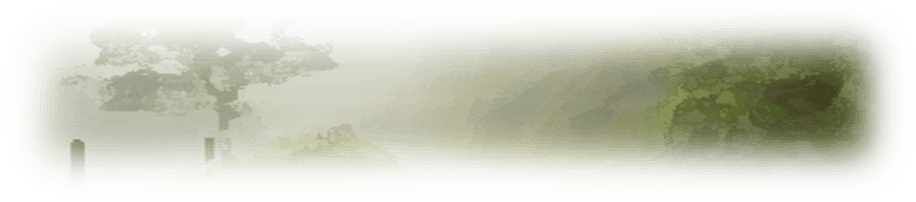
it’s cloudy and damp in the Central Range of the Colombian Andes,
an eerily beautiful morning in a city in the sky. 

Fluvial clouds cover mountains and hide glaciers
in fleecy mist blankets, as though it were too early to rise,
the sun apparently still resting. 

Oddly reminiscent of the patterns on screens
of early televisions
preceding the day’s programming.
_______

© Guillermo Calvo Mahé; Manizales, 2023; all rights reserved.  Please feel free to share with appropriate attribution.

Guillermo (“Bill”) Calvo Mahé (a sometime poet) is a writer, political commentator and academic currently residing in the Republic of Colombia (although he has primarily lived in the United States of America of which he is also a citizen).  Until 2017 he chaired the political science, government and international relations programs at the Universidad Autónoma de Manizales.  He is currently the publisher of the Inannite Review, available at https://guillermocalvomah.substack.com/.  He has academic degrees in political science (the Citadel), law (St. John’s University), international legal studies (New York University) and translation and linguistic studies (the University of Florida’s Center for Latin American Studies).  However, he is also fascinated by mythology, religion, physics, astronomy and mathematics, especially with matters related to quanta and cosmogony.  He can be contacted at guillermo.calvo.mahe@gmail.com and much of his writing is available through his blog at https://guillermocalvo.com/.

Introspection: a senryū of sorts in e minor flat

Fidelity was not his strong point, … well, … in affairs of the heart.
Aesthetics mattered too much, although it was far from the only consideration.

But temerity usually kept him faithful, at least for a while.


© Guillermo Calvo Mahé; Manizales, 2023; all rights reserved. Please feel free to share with appropriate attribution.

Guillermo (“Bill”) Calvo Mahé (a sometime poet) is a writer, political commentator and academic currently residing in the Republic of Colombia (although he has primarily lived in the United States of America of which he is also a citizen). Until 2017 he chaired the political science, government and international relations programs at the Universidad Autónoma de Manizales. He is currently the publisher of the Inannite Review, available at https://guillermocalvomah.substack.com/. He has academic degrees in political science (the Citadel), law (St. John’s University), international legal studies (New York University) and translation and linguistic studies (the University of Florida’s Center for Latin American Studies). However, he is also fascinated by mythology, religion, physics, astronomy and mathematics, especially with matters related to quanta and cosmogony. He can be contacted at guillermo.calvo.mahe@gmail.com and much of his writing is available through his blog at https://guillermocalvo.com/.

If I Only Could, I Surely Would … or Would I?

After a bit over three quarters of a century, the “sounds of silence” have acquired a new meaning, one no longer political.  They now represent the realization, one often addressed by many of all ages, regarding the importance of appreciating the value of solitude and self-reliance.  Not because others have let us down, that would be merely reactive, or because our health is failing and mortality seems near (it’s not, or doesn’t seem to be), but just because, after so many experiences, good as well as bad, we may finally realize to whom we owe ultimate loyalty, perhaps even love, although love seems to become more nebulous as I age, something I know is different with many, perhaps most others. 

In my case, I’ve come to realize that “hello darkness my old friend” is not a rhetorical use of an oxymoron, but a realization that the person I am, the person I’ve been, really is an old friend, one who will not abandon me regardless of how often I criticize myself, and how frequently I’ve regretted paths not trod as well as turns I’ve taken.

The friend in the mirror does not look as he once did, but subtly diminishing eyesight makes the site at least tolerable, as does the care I’ve taken of the body we share, at least usually.  Our conversations are more wide ranging as well as more profound, and rather than seeking answers, we now more frequently enjoy the expanding range of fascinating questions which experience permits us to explore, the new dimensions of our perceptions, jokes now finally fully understood.  Old books reread with new meanings found.  Poetry, finally making more sense, at least sometimes.

The world, as it seemingly aways has, seems bound for hell in a handbasket, and I keep trying to make a dent, however small, in efforts to salvage it.  Although now, I’m not as sure as I once was, why.  I really think I understand Cassandra’s primordial frustrations, perhaps those of the primordially long chain of parents as well, and, of course, to some extent at least, my own. 

From the shadows I think I hear Ebenezer Scrooge whispering “bah humbug”, even when Christmas is long past and not yet near.  And I smile, perhaps even chuckle.  Perhaps he had a point.  Perhaps he was right and the three angels sent to devil him were wrong.  Or, perhaps not.

Cycles seem concerning.  How does one break free?  Do I really want to?  Or would it be awesome to be able to start anew, this life’s lessons not just learned but remembered too.

“The sounds of silence, I’ve loved that song, the words, the tune.  Meanings I once thought I’d grasped.  And I wonder, … how would I write that song today, … if I only could.
_______

© Guillermo Calvo Mahé; Manizales, 2023; all rights reserved.  Please feel free to share with appropriate attribution.

Guillermo (“Bill”) Calvo Mahé (a sometime poet) is a writer, political commentator and academic currently residing in the Republic of Colombia (although he has primarily lived in the United States of America of which he is also a citizen).  Until 2017 he chaired the political science, government and international relations programs at the Universidad Autónoma de Manizales.  He has academic degrees in political science (the Citadel), law (St. John’s University), international legal studies (New York University) and translation and linguistic studies (the University of Florida’s Center for Latin American Studies).  However, he is also fascinated by mythology, religion, physics, astronomy and mathematics, especially with matters related to quanta and cosmogony.  He can be contacted at guillermo.calvo.mahe@gmail.com and much of his writing is available through his blog at https://guillermocalvo.com/.

Vague Memories

The space on the page is still warm, although perhaps now only tepid.

It had, once upon a winter’s day, been occupied.  Occupied by a very special calid phrase, one subsequently erased, but the message’s essence remained, remained aware, somewhere in time, if no longer in space.  Indelible, ineradicable, ineffaceable. 

Destiny is not, by its nature, kind.  But perhaps it knows best.

Still, echoes of misplaced emotions resonate and ephemeral rainbows endure, albeit hidden amidst profoundly deep, dark shadows.  And anyway, notwithstanding the past or the present or the future, somewhere, some-when, hummingbirds play with dragonflies while flowers and willow o’ the wisps in season sing of might have beens.

Vague memories strayed far from home.
_______

© Guillermo Calvo Mahé; Manizales, 2023; all rights reserved.  Please feel free to share with appropriate attribution.

Guillermo (“Bill”) Calvo Mahé (a sometime poet) is a writer, political commentator and academic currently residing in the Republic of Colombia (although he has primarily lived in the United States of America of which he is also a citizen).  Until 2017 he chaired the political science, government and international relations programs at the Universidad Autónoma de Manizales.  He has academic degrees in political science (the Citadel), law (St. John’s University), international legal studies (New York University) and translation and linguistic studies (the University of Florida’s Center for Latin American Studies).  However, he is also fascinated by mythology, religion, physics, astronomy and mathematics, especially with matters related to quanta and cosmogony.  He can be contacted at guillermo.calvo.mahe@gmail.com and much of his writing is available through his blog at https://guillermocalvo.com/.

Tempus Fugit

Tempus fugit” is usually translated into English as “time flies” but that’s not quite right, it’s not accurate.  The correct translation is “time flees”, it escapes.  And that is very different.  It focuses not on the speed with which time disappears, but rather, implies that it is escaping from something it fears or dreads, hopefully towards a refuge, albeit one it may not reach or attain. 

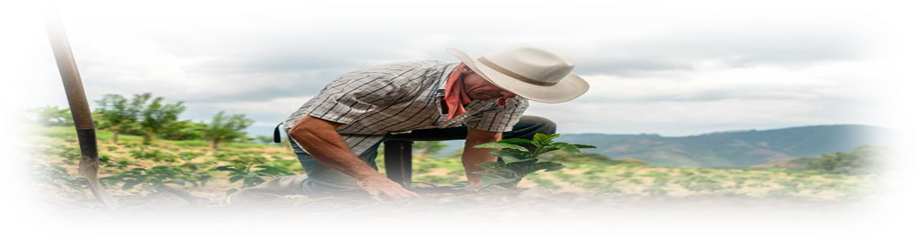
A bit of context.  The expression originated with the Latin poet Virgil, he who wrote Rome’s epic, the Aeneid, but also The Georgics, a long poem divided into four books, in which a version of the expression is first found (Book 3, line 284): “fugit inreparabile tempus”, i.e., irretrievable, time escapes.  The subject of The Georgics is agriculture, but not in a placid rural setting, rather, in large part, it focuses on the importance of human labor and puts me in mind of the noble, Colombian campesinos, in essence, a complex expression relating to those who till the fields, whether as small land owning farmers or their employees, but who, unlike serfs or peasants, are imbued with a bit of what a Roman might have described as dignitas, more than mere dignity, more nobly earned.

The poem is both long and complex, and practical.  It deals in detail with matters that are necessary and practical in an agricultural setting, but in the context of the complex realities of the Roman Civil War following the assassination of Gaius Iulius Caesar and the ascension of his grandnephew and heir, Octavian.  In that regard, for some reason, it puts me in mind of Peter Sellers’ cinematic masterpiece, “Being There”, one of my favorite films, and of the nobility of its protagonist, Chauncey, an orphan employed by a wealthy family as their gardener, a man who grows up without any education other than that which he garners by watching television and through working in his employer’s garden.  Once his employer passes away, Chauncey is set adrift in the world with no possessions other than the clothing his employer bequeathed him, and the observations concerning gardening, which he shares with those he meets.  They assume that such observations are metaphors, profound wisdom shared by Chauncey which applies to their own complex problems, and Chauncey is hailed by the most important and powerful as a genius, albeit a very humble genius.  In reality, Chauncey is the essence of innocence possessed of a beautiful naivety which does not know that there exist impossibilities.

Perhaps time flees towards a world in which Chauncey is not the exception but the norm; one in which Yeshua the Nazarene might find comfort, as might we.  Perhaps traces of that concept can be found in the lives and lore of Colombia’s noble campesinos, from whom we Colombians and others can learn so much.

Tempus Fugit”. Perhaps an expression much more meaningful than we understand.
_______

© Guillermo Calvo Mahé; Manizales, 2023; all rights reserved.  Please feel free to share with appropriate attribution.

Guillermo (“Bill”) Calvo Mahé (a sometime poet) is a writer, political commentator and academic currently residing in the Republic of Colombia (although he has primarily lived in the United States of America of which he is also a citizen).  Until 2017 he chaired the political science, government and international relations programs at the Universidad Autónoma de Manizales.  He has academic degrees in political science (the Citadel), law (St. John’s University), international legal studies (New York University) and translation and linguistic studies (the University of Florida’s Center for Latin American Studies).  However, he is also fascinated by mythology, religion, physics, astronomy and mathematics, especially with matters related to quanta and cosmogony.  He can be contacted at guillermo.calvo.mahe@gmail.com and much of his writing is available through his blog at https://guillermocalvo.com/.
Primordial

Lighting swirls amidst deep, dark shadows, thunder echoing off of silent cliffs somewhere in what will someday be called Cambria. 

Hints of far off cataclysms, dankly diluvial, sail on primordial winds as dusk’s crimson fingers claw at night’s sapphire, diamond flecked cloak.

Albian haze swiftly quickens into mist, threatening to cleave into drops, larger and larger drops, possibly armies of rushing drops, drops plummeting like raiders plundering unsuspecting shores of a world still virginally young, a world yet to yield to the tiny warm blooded invaders who’ll someday evolve into hominids. 

But not just yet. 

Soon though.

Much, much too soon.
_______

© Guillermo Calvo Mahé; Manizales, 2023; all rights reserved.  Please feel free to share with appropriate attribution.

Guillermo (“Bill”) Calvo Mahé (a sometime poet) is a writer, political commentator and academic currently residing in the Republic of Colombia (although he has primarily lived in the United States of America of which he is also a citizen).  Until 2017 he chaired the political science, government and international relations programs at the Universidad Autónoma de Manizales.  He has academic degrees in political science (the Citadel), law (St. John’s University), international legal studies (New York University) and translation and linguistic studies (the University of Florida’s Center for Latin American Studies).  However, he is also fascinated by mythology, religion, physics, astronomy and mathematics, especially with matters related to quanta and cosmogony.  He can be contacted at guillermo.calvo.mahe@gmail.com and much of his writing is available through his blog at https://guillermocalvo.com/.

Poetry

Poetry is hard to define. 

Sometimes, it’s best defined by denying those aspects that most associate with a poem.  Rhyme, meter, strict structure, even alliteration and consonance.  Then again, perhaps the definition of poetry, of what constitutes a poem, is very personal.

To me, the essence of a poem is the creation and sharing of a wave-like sensation that carries both the writer and the reader along an emotive trail, sometimes brief, sometimes expansive, as though one were surfing but on a gently melodious wave floating over a series of profound abysses into which one might chose to wander, lost but questing.  Beauty or horror may be present, but perhaps they can be melded subliminally into something incomprehensibly sublime, perceptible only in a silent and indiscernible language, one only the soul can fully understand.

Then again, there’s rhyme and meter, strict structure, even alliteration and consonance; there’s metaphor and simile; allusion and illusion.  Shades and shadows and echoes and rainbows, hummingbirds and dragonflies and sometimes just dragons, … or maybe frogs.
_______

© Guillermo Calvo Mahé; Manizales, 2023; all rights reserved.  Please feel free to share with appropriate attribution.

Guillermo (“Bill”) Calvo Mahé (a sometime poet) is a writer, political commentator and academic currently residing in the Republic of Colombia (although he has primarily lived in the United States of America of which he is also a citizen).  Until 2017 he chaired the political science, government and international relations programs at the Universidad Autónoma de Manizales.  He has academic degrees in political science (the Citadel), law (St. John’s University), international legal studies (New York University) and translation and linguistic studies (the University of Florida’s Center for Latin American Studies).  He can be contacted at guillermo.calvo.mahe@gmail.com and much of his writing is available through his blog at https://guillermocalvo.com/.

The Children of Lilith

At first, “the” Garden was vast, infinite, eternal, encompassing all that was.  Of course, since then, infinity and eternity have both significantly expanded, but remember, just before the purported Big Bang, the universe, perhaps even the multiverse, all right, maybe even the omniverse were a singularity no larger than an atom.

Anyway, after the unpleasantness with Adam and the Creator, Lilith wandered through the Garden for time without end, or, almost without end, somehow evading them, unseen by them.  That sort of raises questions about the Creator’s ubiquity, omnipotence and omniscience, the answers to which do not please him at all.  But the facts are the facts, at least usually.  Quantum theory may dispute that conclusion.  It’s hard to be omniscient and omnipotent in a quantum world.  Ubiquity?  Well that may be another matter as perhaps “everything” is, in fact, ubiquitous.

Notwithstanding her ability to evade the Creator, somehow the Garden continued to provide her with everything she required.  It was still beautiful, but she detested the presence of the man, her brother and former spouse, and at first, she also detested his meek new wife.  Of the Creator she saw and heard nothing and experienced only his reflected glory, as though he had (hopefully) forgotten her.  At least that had been her aspiration, … and her plan.

Without interaction with the Creator or with those two other beings somewhat similar to her, Lilith grew bored, very bored, and sought without success to relieve that boredom.  In her boredom she became more like the trees in the Garden than like the animals.  She became quiet and still and solitary.  And she created a world inside of her mind where she preferred to dwell, … (like the Creator had already done, perhaps several times).  Today, we might have called them both autistic.

But finally, on a day more memorable than most, the Garden just disappeared from around her. 

The changes were subtle and drastic at the same time.  Most notably, the communion between living things was severed and each became sundered from all others.  And the animals no longer understood her and the trees seemed less willing to share their fruits with her.  And the insects attempted to feed on her whenever they could.  And the weather changed, alternating between wet and dry, hot and cold, sometimes violently.  And she wondered what disaster the stupid man and his timid consort had raught.  But she did not regret whatever they’d done as she sensed that it had loosened the bonds that had imprisoned her for so long.

While for some that was a day of utter and complete, inconsolable sorrow (e.g., for her ex-mate and his new consort), for her it was the day of liberation.  After that, perhaps quite a while after that, or perhaps not, time was young then and inconsistent, harder to measure, she came to know creatures of a sort who had once been some of the Creator’s angels, beings who shared her distaste for the man, former angels whom the Creator had exiled during one of his temper tantrums, and she also met a formerly eloquent serpent who had been the other woman’s pet but was now cast away.  And she spent a very long time with those former angels.  And the serpent became her friend.  Eventually, the chief among those former angels became her lover, for a time, and a friend forever.  In due time, as tends to happen when friends also become lovers, even if briefly, she became a mother; a mother to twins, a boy and a girl whom she named Enlil and Nammu.

And Enlil and Nammu grew up among those exiled angels and being unique, and incest not yet being frowned upon (how could it be despised with everyone, at that time, being closely related), they became lovers and had children of their own.  And those children also propagated until, in time, they formed a clan, then a tribe and then a nation.

And the exiled angels also found lovers among the children of the man, Lilith’s brother and ex-spouse, and of his timid new spouse, and those women also bore children, children who were only partially human.  And those children called themselves the Nephilim.  And Lilith, whom the Nephilim called Ninhursag, was considered by them to be their queen and their goddess. 

Because of her unpleasant experience with Adam, Lilith did not accept any man as her spouse, as a being for whom she would forsake all others, but she did form close bonds and relationships.  Polyamory was inherent in her as she had a great deal of love she was willing to share.  One of her special friends, a friend with “privileges” but definitely not rights, was called An by the Nephilim, and he became their king and their god, the god also of those former angels who’d been cast out of heaven.  An was rarely present in the places Lilith chose as hers, as his business seemed to keep him occupied elsewhere, which suited Lilith, as she had never been taken with the concept of subservient domesticity. 

The Nephilim became famous among men (at least for a time) because, although they could be killed, they were not normally mortal, and they eventually became thought of as gods by many clans and tribes and nations.  But after a time, most disappeared from the world we know, and no one knows whether or not they still live, and if so, if they will ever return, but some people believe that some of the Nephilm have stayed among us, hidden, and may even discreetly intervene in human affairs from time to time.

Lilith has long remained very private so that not even her children are sure where she might be, or even, if she has evolved in a manner that none but she can understand, or whether she ever reconciled with the Creator (unlikely), or perhaps, whether she outgrew him, … and perhaps us as well.

But some of us still recall her, despite the efforts of those who follow the Creator to erase her from their history, or failing that, through calumny, to make her hated and despised, cast as a source of evil and monstrosities.  And as women have become more and more enlightened, it’s as though her spirit somehow acts as a catalyst for equity and empathy.  Something which irks the Creator who continuously seems to mumble, … “will no one rid me of that horrid creature”.  But if he couldn’t accomplish that deed, it is unlikely anyone else can do it for him.

At least not until time ends and space vanishes and the Creator himself is long, long gone, and Lilith, perhaps bored once more, decides that it is once again, time to move on.
_______

© Guillermo Calvo Mahé; Manizales, 2017; revised, 2023, all rights reserved.  Please feel free to share with appropriate attribution.

Guillermo (“Bill”) Calvo Mahé (a sometime poet) is a writer, political commentator and academic currently residing in the Republic of Colombia (although he has primarily lived in the United States of America of which he is also a citizen).  Until 2017 he chaired the political science, government and international relations programs at the Universidad Autónoma de Manizales.  He has academic degrees in political science (the Citadel), law (St. John’s University), international legal studies (New York University) and translation and linguistic studies (the University of Florida’s Center for Latin American Studies).  He can be contacted at guillermo.calvo.mahe@gmail.com and much of his writing is available through his blog at https://guillermocalvo.com/.

Kalliope, a Muse then in Training

He’d met her in the apartment building where their families lived at the time, on Northern Boulevard adjacent to Flushing High School and down the block from a Horn & Hardart.  They’d bonded quickly.  Although she was one year younger than he was, she was vastly more experienced in things intimate and would explain, in intricate detail, what they were proscribed from doing, after which, they’d of course try it.  Her breasts were beautiful, large for a fifteen-year-old, with pretty, very sensitive nipples, but she was otherwise slender, at least then.  Her hair was auburn, and worn a bit shorter than he liked, and her eyes a piercing blue.

He’d seen her, walking with her mother in Manhattan, years later and she’d filled out quite bit.  But back then, in that magical summer and autumn of 1961, she was perfect and he’d immediately succumbed to a sixteen-year old’s addiction for his first love. 

He recalled a day at the beach, perhaps Rockaway but it could have been Jones, and listening to the Beach Boys “Surfing Safari” and to the Drifters singing “Under the Boardwalk”, and to the Four Seasons.  The Beatles had yet to arrive and turn the musical world upside down.

He couldn’t get enough of her back then and when they parted at the end of each day, one or the other would immediately call.  They’d spend what seemed like hours listening to the other’s breath over the phone, having already said everything they could think of, especially how much they loved each other.  He attended a boarding school to which he returned at the end of the summer but she visited him there several times and they talked on the phone every evening.  They made plans for a future together.  He’d attend Columbia University and study international relations, hoping for a diplomatic career, she’d be with him.

It was an ambivalent paradise of joy and pain, at least until it ended about eight months later.  Then only pain, intense and bitter remained.  A future very different than the one they’d briefly planned, although very full as well, at least for him.  He never knew what became of her although it may be that she eventually settled in California.

But perhaps, in a sense, their relationship never really ended, at least from his perspective, after all, he’s writing this reflection.  He doesn’t think of her often anymore.  Sometimes decades go by but then, of a sudden, while reading a book perhaps, or hearing a song, echoes come roaring back.  Bittersweet echoes faded a bit more each time.  Echoes tinted with scents.  Her scent, or perhaps the scent of an ocean, or a park.  Or of her parents’ apartment.  He wonders what she looks like now, where she is, what she’s doing, and whether her life has been happy and fulfilled.  He hopes that it has.  He remembers her parents too, very fondly.  He recalls the time they plied him with Ouzo to see what he’d be like when inebriated.  To be sure he’d not be an abusive husband.  They were, after all, of Hellenic descent.

He’s had many other relationships since those halcyon days.  Way too many in his own opinion.  Many were meaningful with wonderful women.  Endings were usually sad.  But perhaps no other relationship was as intense, for which, in hindsight, he’s now grateful. 

He’s never again experienced that bliss, nor has he experience that pain. A fair exchange, all things considered.
_______

© Guillermo Calvo Mahé; Manizales, 2022; all rights reserved.  Please feel free to share with appropriate attribution.

Guillermo (“Bill”) Calvo Mahé (a sometime poet) is a writer, political commentator and academic currently residing in the Republic of Colombia (although he has primarily lived in the United States of America of which he is also a citizen).  Until 2017 he chaired the political science, government and international relations programs at the Universidad Autónoma de Manizales.  He has academic degrees in political science (the Citadel), law (St. John’s University), international legal studies (New York University) and translation and linguistic studies (the University of Florida’s Center for Latin American Studies).  He can be contacted at guillermo.calvo.mahe@gmail.com and much of his writing is available through his blog at https://guillermocalvo.com/.

Memories:

He’d liked his brandy sweetened.  He’d loved apricot brandy when it was “apricot brandy” and not just apricot flavored, and he liked it strong, at least eighty proof.  And he’d liked regular brandy too, sweetened with Grand Marnier.  And Armagnac, Clés de Ducs if possible; but he’d preferred Spanish to French brandies, especially Cardenal Mendoza, or in a pinch, Gran Duque de Alba.  But he hadn’t like it alone, after supper over coffee, he’d liked it with a bit of cheese, sharp cheddar if possible, and with an apple sliced with a paring knife, and with hot tomato soup.  And he’d liked it best listening to symphonic music, especially Beethoven or Bach, while he was reading, especially Tolkien, or researching religious mythology.  Especially with a roiling fire burning in a large hearth. 

Especially in a Normal-style castle, set on the highest point on a long island, set between a river and a small harbor, in a town named after cold springs.  In a castle with a gym and a football field and a baseball field, and with students and faculty members, and maintenance personnel, and a nurse, and retired military personnel who’d had adventures they enjoyed sharing.  A castle full of memories where new ones were made daily, at least for a while.

One would think those aspirations were unrealistic, unless one had lived them.  And relived them, over and over again, long after the castle was just a shared memory.
_______

© Guillermo Calvo Mahé; Manizales, 2022; all rights reserved.  Please feel free to share with appropriate attribution.

Guillermo (“Bill”) Calvo Mahé (a sometime poet) is a writer, political commentator and academic currently residing in the Republic of Colombia (although he has primarily lived in the United States of America of which he is also a citizen).  Until 2017 he chaired the political science, government and international relations programs at the Universidad Autónoma de Manizales.  He has academic degrees in political science (the Citadel), law (St. John’s University), international legal studies (New York University) and translation and linguistic studies (the University of Florida’s Center for Latin American Studies).  He can be contacted at guillermo.calvo.mahe@gmail.com and much of his writing is available through his blog at https://guillermocalvo.com/.