Remembering Father Nicholas Trivelas on the Fourteenth Anniversary of His Passing

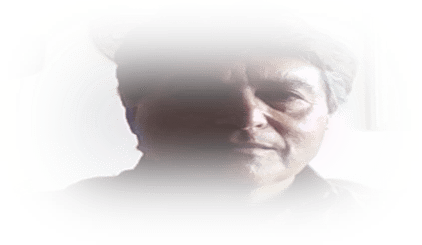
Today, September 30, 2022, is the anniversary of the passing of Father Nicholas Trivelas, formerly pastor at Charleston’s Greek Orthodox Church of the Holy Trinity while I was a student at the Citadel many, many decades ago.  Reflections on his passing brought to mind two other Greek Orthodox priests who were a comfort to me during trying times, Father Nicholas Nick of Fort Lauderdale’s St. Demetrius Greek Orthodox Cathedral and my family’s Greek Orthodox pastor in Queens, New York, when I “wore a much younger man’s clothes”.  The latter’s surname was, I think, Volides.  Because they can marry and father children, Greek Orthodox clerics tend to be more empathic than celibate clerics, and warmer, in a safe manner. 

I confess that I am not a “believer” and it may be that I was not then.  I’m at best an agnostic and a seeker, but I profoundly respect the faith of others.  Indeed, I have studied most major religions and as a young academic, taught a course on mythologies and comparative religions, something that has remained a life-long interest.  I was baptized Greek Orthodox at the age of ten at the insistence of my step father, Leonidas Theodore Kokkins, born in Flushing, New York where he is interred, but I had already been baptized as a Catholic and, as a member of a church associated with the Theosophical Society.  It’s not really as confusing as it sounds.  My maternal family were theosophists and thus generally accepting of all religions.  But the three priests I referenced above were special people in my life and in the lives of others, too many to count. 

The Citadel, the Military College of South Carolina, of which I am a proud graduate, was and is a very special place.  Although it is in continuous evolution, something with which many of its graduates do not agree (being deeply traditionalist), its values seem constant.  The Citadel involves a profoundly demanding, integral experience combing academics, athletics, military training, civic involvement and ethics, one that took everything we could give and then some to complete (indeed, many decent, intelligent and competent people do not succeed there and move on to other endevors elsewhere, with the Citadel’s blessing and best wishes). 

Father Trivelas helped me make it through the Citadel’s rigors and supplemented its values, as did the wonderful Greek community of Charleston, special among them three families, the Misoyianis family, the Kirlis family, and especially the Lempesis family.  It’s hard to think of one without the others, and each always inspires feelings of profound love and gratitude.

As tends to happen in this mobile and dynamic world, one where values seem much less relevant than they once were, the memories and reflections to which I allude are bitter sweet: sad because of the loss of contact but beautiful because of the shared experiences involved and because of the role played by those to whom I’ve referred in whatever positive attributes I’ve attained.  These are memories in which my mother echoes, Powerfully, as do so many others:  my classmates, both at the Citadel and at the Eastern Military Academy (once prominent in Cold Spring Hills, New York, but now long gone), and memories inspired by the student’s I’ve been privileged to teach and the colleagues from whom I’ve also learned a great deal. 

Memories of Father Trivelas trigger them all.  If he was right and there’s a Heaven, he is there, prominently.
_______

© Guillermo Calvo Mahé; Manizales, 2022; all rights reserved.  Please feel free to share with appropriate attribution.

Guillermo (“Bill”) Calvo Mahé (a sometime poet) is a writer, political commentator and academic currently residing in the Republic of Colombia (although he has primarily lived in the United States of America of which he is also a citizen).  Until 2017 he chaired the political science, government and international relations programs at the Universidad Autónoma de Manizales.  He has academic degrees in political science (the Citadel), law (St. John’s University), international legal studies (New York University) and translation and linguistic studies (the University of Florida’s Center for Latin American Studies).  He can be contacted at guillermo.calvo.mahe@gmail.com and much of his writing is available through his blog at https://guillermocalvo.com/.

A Measure of Sad Times

He is very sensitive to all kinds of external stimuli, which he internalizes and, after profound reflection, synthesizes and sometimes grasps an idle lie.  And he loves music, he considers it the primordial language, the most effective language, one speaking directly to the soul.  But for some reason, of late, he has not wanted to heed it.  An affirmative wanting not to listen to it.  And he is perplexed, he doesn’t understand the why of it.  But, then again, there are so many things he just can’t comprehend.

Perhaps it has something to do with the state of the world.  With the current dearth of truth and omnipresence of vitriol and violence. 

Music, without words, he has long believed, rarely lies, except perhaps for martial music.  In that case, it’s as though music was forced to perform, like a beautiful woman being ravished.  Beauty turned inside out and violated.  National anthems tend to follow that pattern, at least frequently.  Unfortunately, he’s come to feel that, like a virus, that pattern seems to be spreading.  Marketing “jingles” of course almost always lie, as do their political variants.  And they’ve overtaken beautiful instrumentals, symphonies and boleros and gipsy inspired variants of flamencos.

Words can apparently pervert anything, and he wonders at the folk wisdom that claims speech evolved to facilitate deception, and thus, of course, the legal profession, and journalism, and politics. But then, what of poetry?

It has dawned on him that truth is not always beautiful and that beauty is all too frequently dishonest.  Even, he guesses, where music is involved.  Perhaps it’s that epiphany that has him down.  Perhaps it is reflections such as these that are muddling and blocking his instinctive love, indeed his need, for music. 

A measure of sad times. 

Perhaps that’s what Don McLean once sensed when he wrote his epic and second best song (Vincent was the very best), without realizing it.

“A long, long time, ago, I can still remember how the music used to make me smile ….”
_______

© Guillermo Calvo Mahé; Manizales, 2022; all rights reserved.  Please feel free to share with appropriate attribution.

Guillermo (“Bill”) Calvo Mahé (a sometime poet) is a writer, political commentator and academic currently residing in the Republic of Colombia (although he has primarily lived in the United States of America of which he is also a citizen).  Until 2017 he chaired the political science, government and international relations programs at the Universidad Autónoma de Manizales.  He has academic degrees in political science (the Citadel), law (St. John’s University), international legal studies (New York University) and translation and linguistic studies (the University of Florida’s Center for Latin American Studies).  He can be contacted at guillermo.calvo.mahe@gmail.com and much of his writing is available through his blog at https://guillermocalvo.com/.

Reflections on the Nature of Divinity, and on its Delusions

Why do I feel compelled to take up the defense of those society considers the worst of the worst when, once upon a long time ago, as an attorney, I refused to either defend or prosecute, preferring to walk away from the legal profession, having sensed that it was soiled?

I don’t mean just ordinary villains, but legendarily evil forces like Lucifer and Cain?  Why do I sense that both history and myth have misjudged them and that it is my role to make their cases, at least through my writings?  Why do I sense that the entity so many of us humans worship is the real villain and that my role is to defend them and expose him, not only to my fellow beings but to the purported Divinity as well?   The Divinity I promised to seek so very long ago, and to honor whether I found him or not? 

With all due respect to current and ancient matriarchic and feminist concepts, the Divinity to which I allude definitely seems masculine, although perhaps not uniquely divine.

The evidence seems clear.  Being prescient, omniscient and omnipotent the mythical Abrahamic Divinity would also have to be guilty of every wrong ever committed, at least derivatively, and even more, the ultimate entrapper.  Lucifer’s sin was to love too much in the face of disdain, and, innocent Cain had no way to know that his actions would have terminal consequences.  Death was virginal then.  So how to convince the Divinity of his guilt, and that the only way to assuage such guilt is to admit the truth (there go the Bible and the Torah and the Koran), to seek the forgiveness of his victims and to make restitution.  In essence, to keep the promises originally made to Adam and Eve, and perhaps even more so, the promises to Lilith of which we’ve not been made privy. 

Why does this seem so clear to me but anathema to most?

Just what happened along the way that turned me into a contrarian?  Was it possibly Divinity itself who, in placing negative as well as positive aspects of destiny in my path, maneuvered me into this role?  Perhaps as a means of permitting itself to face its own guilt, and perhaps helping it assuage it an eventually heal?  Is that what the novel I started a decades ago is about and perhaps why, to make me understand complexities, it then placed Inanna’s avatars so precariously in my life?

Are good and evil inverted reflections in a chaotic sea, shifting with the setting sun and rising moon?

How can I ever know unless I accept the challenge and either succeed or fail?

So many questions.  And proof may be all around me, all around all of us; the world as it is seems so incoherent that it may well be proof that divinity and infernity are not what we’ve been led to believe.  Perhaps my contrarian intuition is the ultimate tool in my quiver, the one that long, long ago, at age seven, first led me to question the nature of the divine, and reject our age old conclusions.

Who’d have thought that after rejecting the legal profession as immoral I’d accept the ultimate contingency case?  Apparently someone or something did, which is why I am what I am and how I am, the essence of the inchoate but the inchoate always remains to be seen.

Infernal reflections?

Perhaps.
_______

© Guillermo Calvo Mahé; Manizales, 2022; all rights reserved.  Please feel free to share with appropriate attribution.

Guillermo (“Bill”) Calvo Mahé (a sometime poet) is a writer, political commentator and academic currently residing in the Republic of Colombia (although he has primarily lived in the United States of America of which he is also a citizen).  Until 2017 he chaired the political science, government and international relations programs at the Universidad Autónoma de Manizales.  He has academic degrees in political science (the Citadel), law (St. John’s University), international legal studies (New York University) and translation and linguistic studies (the University of Florida’s Center for Latin American Studies).  He can be contacted at guillermo.calvo.mahe@gmail.com and much of his writing is available through his blog at https://guillermocalvo.com/.

The Last Guardian: A Divine nightmare

A mote in black on black.  An echo of a shadow of what once might have been once upon a time. 

He was the only thing that remained of the once infinitely expansive multiverse, everything else had withered and disappeared so many eternities ago, that an eternity was infinitely less than a grain of sand in everything that had ever been.  He’d volunteered to stay behind when both he and the multiverse were relatively young, knowing just how lonely he’d eventually be when everything, even time, was so long gone that it was impossible to recall that it had ever been.  But it had, and he remained.  And he recalled, there was nothing else.  The multiverse reduced to his own body or his body expanded to encompass the multiverse, it made no difference.  There was utterly and absolutely nothing else.  The body he’d worn so long ago somehow perfectly preserved and, despite the absence of air or water or sustenance or space, still fully, well, sort of fully, functional.  Despairingly so as it had no functions at all.  A relic.  A memorial of sorts.

His last breath had been an infinity of eons ago, the last trace of long forgotten gasses inhaled, and then, absolutely nothing.  No time, no space.  Just him.  Existing, and watching, although for what he’d no idea.  There was nothing else to see.  He was self-contained.  Only that which he was and would always be but had not always been, now and for very, very long, always conscious.  Eternities’ chosen scapegoat paying for long forgotten sins of long forgotten others.

There was no future, only a long distant past.  And a present out of time.  And the promise he’d made to stay behind so that everything else could end.  He recalled that on the day he’d turned seventy-six, he’d wondered for the first but not the last time, if divinity had once played the role he was now charged with assuming, the sole role at the end of time and space.  If so, that would explain a great deal, perhaps everything.  How could anything remain sane in any sense at all after being so utterly alone, and yet, knowing what awaited, he’d confirmed his commitment, which implied something about his sanity as well.

While still enjoying a normal life span, he’d watched as his contemporaries aged and passed on, and then his descendants.  He’d been there, albeit an oddity, a freak, as species, including humans, evolved and changed, and planets evolved and died, and as different species conquered space and even time, and then they too moved on, but he was cursed with anachronistic eternity, a never ending relic.  And on the last instant of time, everything was gone, everything but him.

The other side of panentheism.  The last guardian, long after the end of time and space.
_______

© Guillermo Calvo Mahé; Manizales, 2022; all rights reserved.  Please feel free to share with appropriate attribution.

Guillermo (“Bill”) Calvo Mahé (a sometime poet) is a writer, political commentator and academic currently residing in the Republic of Colombia (although he has primarily lived in the United States of America of which he is also a citizen).  Until 2017 he chaired the political science, government and international relations programs at the Universidad Autónoma de Manizales.  He has academic degrees in political science (the Citadel), law (St. John’s University), international legal studies (New York University) and translation and linguistic studies (the University of Florida’s Center for Latin American Studies).  He can be contacted at guillermo.calvo.mahe@gmail.com and much of his writing is available through his blog at https://guillermocalvo.com/.

An Ode to Old Shoes

I have a pair of very old shoes, now in pretty bad shape.  

When they were young and just out of the box they were striking, top of the line, perhaps dreaming of a life on board a yacht, or at least on some sort of vessel, sailing through exotic seas.  Perhaps the sea near their birth in the Charleston that I love so much.  Then, as the years rolled by, far from any ocean, they instead started archiving memories for me.  Memories of the family I once had and of the aspirations I had for us all; memories of the aspirations I had for our country, of the ones I had for our world.   Of the ones I had for me.

The years have passed and many people, many places, many things I’ve loved are gone.  Misplaced in some cases, perhaps wondering where I’ve vanished, beyond the veil in others.  I now live on another continent, the one that saw my birth, in a beautiful city near the sky where snowcapped peaks greet me on sunny mornings, high in the central range of the Colombian Andes.  A cycle seemingly renewed but now, again, seemingly awaiting a rebirth.  But there are so many people and places I miss, parts of my heart and soul sprinkled far away in time and space.  People and things gone long before their times.   But, … is there ever a right time for things we love to leave us, … or we them?

Those shoes are old and broken down now, but I still wear them, if only in lieu of slippers at home.  My sons are grown and drifted away.  The family in which I placed so much hope has turned to mist.  Almost as if it had all merely been a midsummer night’s dream.  My aspirations are much less than merely unfulfilled, apparently further from fruition than ever.  But still, they seem to be echoing in those old shoes that are beautiful to me still. 

Misplaced is very different than lost and hope still lingers there.  Hidden amidst bruised and battered old leather with wrinkles in the shape of the myriad memories and transitions they reflect.
_______

© Guillermo Calvo Mahé; Manizales, 2022; all rights reserved.  Please feel free to share with appropriate attribution.

Guillermo (“Bill”) Calvo Mahé (a sometime poet) is a writer, political commentator and academic currently residing in the Republic of Colombia (although he has primarily lived in the United States of America of which he is also a citizen).  Until 2017 he chaired the political science, government and international relations programs at the Universidad Autónoma de Manizales.  He has academic degrees in political science (the Citadel), law (St. John’s University), international legal studies (New York University) and translation and linguistic studies (the University of Florida’s Center for Latin American Studies).  He can be contacted at guillermo.calvo.mahe@gmail.com and much of his writing is available through his blog at http://www.guillermocalvo.com.

Unrequiteable

The unique resonance one soul feels for another now tinged with pain. 

A strange blend. 

Not altogether unpleasant. 

Perhaps like shadows and light or sweet and sour, or the odor of perspiration during intimacy, but distant, unattainable, as though alpha was enamored of omega, infinitely apart yet only a shadow away. 

A romance that never really started but whose echoes can never end.
_______

© Guillermo Calvo Mahé; Manizales, 2022; all rights reserved.  Please feel free to share with appropriate attribution.

Guillermo (“Bill”) Calvo Mahé (a sometime poet) is a writer, political commentator and academic currently residing in the Republic of Colombia (although he has primarily lived in the United States of America of which he is also a citizen).  Until 2017 he chaired the political science, government and international relations programs at the Universidad Autónoma de Manizales.  He is currently a strategic analyst employed by Qest Consulting Group, Inc.  He has academic degrees in political science (the Citadel), law (St. John’s University), international legal studies (New York University) and translation and linguistic studies (the University of Florida’s Center for Latin American Studies).  He can be contacted at guillermo.calvo.mahe@gmail.com and much of his writing is available through his blog at http://www.guillermocalvo.com.

An Estranged Father’s Optimistic Refrain

The concept of family is, at best, in transition, at worse, just a memory.  Its permanence is surely, in most cases, passé.  While the plight of mothers is often articulated, that of fathers, especially fathers left behind, is virtually ignored.  But some of us still manage to salvage the essence of what might have been.

My relationship with my three sons is strained at best, perhaps in some instances non-existent, but that is the present and recent past.  The more distant past is beautiful from my perspective, and remains, not only vivid, but healthy and alive:  I visit it frequently and its vibrant joy is not dissipated or diminished thereby.  It is seemingly unquenchable, a cornucopia molded through long days and arduous nights in frequently difficult times but with yields too beautiful to adequately describe. 

Living in the past is often criticized but to me that seems to be criticizing fulfillment of the fruits of one’s past sacrifices.  Streams of images of my three sons as they were growing are always nearby, images preserved when hope that everything would turn out positively was more than a mere possibility, as long as I persevered.  All I could ever want was inchoate and seemingly assured. 

It has not turned out that way, not the way I hoped and expected, at least not for me, but the impetus of those joyous times is the wind in today’s sails, echoing with fragrances and mirages of what was and what might have been.  So, rather than dwelling on what is, I revel in what was, insisting that having been real, the past is also permanent and that the love created there may be more than enough to see me through.

And that is true for so many, many, many fathers, most of whom believe that

No matter what,

It was all worthwhile.
_______

© Guillermo Calvo Mahé; Manizales, 2022; all rights reserved.  Please feel free to share with appropriate attribution.

Guillermo (“Bill”) Calvo Mahé (a sometime poet) is a writer, political commentator and academic currently residing in the Republic of Colombia (although he has primarily lived in the United States of America of which he is also a citizen).  Until 2017 he chaired the political science, government and international relations programs at the Universidad Autónoma de Manizales.  He is currently a strategic analyst employed by Qest Consulting Group, Inc.  He has academic degrees in political science (the Citadel), law (St. John’s University), international legal studies (New York University) and translation and linguistic studies (the University of Florida’s Center for Latin American Studies).  He can be contacted at guillermo.calvo.mahe@gmail.com and much of his writing is available through his blog at http://www.guillermocalvo.com.

The Legend of Will of Clan Wisp

William was of clan Wisp, hence will-o’-the-wisp became a moniker with which he became associated, albeit long after his passing beyond the veil, although which veil seems hard to tell, in his case, both time and space being malleable.  And it fit. 

He’d been (or was or is) a contrarian, a libertarian, a thinker; here and there and in every case, quickly gone before the Deep State beasties could apprehend him.  Not the hero-type of which Marvel or DC Comics could make hay but then, their purpose was to distract, delay and obfuscate for the benefit of the unnamable, undisclosed masters.  Rather, he was a primordial architype of the kind Joseph Campbell might have been fond, as of course, was Joseph Campbell himself.  An architype that has become exceedingly rare although, of course, it’s always been rare.  He was (and perhaps still is) the perfect blend of his individual and collectivist natures (natures we all share).  Kind and generous but no one’s fool, charitable but seeking no charity for himself; always seeking to attain his better self rather than being critical of the failings of others.  He found ridicule as a form of comedy repugnant and praise irrelevant.  He tolerated mistakes, whether his or others, as long as they were used as tools from which to learn, knowing they made the best teachers, but he hated to make them.  He expressed his views openly and vigorously but had an open mind and was willing to change them if he became convinced they needed changing, and while he willingly shared his views, he never imposed them on others.  He led by example and, while he did not seek leadership roles, they somehow all too regularly found him, albeit always informally and never permanently, after all, he was (and perhaps still is) Will-o’-the-wisp.

Will seems gone today, when we most need him.  When blaring pseudo victims erase history with poorly structured creative narrative designed to avoid solving the problems reflected in the causes they claim to espouse.  After all, if the problems were solved, what would their roles be, roles for which they were richly rewarded with book deals and speaking fees by the unnamable, undisclosed masters.  Pithy ridicule rather than logic is their stock and trade, malleable tools facilitating hypocrisy, verisimilitude and deception; after all, the shell game is their favorite modus operandi and the naïve and gullible their stock-in-trade.

Then again, many-and-many were the times that foes thought Will gone for good (and good riddance) only to have him show up unexpectedly.  That was his stock-in-trade.  So, who knows? 

2021 was not his year, but 2022, it has a certain rhythmic quality he’s been known to favor.
_______

© Guillermo Calvo Mahé; Manizales, 2021; all rights reserved.  Please feel free to share with appropriate attribution. Guillermo (“Bill”) Calvo Mahé (a sometime poet) is a writer, political commentator and academic currently residing in the Republic of Colombia (although he has primarily lived in the United States of America of which he is also a citizen).  Until 2017 he chaired the political science, government and international relations programs at the Universidad Autónoma de Manizales.  He is currently a strategic analyst employed by Qest Consulting Group, Inc.  He has academic degrees in political science (the Citadel), law (St. John’s University), international legal studies (New York University) and translation and linguistic studies (the University of Florida’s Center for Latin American Studies).  He can be contacted at guillermo.calvo.mahe@gmail.com and much of his writing is available through his blog at http://www.guillermocalvo.com.

A New Year’s Message on my Wife’s Birthday, December 31, 2021

Is it goodbye and good riddance for 2021? 

Perhaps.  Okay, definitely, but not for the ills that beset us in this tempestuous year.

Were the worst of us really in charge?  Are they still?  It seems that way but experiences teach us that it can get even worse, much worse.  Of course, it could also get better, but momentum does not seem to be in that direction, not in the United States, although in various parts of Latin America 2021 has been very positive, especially in Bolivia, Peru, Chile and Honduras. 

Europe seems putrid as does the Middle East and Africa continues mired in a European designed quagmire.  Antarctica seems to be shrinking and we may soon meet its bedrock after millions of years in hibernation.  The Arctic is shrinking as well, bad news for some but not for the Russians or Canadians who may see not only Northwest and Northeast sea passages thriving but also once frozen tundra become productive farmland. 

Now comes the century which, in the current millennia, will see the second most number of twos, 2022. 

What will it bring? 

Well, in large part that depends on how gullible and manipulable and uninformed we are, as it always does.  No doubt the worst among us (who control the Deep State and its corporate media and Democratic Party as well as traditionalist Republicans) will continue working 24/7 to maintain the status quo ante in many things, all bad, and to polarize us even more, and to keep us balanced on a razor’s edge of nuclear annihilation constantly baiting both the Bear and the Dragon.  Still, left wing populists trapped in the Democratic Party may escape their overseers as right wing populists have done since 2016, and maybe, akin to the Miracle on 34th Street, both may realize that populists of all ilks, acting in unison, can bring us back from the brink of destruction; that they have much more in common than the policies that separate them, all too often illusory and manufactured and maintained solely to keep them at bay, disorganized, ineffective, and, most importantly, safely out of the way.

2022, 2+0+2+2 = 6.  Interesting.  The year of the twos equal six.  Almost but not quite synergistic. 

Might it be the year when, answering the plaintive query in Bob Dylan’s “Blowing in the Wind”, written in ten minutes across the street from the Gaslight in 1962 almost sixty years ago we decide that the time to attain equity, justice and peace is now?

Blowing in the Wind”, listening to it carefully today might bet the best way to bring in 2022.  Perhaps, even singing along:

How many roads must a man walk down before you call him a man?
How many seas must a white dove sail before she sleeps in the sand?
Yes, and how many times must the cannonballs fly before they’re forever banned?
The answer, my friend, is blowing in the wind, the answer is blowing in the wind!

Yes, and how many years must a mountain exist before it is washed to the sea?
And how many years can some people exist before they’re allowed to be free?
Yes, and how many times can a man turn his head and pretend that he just doesn’t see?
The answer, my friend, is blowing in the wind, the answer is blowing in the wind!

Yes, and how many times must a man look up before he can see the sky?
And how many ears must one man have before he can hear people cry?
Yes, and how many deaths will it take ’til he knows that too many people have died?
The answer, my friend, is blowing in the wind, the answer is blowing in the wind!

The answers, my friends, are blowing in the wind, the answers are blowing in the wind!
_______

© Guillermo Calvo Mahé; Manizales, 2021; all rights reserved (except, of course, for Bob Dylan’s lyrics).  Please feel free to share with appropriate attribution.

Guillermo (“Bill”) Calvo Mahé (a sometime poet) is a writer, political commentator and academic currently residing in the Republic of Colombia (although he has primarily lived in the United States of America of which he is also a citizen).  Until 2017 he chaired the political science, government and international relations programs at the Universidad Autónoma de Manizales.  He is currently a strategic analyst employed by Qest Consulting Group, Inc.  He has academic degrees in political science (the Citadel), law (St. John’s University), international legal studies (New York University) and translation and linguistic studies (the University of Florida’s Center for Latin American Studies).  He can be contacted at guillermo.calvo.mahe@gmail.com and much of his writing is available through his blog at http://www.guillermocalvo.com.

Confused Reflections as another Solstice Passes By

“Poignant with loss”.

The phrase resonates. 

Not in the sense of self-pity but perhaps a bit melodramatic.  Can one just as easily be poignant with joy?

Birth is the beginning of death and every gain is also the beginning of a corresponding loss.  A full life, one worth living, one where one has truly plumbed the depths and heights of feeling, one full of useful errors, is full of both loss and joy.  With vulnerability, dominion and confusion in equal measures.  With un-chainable emotions carefully balanced, control lost and regained and lost again.

For a very long time, most of my life really, the twin solstices have been poignant.  More so since I became estranged from my sons.  They are flying on their own, free to make their own mistakes and learn their own lessons.  To be deceived and perhaps enlightened as well.  To make their own joys and suffer their own sorrows.  To betray and be betrayed.  To accumulate and share experiences with their own, unique families.  The permanence for which I hoped proved transitory but in my life, transition has been the only constant.

Perhaps the poignancy I feel so often but more strongly during the solstices has to do with how often I’ve moved, starting when I was around two.  Back then, the constant change of situs was not yet impactful, at least not consciously so, but as I started school at five and changed schools at least once every year until I was fifteen, the changes become more and more difficult.  Friends were made each year only to be quickly lost.  That taught me how to make friends easily but also not to count on them.  Sadly, separations became easier and easier to bear until the seemed almost inconsequential, regardless of how strong bonds had once seemed.

That changed for a while when at the age of fifteen I became a “cadet”, first at the Eastern Military Academy in Huntington, New York, and then at the Citadel, the Military College of South Carolina.  Seven solid years of building bonds with schoolmates, ties which have persevered for decade after decade.  Then a return to Eastern as a faculty member; nine more years during which the nature of evolving bonds changed.  Bonding was no longer, for the most part, with peers, but rather, with my own pupils, young off-white tabulas almost rasas whom I sought to mentor.  Apparently I’d grown and passed through several rites of passage.  Some of those students have remained in my life, albeit at a distance, for more than half a century.

Fifteen was memorable for other reasons too.  I’d always had a crush on some girl or other but before I attained that lofty age, they rarely knew (I wonder though whether any suspected what I felt).  That changed.  I started developing intimate ties with young ladies, ties I rarely handled well.  Relationships seemed a game then.  I had so much to learn and they had so much to teach, all too frequently bittersweet.  Especially at this time of year.  Julia Iglesias (my favorite singer) singing “To All the Girls I’ve Loved Before” has come to have a special meaning for me, but one more often than not tinged with regrets.  Seemingly, perhaps I stayed fifteen for way too long.  I’m still in touch with some lost loves, but not many.  However, looking back, many more of them have stayed in my heart. 

As it is for all of us eventually, as time slipped by, I lost precious family members and then classmates and students and friends and perhaps former lovers as well.  The other side of the veil becomes more and more crowded so much faster now.  Losses of places and people accumulate in profound pools of nostalgia weaving melancholy tapestries in shades of gray and the colors in rainbows fade.  Melancholy becomes a place, one I visit as accumulated memories croon siren songs and I brood on things I’d change.  Things that once seemed so right but now seem as though they might have been mistakes.  Mistakes I’d correct, … if only I could.

So many people have touched my life.  So many have shared sadness and happiness, ecstasy and despair.  Others have merely crossed my path for an instant.  I recall people I should have met, people who I saw in passing without a shared word and who immediately moved on but who I’ve never forgotten and wish I’d gotten to know.  Roads not taken are always more plentiful than the paths we’ve trod and who knows where they might have led.

Hopefully I’ve grown wiser but wisdom is strange.  It’s an imperfect mirror with distorted reflections and more and more unanswered, perhaps unanswerable, questions.  Time alone doesn’t make one wise but perhaps it makes us more sage than we once were.  Mistakes overcome bring wisdom, and mistakes, I’ve had my share.  And not too few to mention.  My way was not always the best.

This season is not only about gift giving and festivities but more importantly, it has always also been a time for reflection and introspection.  A time to ponder how we’ve become who we are.  As we age, some of us become less egocentric and our contemplation expands to the collectives of which we’re a part, to our future as a species.  Those of us who study history professionally but by some miracle at least try to do so objectively, at some point realize that truth is more than just elusive.  We come to realize that our own memories are at best an imperfect motley, an indecipherable collage, and that our collective memory tends to be even worse.  What we call history, what we pass on to our progeny, is not only usually inaccurate but all too often cynically scored, liveried in beautiful music and soaring rhetoric designed to mold us into sated sheep and lyrical lemmings easily misled.  To our collective detriment.  Apparently, as we age, we become cynics, although the wise among us may attain that status sooner.

Things seemed so much easier to understand when I was very young, so many things seemed so clear, so obvious.  Faith made belief easy.  God was in his Heaven with Père Noel at his side taking notes.  Fantasy seemed as likely to be true as what passed for reality.  Truth and justice were tangible rather than imagined.  One once among us, a Prince of Peace, had ascended to sit at the right hand of his father and certainly would never take sides in wars where we slaughtered each other in his Holy name.  But then faith became more and more elusive and harsh “realities” slowly took its place, purported sanity replacing benevolent chaos.

Like so many others, I wonder: “do we lose cognitive capacity as we pass from the magic era of early childhood into the realm of knowledge acquired”?  Is accumulated wisdom the antithesis of infancy’s faith or are we each a unique melding of instinct and pain, knowledge and joy, deception and rejection, unable to really communicate with anyone or anything else, even with the people we were and those we’ll become?

What a depressing thought!

Can’t we be both unreservedly alone and completely connected with everyone and everything that’s ever been?  Quantically linked since before eternity was conceived, when everything was part of the primordial proto quark?  After all, once upon a time, every part of what we are was joined together at the starting gate of a Big Bang, before we became Magellanic Clouds and then stars and rays of light.  And isn’t light both an isolated particle and a collective wave?

Confused reflections as another solstice passes by.
_______

© Guillermo Calvo Mahé; Manizales, 2021; all rights reserved.  Please feel free to share with appropriate attribution.

Guillermo (“Bill”) Calvo Mahé (a sometime poet) is a writer, political commentator and academic currently residing in the Republic of Colombia (although he has primarily lived in the United States of America of which he is also a citizen).  Until 2017 he chaired the political science, government and international relations programs at the Universidad Autónoma de Manizales.  He is currently a strategic analyst employed by Qest Consulting Group, Inc.  He has academic degrees in political science (the Citadel), law (St. John’s University), international legal studies (New York University) and translation and linguistic studies (the University of Florida’s Center for Latin American Studies).  He can be contacted at guillermo.calvo.mahe@gmail.com and much of his writing is available through his blog at http://www.guillermocalvo.com.