
Mr. Trump may be vile and corrupt but he is not always wrong or wrong about everything although he certainly tends to distort reality viciously, even when he has a scintilla of a point.
For example, his allegations about electoral fraud are not without foundation. There are clearly ineligible voters registered to vote in the United States and elsewhere, although how many is not clear. And many of the suggestions in the Safeguard American Voter Eligibility (SAVE) Act have merit, indeed, many of the safeguards are staples of electoral systems all over the world although the United States federal system, coupled with the antipathy in the United States to a uniform form of national identity card, makes implementation problematic.
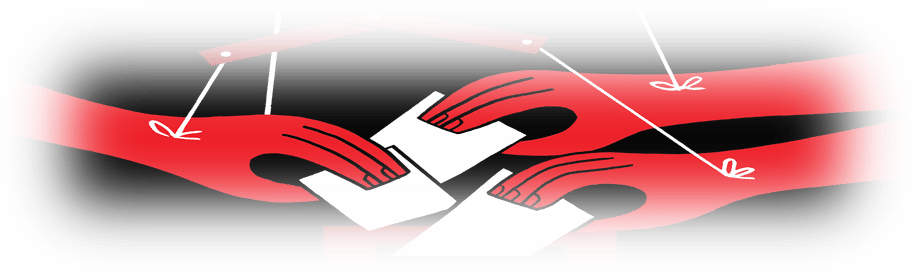
However, a much more serious related problem, one apparently being exploited by Israel and perhaps others (including diverse intelligence agencies all over the world), involves an insidious form of identity theft, i.e., where eligible voters who do not normally vote but whose votes are sometimes cast nonetheless, without their knowledge or consent, drastically impact electoral results. There is purportedly evidence that companies with access to electoral data trace such non-voters and make related information available to diverse governments and entrepreneurial enterprises, facilitating electoral fraud.
The indicia is a large and anomalous increase in voting volume in favor of the victorious candidate, one that then wins by small margins as recently occurred all over Latin America and may have occurred in the 2020 United States elections. Given the political disinterest of those whose “votes” are cast without their knowledge or authority, such tactic is almost impossible to prove or even detect other than on a macro level, and the law generally does not accept that kind of proof. And when those charged with electoral integrity are involved, no investigations take place, complaints being dismissed on technical grounds.
That seems to be the new electoral norm everywhere. Of course, the foregoing observation is labelled, at best, as a “conspiracy theory” although it is clear that it is really more than just a working hypothesis. When added to the reality that abuse of social media to circulate massive amounts of false information, scientifically timed for optimal electoral results is rampant, it seems obvious that “democracy” has become even more of a non sequitur than usual.
_____
© Guillermo Calvo Mahé; Manizales, 2026; all rights reserved. Please feel free to share with appropriate attribution. Image copyright New York Times.
Guillermo (“Bill”) Calvo Mahé (a sometime poet and aspiring empirical philosopher) is a writer, political commentator and academic currently residing in the Republic of Colombia (although he has primarily lived in the United States of America of which he is also a citizen). Until 2017 he chaired the political science, government and international relations programs at the Universidad Autónoma de Manizales. Previously, he chaired the social studies and foreign language departments at the Eastern Military Academy in Huntington, New York. He is currently the publisher of the Inannite Review available at Substack.com; an intermittent commentator on radio and television; and, an occasional contributor to diverse periodicals and publications. He has academic degrees in political science (BA, The Citadel, the Military College of South Carolina), law (JD, St. John’s University, School of Law), international legal studies (LL.M, the Graduate Division of the New York University School of Law) and translation and linguistic studies (GCTS, the University of Florida’s Center for Latin American Studies). However, he is also fascinated by mythology, religion, physics, astronomy and mathematics, especially with matters related to quanta, cosmology and cosmogony. He can be contacted at guillermo.calvo.mahe@gmail.com and much of his writing is available through his blog at https://guillermocalvo.com/.

