Old Corps

Old Corps:  Something that in our day, the 1960’s, we looked up to and admired but which, with the passage of time, has somehow become a pejorative.  The uniforms have changed: first the silk full dress sashes were gone, then real sashes of any kind; then the blitzed brass; then the so-called grey nasties and the cotton uniform trousers and now, epilates sprout on sort of grey shirts, none of which are drastically starched, but perhaps that part is superficial.  The family mess is gone and that had a value none now understand, as is the strict daily formation schedule.  And today’s version of fatigues, without even spit shined boots, are the daily norm.  The honor system we revered, if not the words of the Honor Code, has also gone the way of the Dodo, as it has in all the senior military colleges being deemed much too inhumane and inflexible.

Standards have changed.  They are imposed from above rather than percolating from the corps and that is a shame.  We grew together as a corps and discarded grievous errors, like racism, because we were taught from within by people like Charley Foster that it was not only immoral and wrong, but stupid and wholly inconsistent with the Honor Code which was our core.  Hazing was abused in our time but served a purpose as those held in captivity during the stupid wars in Southeast Asia made clear.  And the rigors of our year-long fourth class system were not forced on us but demanded by us; we wanted the most profoundly challenging plebe system in the world.

Times have changed.  Today, October 11, 2025, we demolished a mediocre Division II school in football and the corps was proud.  I was ashamed.  As I wrote, I much preferred when we went against the very best and had our butts kicked to being bullies.  I would have been horrified had we lost today but, when did we set our standards that low?  And it was not a victory for the corps but one attained by de facto non-cadet mercenaries we sort of hire to make it seem as though we really compete.

I do take great pride in our academic achievements but believe that they could be attained, and even surpassed, if they were set in the context we treasured where we demanded to be challenged so that the impossible was merely challenging,  But those days are no longer with us and perhaps will never return.

Today’s Citadel is a fine institution but it’s not the institution many of us, most of us, hoped it would remain or, even more, the institution so many us believed it could become.  The excuses are myriad but they’re excuses and I believe in my heart of hearts that today’s corps of cadets, like ours, would prefer the environment we felt we had bequeathed it, and that they would make us proud.

I don’t know where the responsibility lies for the foregoing dilution in values and traditions.  It’s hard for me to accept that it lies in a four star Marine Corps general who is also a Citadel graduate, or in the members of the Board of Visitors we elect.  It was not sudden but rather, gradual, one change deemed insignificant after another until our beloved alma mater became something different.  Not totally different, the spirit of the corps of cadets remains, or so I believe.  But the leadership is something else.  As is the experience and inevitably the product

Somewhere in time and space generals Summerall and Clark spin in their graves as does the Boo, and as do many of our classmates and those who went before us.  And it seems there is little we can do but hope that this is a cyclical phenomenon and that sometimes soon, the pendulum will right itself.  But perhaps that hope needs a bit of help from those of us in a position to make a difference.
_____

© Guillermo Calvo Mahé; Manizales, 2025; all rights reserved.  Please feel free to share with appropriate attribution.

Guillermo (“Bill”) Calvo Mahé (a sometime poet and aspiring empirical philosopher) is a writer, political commentator and academic currently residing in the Republic of Colombia (although he has primarily lived in the United States of America of which he is also a citizen). Until 2017 he chaired the political science, government and international relations programs at the Universidad Autónoma de Manizales. Previously, he chaired the social studies and foreign language departments at the Eastern Military Academy in Huntington, New York. He is currently the publisher of the Inannite Review available at Substack.com; an intermittent commentator on radio and television; and, an occasional contributor to diverse periodicals and publications. He has academic degrees in political science (BA, The Citadel, the Military College of South Carolina), law (JD, St. John’s University, School of Law), international legal studies (LL.M, the Graduate Division of the New York University School of Law) and translation and linguistic studies (GCTS, the University of Florida’s Center for Latin American Studies). However, he is also fascinated by mythology, religion, physics, astronomy and mathematics, especially with matters related to quanta, cosmology and cosmogony. He can be contacted at guillermo.calvo.mahe@gmail.com and much of his writing is available through his blog at https://guillermocalvo.com/.

Reflections on an Unremittingly Ludicrous Situation

Republicans are absolutely correct, the Democratic Party is horrible but, then again, so are Democrats, the Republican Party is awful.  Interestingly, both are subservient to the same master and it is not the United States’ citizenry.

The second Trump administration is a disaster, domestically and internationally, but, in all honesty it’s not a worse disaster than the Biden administration, and, internationally, while terrible, it is no worse than the prior Obama and Clinton administrations which planted the seeds for so many of today’s problems (think of the Ukraine, and Libya and Syria and Yemen, etc.).  And of course, the administration of George W. Bush was as terrible and inept as any of them, although, in each case, “inept” is measured only with respect to how such administrations benefit United States citizens.  Each was highly apt as far as the billionaire class was concerned and with respect to the American Israel Public Affairs Committee (AIPAC).

The sad part is that Mr. Trump’s inane behavior, rather than usher in a real independent and pro-United States administration comprised of people like former Congressman Dennis Kucinich or former Senator Jim Webb, real statesmen, it is very likely to usher in a new Democratic Party administration led by the Clintons and the Obamas and Pelosi, etc., also foreign owned, rather than one dedicated to world peace, domestic tranquility, prosperity and freedom from AIPAC domination.  Thus, the more things purportedly change, the more they stay the same and it is our fault, yours and mine, both individually and collectively, for being so consistently gullible.  Of course, things don’t quite stay the same as each subsequent administration becomes more vitriolic and more seriously abuses our civil liberties and constitutional rights, more thoroughly perverting and subverting the institutions and customs meant to preserve and protect us while the previous administration hypocritically laments the sad state of affairs.

For decades public opinion polls have shown that the United States electorate would prefer a political administration other than one controlled by either the Republican or Democratic parties but every election, thanks in large part to the AIPAC controlled corporate media, we are convinced that those are our only two choices and that voting for third parties or independents is merely wasting our votes, and that we thus have to vote for one of the two AIPAC owned political parties so that the other does not attain power.  Thus, rather than voting our conscience and with our intellect, we tend to vote from artificially induced fear.

The stupidity involved is incredible!  Albert Einstein would have described it as insane.  But it is constant and consistent and anyway, it’s probably already too late to change things since, as may well have occurred in the United States already and as is occurring in Europe west of the Caucuses, electoral manipulation through distortive news reporting and, when that is not enough, electoral manipulation through abuse of the judicial system (as recently occurred in Romania) or, as a last resort, through electoral fraud involving destruction of inconvenient ballots (as was apparently again the case today in Moldavia) and through manufacture of necessary ballots, or else, through the hacking of electronic voting equipment will prevent changes opposed by the alliance of Deep States that makes a mockery of even the illusion of democracy.

For decades, especially since Eric Arthur Blair (writing under the pen name George Orwell) in his dystopian epic 1984 (published in 1948) warned us, we have been completely manipulated, duped, and our intellect and ethics have been insulted.  We not only “should” know better, we in fact “do” know better, but somehow, that makes no difference.  The genocide against which we purportedly fought a world war has now become acceptable, although, the reality, when one examines history, is that genocide has always been acceptable, one need only note the celebrated instances of genocide in the Tanakh (Old Testament), e.g., Jericho, or much more recently, the genocide perpetrated against indigenous Americans by European colonists, the genocide in the Congo perpetrated by the Belgians, the genocide in India and Africa perpetrated by the British, the genocide in Armenia perpetrated by the Turks and the bombings of Dresden, Hiroshima and Nagasaki during the second war to end all wars, thus, the genocide engaged in by the Nazis was apparently only horrendous because the Nazis lacked sophisticated public relations such as those employed by Zionists and, of course, the Nazis lost a major war.

So, … we rush towards Armageddon, many Christion Zionists with open arms in the hope that Yešu the Nazarene will deem it prudent to return and reward slaughter and mayhem with his holy presence.  We rush towards Armageddon oblivious, polarized and incoherent but, apparently, blissfully so.  Or, perhaps, we’ll just blissfully remain enslaved to our betters who apparently deserve to use us as they will.
_____

© Guillermo Calvo Mahé; Manizales, 2025; all rights reserved.  Please feel free to share with appropriate attribution.

Guillermo (“Bill”) Calvo Mahé (a sometime poet and aspiring empirical philosopher) is a writer, political commentator and academic currently residing in the Republic of Colombia (although he has primarily lived in the United States of America of which he is also a citizen). Until 2017 he chaired the political science, government and international relations programs at the Universidad Autónoma de Manizales. Previously, he chaired the social studies and foreign language departments at the Eastern Military Academy in Huntington, New York. He is currently the publisher of the Inannite Review available at Substack.com; an intermittent commentator on radio and television; and, an occasional contributor to diverse periodicals and publications. He has academic degrees in political science (BA, The Citadel, the Military College of South Carolina), law (JD, St. John’s University, School of Law), international legal studies (LL.M, the Graduate Division of the New York University School of Law) and translation and linguistic studies (GCTS, the University of Florida’s Center for Latin American Studies). However, he is also fascinated by mythology, religion, physics, astronomy and mathematics, especially with matters related to quanta, cosmology and cosmogony. He can be contacted at guillermo.calvo.mahe@gmail.com and much of his writing is available through his blog at https://guillermocalvo.com/.

Panentheistic Reflections on Evolutionary Structure

Within the diverse variants of hypotheses concerning the concept of transmigration of souls (including but not limited to the concept of reincarnation) karma occupies an important role.  However, an alternative related karma-free concept appeals to me, that of panentheistic monism.  In the variant of panentheistic monism to which I am most drawn, a hierarchy of self-aware intelligences exist which include us, evolving constantly based on experience, but based on a concentric form of collectivism.  Thus, in our case, we are comprised of diverse collectives; one includes our cells, then, on a higher plane, we are a collective comprised of our organs which are collectives of our cells, then, we are bodies comprised of a collective of our organs and our cells.  Further up the concentric ladder, we perceive of ourselves as individuals but also as members of collectives in which we are parts, e.g., our bond pairings, our families, our clans (extended families), our social groupings (religions, social communities, racial and ethnic identifications, etc.) culminating in our belief that we are part of a collective that we identify as humanity.

The interesting thing is that the collectives of which we are members, albeit subject to numerous variable tensions, seem to have identities of their own, a concept central to sociological hypotheses where groups act in a manner significantly different than would their individual members, willingly sacrificing the interests of individual members for what the collective perceives as a “greater good” (but which much more often seems to involve the interests of elites capable of manipulating the group for their benefit through coercion, very much in the manner that cancers function in our individual bodies).  That is a phenomenon that seems omnipresent in human collectives, at least as far as we know.  An open and critical question involves whether or not the collectives of which we are a part culminate at the level of our species, or whether our species is itself a part of an aware and volitional series of more complex entities such as the complex varieties of life found on our planet and, perhaps, the complex of biological and non-biological components of our environment, including air, water, weather, etc.  If so and, if we are just incapable of perceiving the levels of sentience of which we are a part (for example, the concept of Gaia), perhaps our planetary system is itself only a component of a series of greater sentient wholes, wholes such as our solar system, the group of solar systems of which our own is a part, the galaxy, the universe, etc.

Panentheism is generally viewed as a religious or spiritual concept but that may be misleading.  It may also involve an organizational reality where the omniverse (the total of all multiverses which, in turn, involve the organizational structure of individual universes, each with its own laws of physics and evolution) is sentient and self-aware, sentience being the extra-physical factor that separates the concept of panentheism from the related concept of pantheism.  In their religious variants, pantheism is the belief that divinity is the sum total of everything to which panentheism adds sentient self-awareness.

Monism adds an evolutionary element thus, each component of the pantheistic omniverse is deemed to be evolving and, in evolving, is assisting its superior structures to evolve so that, in a sense, inferior structures (inferior in terms of their level rather than their abilities) are the engines that drive the evolution of the structures of which they are components.  In a sense, there is a striving towards never-attainable perfection at all levels, a striving that is not always constant or successful so that evolution does not involve constant progress, although progress, in the long term, tends to be consistent.

The foregoing applies to the function we refer to as the transmigration of souls as it is apparently through experiences during myriad lifetimes that the systems of which we are components learn and evolve.  We are the tools for their perception of experiences, experiences that test their own evolutionary hypotheses, testing them and converting them into theories, and perhaps, eventually, into natural laws, laws being concepts impossible to violate.

Good and evil are hypotheses which we, in our diverse human groupings, develop, develop as guideposts, but they probably do not, except perhaps in very rare cases, rise to the level of theories and certainly even more rarely to the level of laws, although we tend to treat them as such.  Concepts involving good and evil tend to involve evolutionary processes that start as a practices, evolve into traditions, then customs and then, perhaps, into social norms which may eventually become codified into obligations whose violation is subject to penal sanctions.  But, since violations are possible at all levels and exceptions prevail, they do not really, regardless of how denominated, evolve into real laws.

The foregoing, at least for me, explains the incoherent societies in which we live and in which humans have always lived, where deceit, treachery and hypocrisy seem to be the norm, especially when we describe them in patriotic and religious terms.  But, on the brighter side, we are parts of an infant omniverse taking baby steps which perhaps in time may produce an evolutionary structure worth admiring.
_____

© Guillermo Calvo Mahé; Manizales, 2025; all rights reserved.  Please feel free to share with appropriate attribution.

Guillermo (“Bill”) Calvo Mahé (a sometime poet and aspiring empirical philosopher) is a writer, political commentator and academic currently residing in the Republic of Colombia (although he has primarily lived in the United States of America of which he is also a citizen). Until 2017 he chaired the political science, government and international relations programs at the Universidad Autónoma de Manizales. Previously, he chaired the social studies and foreign language departments at the Eastern Military Academy in Huntington, New York. He is currently the publisher of the Inannite Review available at Substack.com; an intermittent commentator on radio and television; and, an occasional contributor to diverse periodicals and publications. He has academic degrees in political science (BA, The Citadel, the Military College of South Carolina), law (JD, St. John’s University, School of Law), international legal studies (LL.M, the Graduate Division of the New York University School of Law) and translation and linguistic studies (GCTS, the University of Florida’s Center for Latin American Studies). However, he is also fascinated by mythology, religion, physics, astronomy and mathematics, especially with matters related to quanta, cosmology and cosmogony. He can be contacted at guillermo.calvo.mahe@gmail.com and much of his writing is available through his blog at https://guillermocalvo.com/.

Of Synchronicity

Synchronicity:

Apparently a Jungian term that seems related to coincidence, i.e., in the sense of co-incidence, but nexus free although meaningfully connected.

Perhaps a toy in divinity’s tool chest meant to confound and confuse even as it enlightens.

Interesting.
_____

© Guillermo Calvo Mahé; Manizales, 2025; all rights reserved.  Please feel free to share with appropriate attribution.

Guillermo (“Bill”) Calvo Mahé (a sometime poet and aspiring empirical philosopher) is a writer, political commentator and academic currently residing in the Republic of Colombia (although he has primarily lived in the United States of America of which he is also a citizen). Until 2017 he chaired the political science, government and international relations programs at the Universidad Autónoma de Manizales. Previously, he chaired the social studies and foreign language departments at the Eastern Military Academy in Huntington, New York. He is currently the publisher of the Inannite Review available at Substack.com; an intermittent commentator on radio and television; and, an occasional contributor to diverse periodicals and publications. He has academic degrees in political science (BA, The Citadel, the Military College of South Carolina), law (JD, St. John’s University, School of Law), international legal studies (LL.M, the Graduate Division of the New York University School of Law) and translation and linguistic studies (GCTS, the University of Florida’s Center for Latin American Studies). However, he is also fascinated by mythology, religion, physics, astronomy and mathematics, especially with matters related to quanta, cosmology and cosmogony. He can be contacted at guillermo.calvo.mahe@gmail.com and much of his writing is available through his blog at https://guillermocalvo.com/.

Of Māui, Prometheus and Lucifer; or, should it be of Māui, Anansi, Kokopelli, Sun Wukong, Joha and Loki

Māui is, or was, not an Island in Hawaii, at least not originally; he is (or was) a Polynesian divinity related in certain aspects to the Greek Prometheus and the Roman Lucifer.  Like them, he purportedly stole fire from the gods and gifted it to humans.  That, apparently, was Lucifer’s only sin, he was, after all, to the Romans, a divinity charged with encouraging veracity and light but of course, the media, both ancient and current, have calumnied him incessantly, confusing him with YHWH’s former pet, the Hebrew archangel Hêl él.  But Māui was an even more interesting character than Prometheus and Lucifer.  Like African Anansi or Pueblo Kokopelli or Chinese Sun Wukong or Semitic Joha or Nordic Loki, … he was a trickster divinity.  The most entertaining, dangerous, unpredictable and interesting kind of divinities.

Unfortunately for him, his philanthropy towards humans led to his demise. 

Not satisfied with just gifting us fire, or pulling Islands galore from the ocean floor (one of which bears his name), Māui sought to imbue us, you and me and everyone we know and everyone anyone has ever known, … with immortality.  He sought to accomplish that task, the undoing of YHWE’s curse, by creatively eliminating the death goddess Hine-nui-te-pō, something he attempted to do by penetrating her vagina in the form of a worm, something that in some aspects, at least to some with a sense of humor if not a sense of propriety, seemed inordinately appropriate.  After all, there are worms and there are worms and there are worms, some very large and powerful while others are rather small and seemingly meek, although, in the long term, the latter’s patience tends to be rewarded.  

So Māui penetrated Hine-nui-te-pō, albeit not in an overtly sexual manner, as a tiny worm after which it was his plan to traverse her genital canal seeking to break through to her alimentary canal and then, to exit through her mouth.

For some reason, Māui believed that such journey would be unnoticed, albeit terminal.  Why he believed that perhaps only he knew but, alas, he is no longer available to provide an explanation.

Unfortunately for both us and for him, he was inadvertently betrayed by his avian sidekick, pīwakawaka, who, as sidekicks are all too often wont to do, burst into laughter at the sight of Māui entering Hine-nui-te-pō’s vagina and she, alerted by the ruckus (surprising though that she hadn’t noticed her penetration), became furious and both inadvertently and deliberately, concurrently, crushed Māui to death with her vagina’s obsidian teeth.

Ouch!  Obsidian teeth would seem to have made both sexual congress and successful gestation, at best, improbable.  There are rumors to the effect that it is not only Hine-nui-te-pō who sports that attribute but that’s another story.

Anyway ….

Poor Māui, poor, shredded Māui.  Poor, poor us.
_____

© Guillermo Calvo Mahé; Manizales, 2025; all rights reserved.  Please feel free to share with appropriate attribution.

This vignette is dedicated to Captain Woodruff C. Goble, USMC (retired), lately a florist on Māui but once a hero to many of us.  He still is.  Especially to the members of the Citadel, class of 1968’s, Hotel Company.

Guillermo (“Bill”) Calvo Mahé (a sometime poet and aspiring empirical philosopher) is a writer, political commentator and academic currently residing in the Republic of Colombia (although he has primarily lived in the United States of America of which he is also a citizen). Until 2017 he chaired the political science, government and international relations programs at the Universidad Autónoma de Manizales. Previously, he chaired the social studies and foreign language departments at the Eastern Military Academy in Huntington, New York. He is currently the publisher of the Inannite Review available at Substack.com; an intermittent commentator on radio and television; and, an occasional contributor to diverse periodicals and publications. He has academic degrees in political science (BA, The Citadel: The Military College of South Carolina), law (JD, St. John’s University, School of Law), international legal studies (LL.M, the Graduate Division of the New York University School of Law) and translation and linguistic studies (GCTS, the University of Florida’s Center for Latin American Studies). However, he is also fascinated by mythology, religion, physics, astronomy and mathematics, especially with matters related to quanta, cosmology and cosmogony. He can be contacted at guillermo.calvo.mahe@gmail.com and much of his writing is available through his blog at https://guillermocalvo.com/

Shadowy Sepulchral Echoes

Or perhaps, the title should be “echoing sepulchral shadows”, or “echoes of sepulchral shadows”.  For some reason, a melody with the phrase “lions and tigers and bears, oh my” comes to mind but that was from an allegorical fairy tale translated into film, first black and white and then in color, and this is quite a bit different, and not allegorical at all.  Nor is it metaphorical.  Indeed, at least in parts, it’s clearly historical.  At least in part, it’s inspired by some of my son Alex’s work, although not by his novel The Old Breed: Haxan.  A shameless plug, I admit it.

The place name “Jericho”, apparently originally “Yəriḥo” (although the concept of “originally” is, of course, as suspect as it is relative), is believed to derive from either the Canaanite word “rēḥ” meaning fragrant or from the Canaanite lunar deity Yarikh once worshipped there.  In Jericho, in the land that during more recent millennia has been called Palestine, in the part of Palestine now referred to as the West Bank, within a cavern, there’s a special spot, perhaps ten meters square (although it’s actually sort of round, or perhaps sort of spherical might be more accurate), “sort of” being the operative element.  It’s reputed to be the oldest place continuously inhabited by Homo sapiens on Terra although not necessarily inhabited by the living.  A number of places in Africa, however, would surely dispute the foregoing, as might a number of places in Asia and in the Indian Subcontinent.  Perhaps even in the Americas.

Be that as it may, that special place within the confines of Jericho is deemed sacred not, only to adherents of the three fratricidal branches of the Abrahamic family of religions, but by the shades of what might have been among the first humans to imagine and thus empower proto-deities tasked with protecting us, … mainly from ourselves.  Thus, truths better left untold may well dwell there, … muttering. 

Within that tiny circle resonate the primordial shades of presences who consider themselves a “family” of sorts.  Guardians of beginnings and of endings.  Of many, many beginnings and of many, many endings, although, many of the endings are indistinguishable from beginnings and many of the beginnings seem to meld into earlier endings, kind of like a spiraling Worm Ouroboros.

It’s a comforting spot for the souls of ancient gods and for the spirits of their ancient priests and priestesses and for the ghosts of the select among their ancient followers.  In short, it’s a comfortably haunted spot, haunted by souls and spirits and ghosts who, in some cases, realize that their former hosts have expired while in other cases, they refuse to acknowledge their expiration.  Still, generally, it’s a friendly sort of haunting, more like a cohabitation. 

Dreams there tend to be astounding and hard to forget whether one would want to forget or to remember them.  Lately though, they’ve tended towards hyperbolically apocalyptic themes featuring trumpets blaring and four terrible dark-winged equestrians charging.

Dead gods sometimes corporeally congregate there.  Indeed, all but one of the seventy sons of divine Ēl still meet there in Divine Council from time to time, although sometimes, they merely gather to play and wrestle and gossip.  To gossip about the incomprehensibly irreconcilable doings of their sons and daughters, and of their sons’ and daughters’ sons and daughters and so on, ad infinatum.  And of the course, they gossip about the deranged conduct of their missing sibling and about the echoing conduct of his purported followers.  That particular sibling struck out on his own a bit longer than three millennia ago and, asserting that he is a “jealous god” has done his best to eliminate all echoes of divinity other than his own.  Rumor has it (although with rumors one can never vouch for their accuracy) that the remaining members of Ēl’s Divine Council have taken to heavy metal music although melded with ancient Middle Eastern rhythms.  Could be I guess.

Anyway, “ancient” is a relative term there. 

To many of the elder gods, the most ancient of the primordial echoes we the living sometimes recall are still little more than the yelps of young interlopers.  What the eldest of all gods think, the ones who were hoary long before the advent of divine Ēl, none living elsewhere now know, although there, in that primordial habitation, echoes of their voices still sometimes seem to resonate, to resonate among the darkest shadows.  Dusky shadows from somewhere beyond the realms of time and space. 

Interlopers have always arrived there in waves.  They still do, as though drawn by a primordial gravitational well.  Indeed, for many, many millennia, many interlopers have found themselves trapped there by a strange event horizon and then, have found themselves drawn into tiny but very complete universes, or perhaps multiverses, although the correct term may be more akin to a sole omniverse.  Evidently some sort of spell is involved, or magic, or miracles, or arcane laws of physics.  Those concepts are difficult to distinguish there, primarily differing, like beauty, in the eyes of the one doing the beholding.

Syncretism plays there at times.  Meddlingly melding echoes of personalities long gone into new souls, souls that then scatter to the four winds, left free to find their own mischief, mischief bereft of memories and of guidance.  An amalgam that may explain why we find ourselves where we now seem to be. 

But who knows. 

The “family” does not share its secrets, or its intuitions or its suspicions.  And if any of its members dared to do so, no one would believe them or, perhaps more accurately, very few would believe them and they would probably be considered no more than peculiar conspiracy theorists by their peers.

In Jericho: where the genocidal Hebrew leader Joshua once murdered so many and where mayhem and murder echo still.
_____

© Guillermo Calvo Mahé; Manizales, 2025; all rights reserved.  Please feel free to share with appropriate attribution.

Guillermo (“Bill”) Calvo Mahé (a sometime poet and aspiring empirical philosopher) is a writer, political commentator and academic currently residing in the Republic of Colombia (although he has primarily lived in the United States of America of which he is also a citizen). Until 2017 he chaired the political science, government and international relations programs at the Universidad Autónoma de Manizales. Previously, he chaired the social studies and foreign language departments at the Eastern Military Academy in Huntington, New York. He is currently the publisher of the Inannite Review available at Substack.com; an intermittent commentator on radio and television; and, an occasional contributor to diverse periodicals and publications. He has academic degrees in political science (BA, The Citadel, The Military College of South Carolina), law (JD, St. John’s University, School of Law), international legal studies (LL.M, the Graduate Division of the New York University School of Law) and translation and linguistic studies (GCTS, the University of Florida’s Center for Latin American Studies). However, he is also fascinated by mythology, religion, physics, astronomy and mathematics, especially with matters related to quanta, cosmology and cosmogony. He can be contacted at guillermo.calvo.mahe@gmail.com and much of his writing is available through his blog at https://guillermocalvo.com/.

An Interlocking Spherical Introspection

It seems interesting and perhaps even meaningful in some way that I am so much more drawn to interlocking identical serial spheres which share a common center at their edges than I am to concentric circles which seem less interesting to me, perhaps even boring; the former sacred and magical while the latter merely organizationally utilitarian, a means of describing concentrating priorities.  I’m not sure why I feel as I do, indeed, the reality is that I haven’t a clue.  But I do.

Perhaps there is an egalitarian element in interlocking serial spheres which share a common center at their edges, something wholly lacking in concentric circles, and perhaps in the shared centers of the former there exists a focused form of synergy.  Not a dominant focus but rather, a sort of distillation which, for some reason puts me in mind of the brandy that one can make from the liquid residue of frozen mead.  A strange sort of simile but perhaps one that, with reflection and introspection, might yield a primordial sort of sacred meaning.  Perhaps a sort of key to something we should know but which has, for some reason, perhaps a very good reason, been withheld.

For some reason, I sense that my preference discloses something important about me, something that I should know and perhaps even more, something those who, for some reason or other, rely on me or care for me or fear me, with or without cause, should know.  Perhaps it’s a clue to a secret pathway towards my soul or even, an echo hidden in shadows cast by a source of distant wisdom that enjoys teasing me with hints of who I am or who I should be, or perhaps of who I once was.

Or perhaps, at their shared core, there’s a hint of what divinity might be.  Or of what divinity is not.

Or perhaps it’s just a silly, meaningless predilection.

But I rather think not.
_____

© Guillermo Calvo Mahé; Manizales, 2025; all rights reserved.  Please feel free to share with appropriate attribution.

Guillermo (“Bill”) Calvo Mahé (a sometime poet and aspiring empirical philosopher) is a writer, political commentator and academic currently residing in the Republic of Colombia (although he has primarily lived in the United States of America of which he is also a citizen). Until 2017 he chaired the political science, government and international relations programs at the Universidad Autónoma de Manizales. Previously, he chaired the social studies and foreign language departments at the Eastern Military Academy in Huntington, New York. He is currently the publisher of the Inannite Review available at Substack.com; an intermittent commentator on radio and television; and, an occasional contributor to diverse periodicals and publications. He has academic degrees in political science (BA, The Citadel, The Military College of South Carolina), law (JD, St. John’s University, School of Law), international legal studies (LL.M, the Graduate Division of the New York University School of Law) and translation and linguistic studies (GCTS, the University of Florida’s Center for Latin American Studies). However, he is also fascinated by mythology, religion, physics, astronomy and mathematics, especially with matters related to quanta, cosmology and cosmogony. He can be contacted at guillermo.calvo.mahe@gmail.com and much of his writing is available through his blog at https://guillermocalvo.com/.

Reflections on the New York City Electorate and, Secondarily, on the Mayoral Candidacy of Zohran Mamdani

Like Zohran Mamdani, but more like Albert Einstein, Noam Chomsky, Martin Luther King, Jr., Nelson Mandela, Pepe Mujica and many others, I define myself as a democratic socialist.  That is very different from authoritarian socialists, “social democrats” and very, very different from a supporters of the ill-named Democratic Party or of the GOP although, with respect to the latter two, I find the Democratic Party much more hypocritical, despicable and dangerous.  I am not a Trump or MAGA supporter, far from it, but nor am I afflicted with Trump Derangement Syndrome.  Trump has many faults but all are shared by the most prominent Democrats, Democrats like war mongers Hillary Clinton, Barack Obama and Joe Biden to name just a few, especially with respect to their primary allegiance to Israel, allegiance bought and paid for by AIPAC.  My primary regret with reference to Mr. Mamdani’s candidacy is that it is Messrs. Cuomo and Adams who are running as independents and Mr. Mamdani will be the candidate of the utterly corrupt Democratic Party, although its leadership has not only rejected him but is actively opposing him.  More than anything, New York City, New York State and the United States need new political alternatives whose loyalty is to the United States and its citizenry rather than to a foreign government (Israel) or to the billionaire caste (it’s more a caste than a class).  But no such luck.  At least not yet.

I find the article entitled “Debunking the Myths about Mamdani’s Candidacy” written by Stewart Lawrence and published on August 13, 2025 in Counterpunch (available at https://www.counterpunch.org/2025/08/13/debunking-the-myths-about-mamdanis-candidacy/) not only interesting, but reflective of a hopeful sign, i.e.,  that the young may prove significantly less naïve and less subject to media manipulation and much more cognitively competent and ethical than most of their elders, a bit strange given that my generation, the Baby Boomers, shared many of their values when we were their age. When purportedly, “the Times they were a ‘Changing”.  That is a double edged sword, though, as my generation permitted its idealism to be corrupted in a quest for financial security as soon as we became parents.  One wonders if that same affliction will also contaminate the best of Generation X and Generation Z, etc.

While I share some, perhaps many, perhaps even most of Mr. Mamdani’s values and beliefs, there are postures I feel are simplistically addressed by him.  For example, those dealing with issues like immigration and law enforcement which, while very important, are more complex than what he perceives.  And, I’m concerned that beneath it all, he’s a partisan Democrat who suffers from the obligatory Trump Derangement Syndrome and who, like Bernie Sanders and Alexandria Ocasio-Cortez (“AOC”, a moniker I find presumptive) will, if he is elected (a near certainty, sell out his values in exchange for acceptance by the same old power brokers who have always controlled everything and that he will all too soon permit himself to serve as little more than a deceptive token.  A cynical view, I know, but one well earned.

Still, for now, Mr. Mamdani is a breath of fresh air and much more importantly, those who are drawn to him, especially those among the young and among most of New York City’s Jewish population seem to have had the cobwebs removed from their eyes and their ears and their mouths reflecting a political awakening that may help lead us away from the Deep State’s perpetual wars and thus from the edge of the apocalyptic abyss. It may center us on the importance of spending our hard earned tax revenue on positive things, items like free universal health care, like free education for all at all levels, like affordable housing for all, like adequate nutrition for all, like all of the things, including the foregoing, available to Israeli and European citizens, who our government subsidizes. 

Wouldn’t that be something? 

Especially if the New York City electorate has really woken to the realities facing us, especially if they reflect not just a New York City phenomenon.  Especially if they can reject “woke” triumphalism and virtue shaming which, rather than draw others to their idealistic goals, just turns them off.
_____

© Guillermo Calvo Mahé; Manizales, 2025; all rights reserved.  Please feel free to share with appropriate attribution.

Guillermo (“Bill”) Calvo Mahé (a sometime poet) is a writer, political commentator and academic currently residing in the Republic of Colombia (although he has primarily lived in the United States of America of which he is also a citizen). Until 2017 he chaired the political science, government and international relations programs at the Universidad Autónoma de Manizales. Previously, he chaired the social studies and foreign language departments at the Eastern Military Academy in Huntington, New York. He is currently the publisher of the Inannite Review available at Substack.com; an intermittent commentator on radio and television; and, an occasional contributor to diverse periodicals and publications. He has academic degrees in political science (BA, The Citadel, The Military College of South Carolina), law (JD, St. John’s University, School of Law), international legal studies (LL.M, the Graduate Division of the New York University School of Law) and translation and linguistic studies (GCTS, the University of Florida’s Center for Latin American Studies). However, he is also fascinated by mythology, religion, physics, astronomy and mathematics, especially with matters related to quanta, cosmology and cosmogony. He can be contacted at guillermo.calvo.mahe@gmail.com and much of his writing is available through his blog at https://guillermocalvo.com/.

Reflections on Liminality

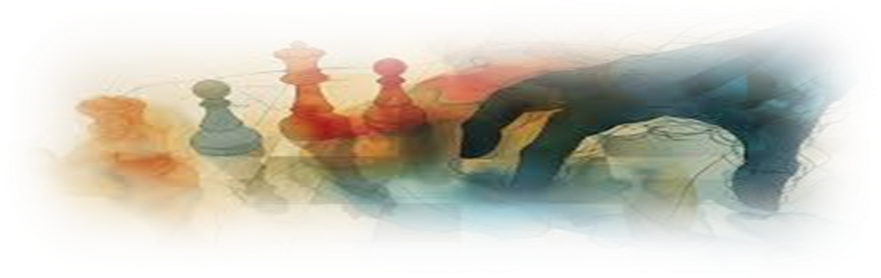
The “liminal”, a sequential period between the introductory and the conclusive somehow touching both.  The cognitive temporal range where most creativity takes place and where, towards the end, the transitional is crystalized before becoming calcified.  The midgame in chess comes to mind.

Temporal instants where an open mind is still possible albeit not all that common, intervals where one integrates learning: i.e., the initial programming of our earlier years adjusted by the collection of our accumulated experiences which collectively make us who we eventually become.

The most interesting aspect of our personal cognitive realms but one we too rarely visit.
_____

© Guillermo Calvo Mahé; Manizales, 2025; all rights reserved.  Please feel free to share with appropriate attribution. Guillermo (“Bill”) Calvo Mahé (a sometime poet) is a writer, political commentator and academic currently residing in the Republic of Colombia (although he has primarily lived in the United States of America of which he is also a citizen). Until 2017 he chaired the political science, government and international relations programs at the Universidad Autónoma de Manizales. Previously, he chaired the social studies and foreign language departments at the Eastern Military Academy in Huntington, New York. He is currently the publisher of the Inannite Review available at Substack.com; an intermittent commentator on radio and television; and, an occasional contributor to diverse periodicals and publications. He has academic degrees in political science (BA, The Citadel, The Military College of South Carolina), law (JD, St. John’s University, School of Law), international legal studies (LL.M, the Graduate Division of the New York University School of Law) and translation and linguistic studies (GCTS, the University of Florida’s Center for Latin American Studies). However, he is also fascinated by mythology, religion, physics, astronomy and mathematics, especially with matters related to quanta, cosmology and cosmogony. He can be contacted at guillermo.calvo.mahe@gmail.com and much of his writing is available through his blog at https://guillermocalvo.com/.

Reflections on Canaanite Salem

Photo copyright: Michael Ventura / Alamy Stock Photo

Salem: the Jebusite city whose name was debauched and became Jeru-Salem and then, the focus for genocide, animal sacrifice and the mother of blood libels (sacred to the fratricidal sons of Avram).  Divine El, the principal deity of the Canaanites, must surely have cursed them all.  Or, at least, he should have.

I wonder what Canaanite Salem was like before all the hatred and all the blood was shed.  Before patricidal David came.  The Canaanites were apparently a pleasant and generous people but then, Joshua (political heir to Moishe) came to slaughter all their men and women and children and flocks and pets, all in the name of Avram’s unholy god, YHWH, the younger, black sheep son of El. 

Then, the Canaanites were just … no more. 

Sort of how Zionists aspire that the Palestinians will “just be no more” and that everyone will forget what happened.
_____

© Guillermo Calvo Mahé; Manizales, 2025 (photo excluded); all rights reserved.  Please feel free to share with appropriate attribution. Guillermo (“Bill”) Calvo Mahé (a sometime poet) is a writer, political commentator and academic currently residing in the Republic of Colombia (although he has primarily lived in the United States of America of which he is also a citizen). Until 2017 he chaired the political science, government and international relations programs at the Universidad Autónoma de Manizales. Previously, he chaired the social studies and foreign language departments at the Eastern Military Academy in Huntington, New York. He is currently the publisher of the Inannite Review available at Substack.com; an intermittent commentator on radio and television; and, an occasional contributor to diverse periodicals and publications. He has academic degrees in political science (BA, The Citadel, The Military College of South Carolina), law (JD, St. John’s University, School of Law), international legal studies (LL.M, the Graduate Division of the New York University School of Law) and translation and linguistic studies (GCTS, the University of Florida’s Center for Latin American Studies). However, he is also fascinated by mythology, religion, physics, astronomy and mathematics, especially with matters related to quanta, cosmology and cosmogony. He can be contacted at guillermo.calvo.mahe@gmail.com and much of his writing is available through his blog at https://guillermocalvo.com/.